

Fire has always occupied a particular place in the home. It provides warmth, of course, but its influence extends well beyond function. A visible flame slows the pace of a room, draws people inward, and gives even the most minimal interior a sense of life.
With the launch of the s6-H, Stûv America is placing that idea at the center of the design.
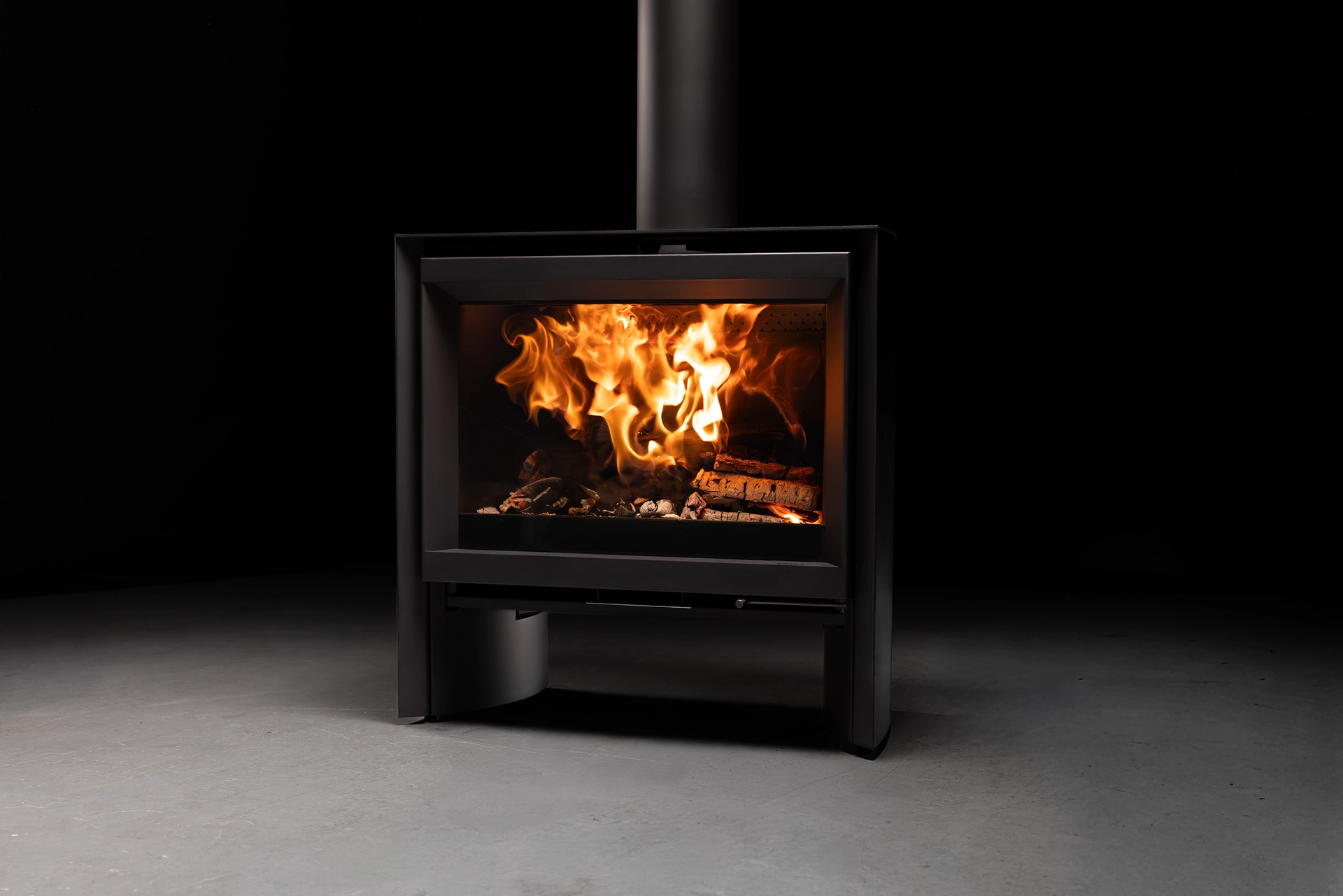
The new wood stove is defined by a generous glass front, a softened silhouette, and a sculptural black-steel body that feels more like a considered object than a conventional heating appliance. Rather than concealing the mechanics of fire, the design frames them, allowing the movement of the flame to become the focal point.
It is an approach that reflects a broader change in contemporary interiors. Fireplaces and stoves are no longer treated simply as necessary architectural fixtures. Increasingly, they are being used to establish atmosphere, organize a room, and introduce a sense of permanence into spaces otherwise defined by clean lines and restrained materials.
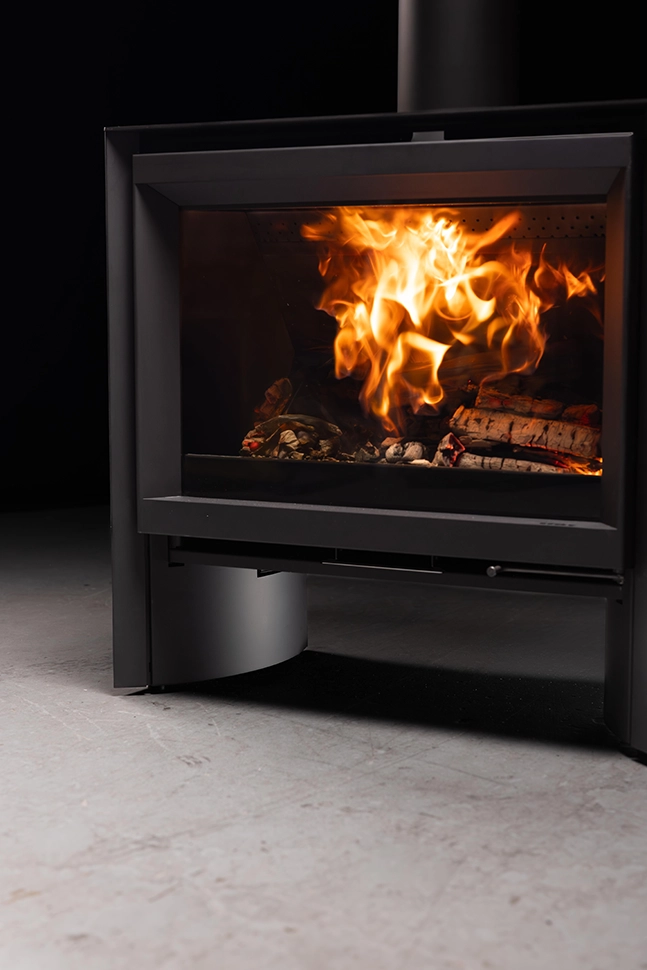
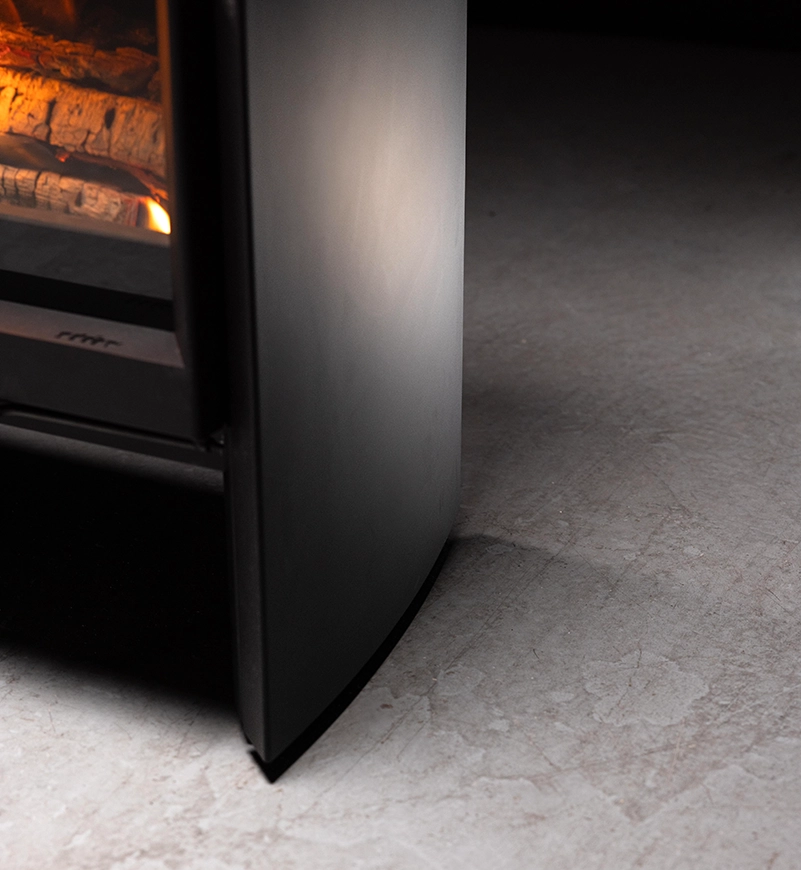
The s6-H responds to that shift with a design that is deliberately understated. Its curved profile softens the visual weight traditionally associated with cast-iron stoves, while its dark finish gives the piece enough presence to anchor a room without dominating it. The result is both familiar and distinctly contemporary.
That balance is important. A wood stove carries centuries of cultural association, from rural cottages and mountain homes to workshops, kitchens, and gathering places. Reinterpreting such an object requires restraint. Too much ornament risks nostalgia, while excessive minimalism can strip away the warmth that makes the stove appealing in the first place.
Stûv’s answer is to concentrate attention on the fire itself.
The broad glass area creates an expansive view of the flame, turning combustion into a changing visual composition. Against the black steel exterior and cast-iron interior, the fire becomes brighter and more dramatic, yet the overall effect remains controlled. The stove does not attempt to imitate a traditional fireplace. It creates its own architectural moment.
This quality allows the s6-H to move easily between different interiors. In a pared-back modern room, it can serve as a dark sculptural counterpoint to pale walls, stone floors, and natural wood. In a warmer setting, it can sit comfortably among textured upholstery, timber beams, and layered materials. Its simplicity gives it versatility, while its rounded shape prevents it from appearing severe.
The idea of the stove as a design object also changes how a room might be arranged around it. Instead of being relegated to a wall or corner, a piece with a strong visual identity can become the center of a seating plan. Chairs may be angled toward the flame. A low table can establish a more intimate conversation area. Lighting can be softened, allowing the glow of the fire to carry more of the atmosphere.
This is where the emotional role of the stove becomes as important as its practical one.
In a culture increasingly shaped by screens, automation, and speed, fire offers something elemental. It moves unpredictably. It demands attention without requiring interaction. It creates a point of focus that feels both ancient and immediate.
The most compelling interiors often depend on this kind of tension: precision balanced by imperfection, architecture softened by movement, and contemporary design grounded by something instinctive. A wood stove can provide all three.
The s6-H also arrives at a moment when designers and homeowners are reconsidering the relationship between comfort and visual restraint. Luxury is moving away from excess and toward atmosphere, longevity, and material quality. A room does not need to be filled with objects to feel complete. Sometimes, a single well-resolved element can shape the entire experience.
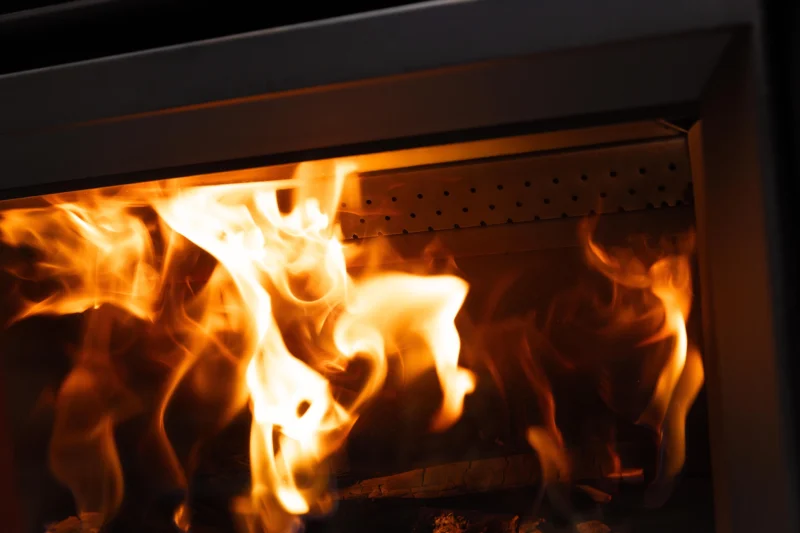
The stove’s construction reinforces that sense of solidity. Its steel exterior gives the piece a clean, tailored character, while cast iron is used inside the firebox. The all-black finish keeps the composition visually unified and places greater emphasis on the changing color and movement of the flame.
Stûv America describes the model as part of a wider expansion of its North American range, which now includes five product families and more than 35 models. The company is the North American subsidiary of Belgian manufacturer Stûv SA, founded in 1983, and has spent nearly two decades adapting and producing fireplaces and stoves for the region.
That background matters because the s6-H feels less like an isolated styling exercise than a continuation of a long design language. Stûv has built its reputation around fireplaces and stoves that reduce visual clutter, emphasize the flame, and treat heating appliances as part of the architecture.
The s6-H carries those ideas forward in a form that is softer, more domestic, and perhaps easier to integrate into a wider range of homes.
Its appeal lies in that adaptability. The stove does not rely on novelty, elaborate detailing, or an overtly technological appearance. Instead, it uses proportion, curvature, and material contrast to give a familiar object renewed presence.
For designers, that opens several possibilities. The stove can act as a focal point in a compact living room, bring warmth to a glass-walled retreat, or provide a grounded counterpoint in an open-plan interior. It can sit within a rustic setting without feeling predictable, or within a contemporary one without becoming cold.
Yet its strongest feature remains the simplest: the view of the fire.
In the S6-H, flame is not treated as a by-product of the appliance. It is the primary visual element, framed with enough precision to feel intentional and enough openness to remain alive.
That is what gives the stove its quiet authority. It does not compete with the room around it. It changes the room by introducing warmth, movement, and a natural point of stillness.
In an era of increasingly invisible technology, Stûv has chosen to put the most ancient part of the experience on display.
