

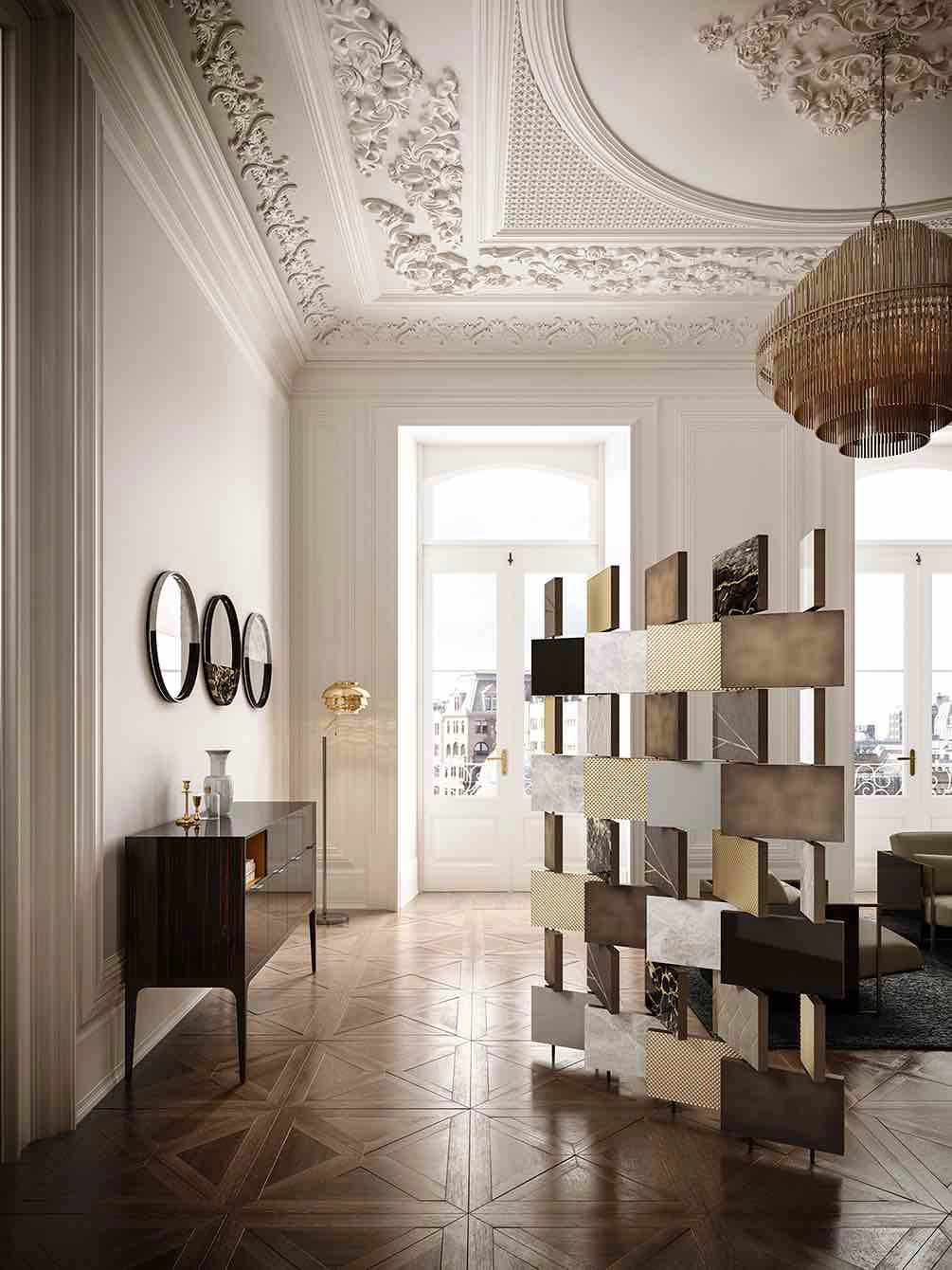
A wall divides. A decorative room divider suggests. In the most thoughtfully composed homes, that distinction can determine whether an interior feels merely organized or beautifully orchestrated. Walls establish permanence, while screens introduce something more nuanced: privacy without complete separation, structure without enclosure, and ornament that remains intimately connected to the architecture.
The decorative room divider is now returning in increasingly sculptural form. Fashioned from antiqued mirror, brushed brass, engraved stainless steel, natural stone, supple leather, glass, and richly figured wood, these pieces occupy the compelling territory between furniture, architecture, and collectible design. They do not simply establish where one space ends, and another begins; they shape the experience of moving through a home.
Their renewed appeal is closely connected to contemporary residential planning. Open interiors remain desirable, particularly in expansive apartments, penthouses, and modern villas, yet an uninterrupted floor plan can sometimes feel exposed or visually unresolved. A beautifully designed partition introduces intimacy without sacrificing the light, scale, or long sightlines that make an open-plan home so alluring.
Placed between an entrance hall and living room, a decorative screen can temper the immediate view into the home and create a more graceful sense of arrival. Between living and dining areas, it can establish two distinct atmospheres without resorting to a solid wall. In a bedroom suite, it might conceal a dressing room or bathing area while preserving the visual continuity of the architecture.
The finest examples appear neither incidental nor purely practical. They are composed with the same attention given to bespoke cabinetry, a dramatic staircase, or an important piece of art. Proportion, pattern, transparency, and material determine whether a divider feels ethereal and almost weightless or substantial enough to anchor the room around it.
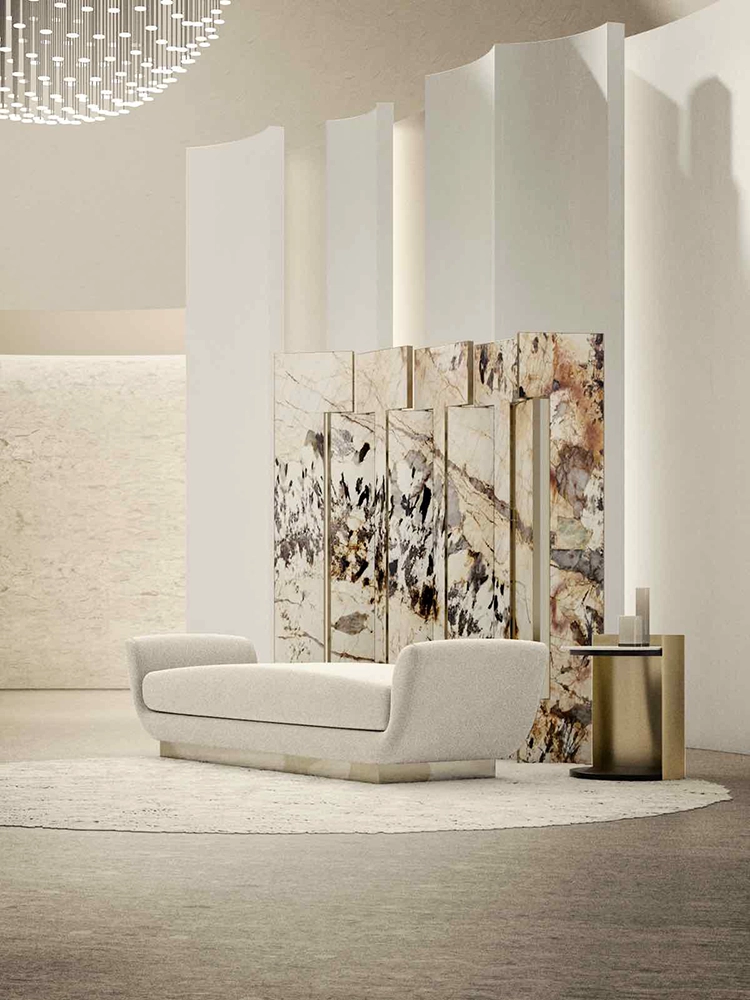
Italian interiors specialist Rossato approaches the room divider as a made-to-measure element designed in conversation with the architecture. Its pieces are handcrafted in Italy and bring together materials more commonly associated with fine furniture and decorative arts, including oak, woven leather, marble, suede, antiqued mirror, and architectural metal. Rather than treating the screen as an isolated accessory, Rossato designs each piece to respond to the proportions, finishes, and atmosphere of its surroundings.
The company’s Tiffany divider demonstrates this layered approach particularly well. Embroidered fabric, oak veneer, woven leather, natural travertine, and brushed brass are arranged within a composition that alternates between open and solid forms. It provides separation, but the greater impression is one of tactile refinement—a screen conceived as a piece of furniture that can be appreciated from every side.
Rossato’s Zeno divider takes an entirely different direction. Sheets of antiqued and extra-clear mirror are positioned at angles within a polished brass frame, producing shifting reflections as the viewer moves through the room. The screen does not simply divide the interior; it changes one’s perception of its depth, multiplying light and fragmenting the surrounding architecture into an evolving composition.
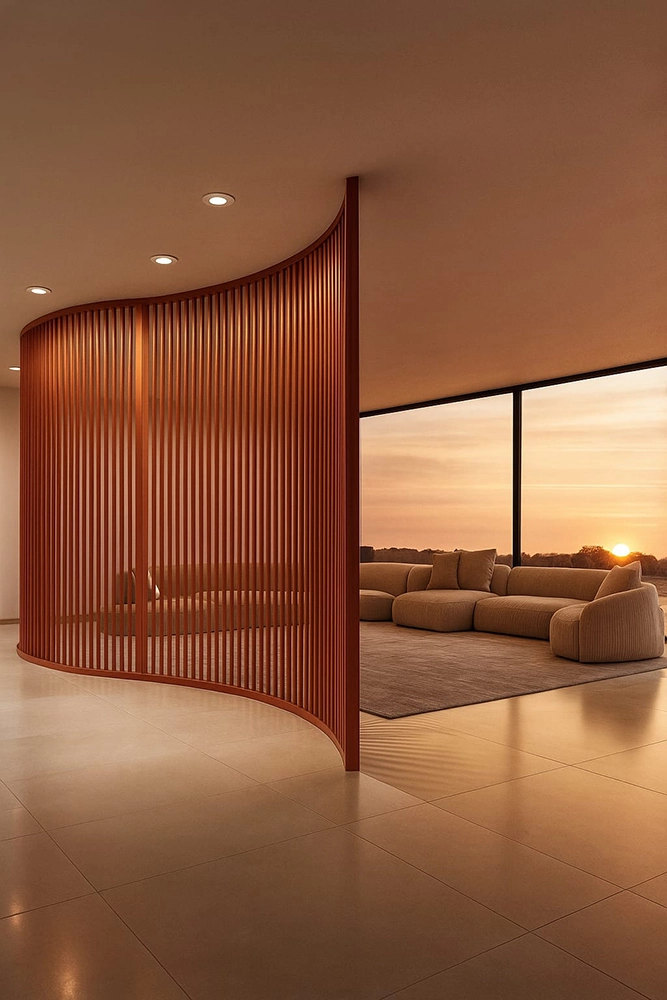
For a more explicitly architectural interpretation, The Davani Group creates custom metal screens and dividers for residential spaces, including living and dining areas and private wine rooms. Produced to suit the individual project, the company’s screens often employ bronze, glass, patinated metal, and precisely fabricated geometric patterns. Their visual strength comes from the tension between the permanence of metal and the openness of the spaces cut through it.
A bronze screen can feel monumental without becoming oppressive, particularly when the metal is given a softly aged or hand-applied patina. Against pale stone, plaster walls, or restrained upholstery, its warmth becomes almost luminous. Used between a formal dining room and adjoining salon, the screen can create a ceremonial threshold, allowing both spaces to remain connected while giving each a distinct identity.
Material finish is especially important. Highly polished metal reflects its surroundings and introduces glamour, while brushed or patinated surfaces have a quieter, more architectural presence. Bronze may bring warmth and gravitas; blackened steel can lend graphic definition; brass introduces light and richness. The choice should reinforce the wider language of the home rather than compete with it.
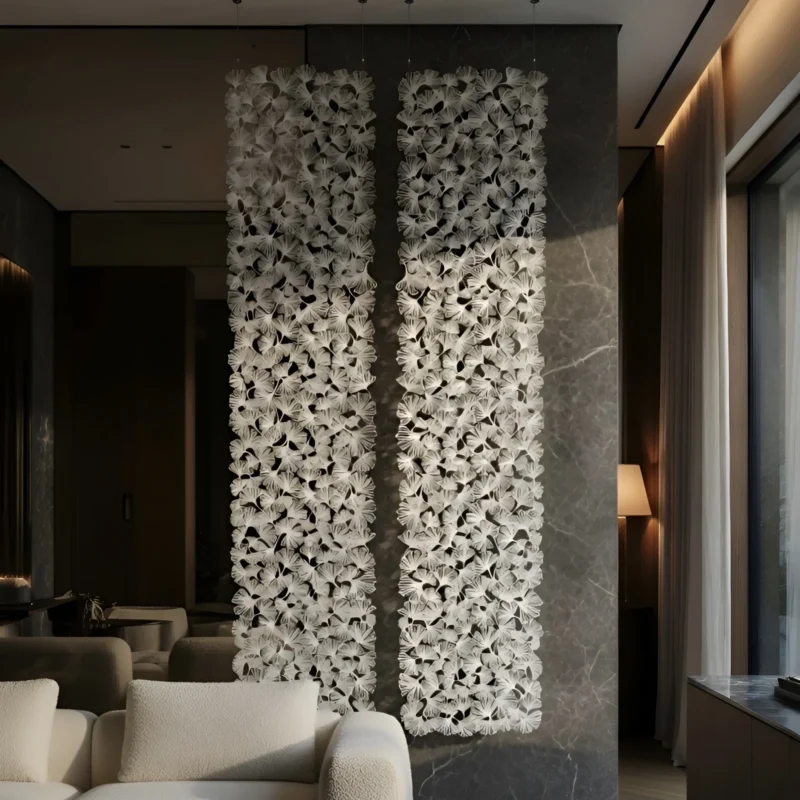
Caino Design explores the decorative screen through exceptionally thin sheets of engraved stainless steel. Its panels are designed as partitions, metallic curtains, wall treatments, and privacy screens, with patterns ranging from botanical abstractions to fluid geometries. The metal’s slender profile allows each installation to retain a sense of delicacy even when used at considerable scale.
The company’s nature-inspired designs are particularly suited to residential interiors in which the screen is intended to filter rather than block the view. Light passes through the engraved openings, creating shadows that shift throughout the day. What begins as a static metal surface becomes responsive to its environment, changing according to the angle of the sun, nearby illumination, and movement within the room.
This interplay of light and shadow is one reason decorative dividers can feel more expressive than conventional walls. Concealed lighting placed above, below, or within the frame can emphasize texture and project patterns onto adjacent surfaces. Mirrored elements amplify surrounding light, while glass and polished metal introduce reflection. The partition develops a different personality after dark, when its functional role becomes secondary to the atmosphere it creates.
Customization gives these pieces their greatest potential. A pattern may echo the geometry of a staircase, reference foliage beyond a garden window, or repeat a motif found in the home’s stonework. Materials can connect the divider to nearby furniture, hardware, or architectural finishes, allowing it to belong convincingly to the space rather than appear added after the fact.
Restraint, however, remains essential. A highly decorative partition is most compelling when balanced by quieter materials and sufficient visual space. Against honed stone, softly veined plaster, tailored upholstery, or understated timber, it can assume the authority of an artwork. In an already elaborate room, the same piece risks becoming another competing surface.
The return of the decorative room divider reflects a wider evolution in residential luxury. Grandeur is no longer measured solely through scale or abundance. It can be found in the intelligence of a transition, the framing of a view, and the choreography of privacy and openness within the home.
Whether composed of engraved steel, antiqued mirror, bronze, leather, or marble, the contemporary decorative room divider offers something a conventional wall cannot. It separates without isolating, conceals without darkening, and introduces ornament without overwhelming the architecture. A wall tells us where a room ends; a beautiful screen makes us curious about what lies beyond.
