

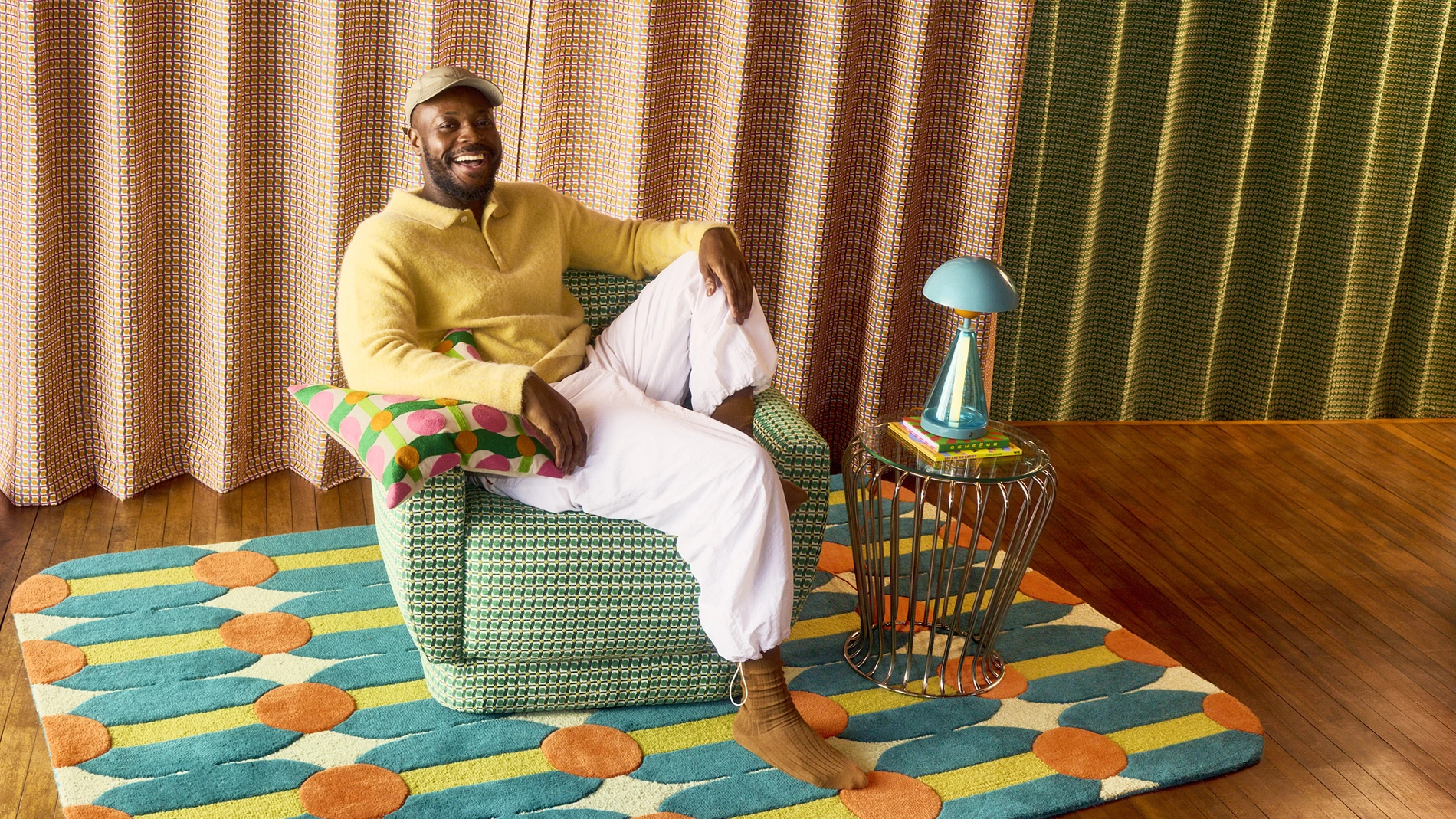
Color arrives first. Saturated florals spread across bedding, rugs, and upholstery. Curved furniture softens the geometry of a room. Chrome, bouclé, graphic pattern, and playful proportion come together in pieces that feel optimistic without becoming frivolous.
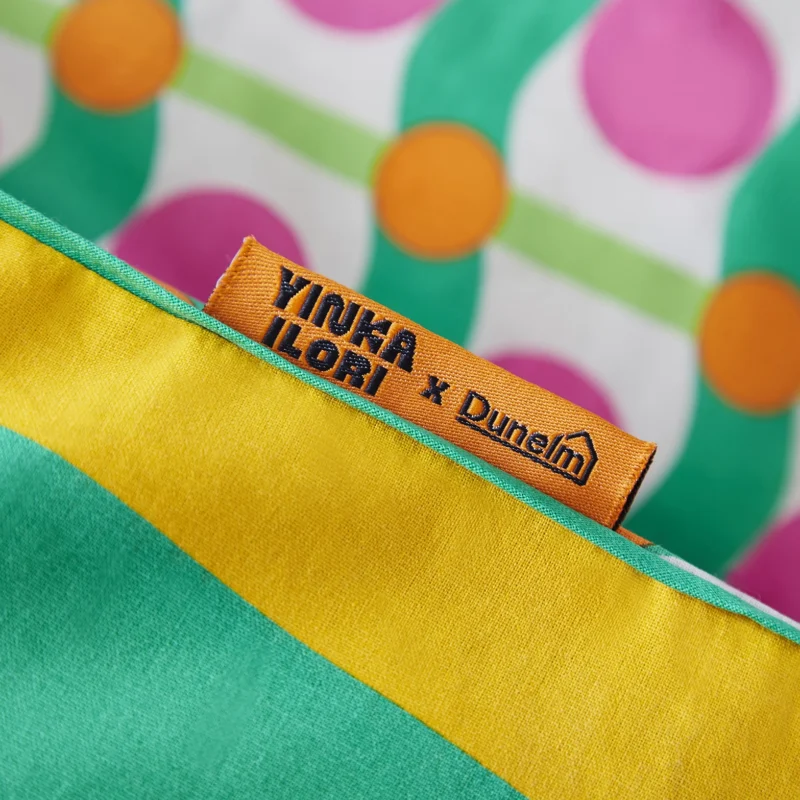
This is the visual world of Yinka Ilori, the London-based artist and designer known for transforming public spaces, furniture, and architecture through bold color and narrative. In his limited-edition collection for Dunelm, that language moves decisively into the home, expressed across furniture, lighting, rugs, bedding, towels, and decorative accessories.
The collection brings together 40 pieces designed to introduce character into everyday interiors at a broad range of price points. Yet its appeal extends beyond color or accessibility. At its strongest, the range demonstrates how domestic objects can carry stories of place, family, identity, and community without sacrificing function.
That shared belief in community helped shape the collaboration from the beginning. Dunelm began as a market-stall business in Leicester, while Ilori grew up helping in his parents’ supermarket in North London. Both experiences were rooted in local exchange: familiar faces, daily rituals, informal conversations, and the sense that commerce could also create connection.
“What struck me about Dunelm’s beginnings was their love for community,” Ilori says. “Growing up in a working-class environment, community was everything for my family. It was how we shared stories and how we built things off the ground together, as a collective.”
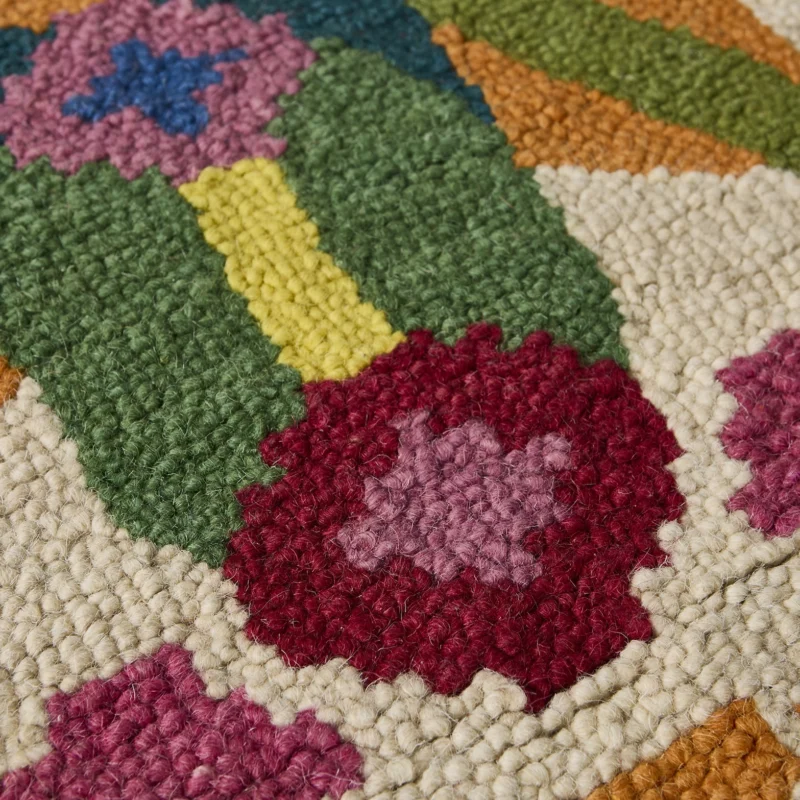
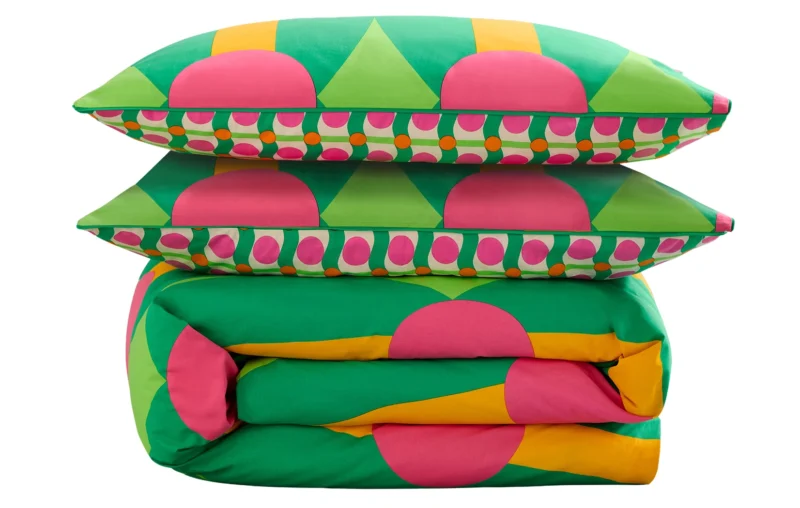
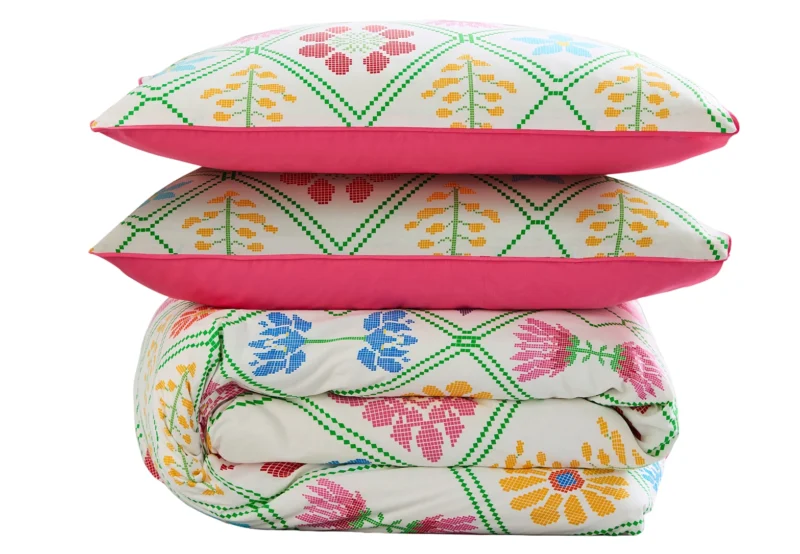
That idea is woven throughout the collection, often quite literally. Leicester’s textile history provides one of its key references, particularly the city’s relationship with migration and manufacturing. Floral motifs draw upon national flowers associated with communities from countries including India and Pakistan, while Ilori’s familiar geometric patterns bring a more contemporary graphic rhythm.
The result is not a nostalgic exercise, nor an attempt to reproduce traditional motifs in a literal way. Instead, the collection uses pattern as a form of storytelling. Flowers, grids, curves, and blocks of color become a visual vocabulary through which cultural memory is translated into furniture and textiles intended for daily use.
Ilori’s design language is especially effective when applied to larger pieces. The Sweet Flows swivel chair, with its rounded profile and richly patterned upholstery, has the presence of a collectible object yet remains generous and approachable. Its curved silhouette gives it a sculptural quality, while the textile transforms the chair into a focal point capable of organizing an entire room.
The Half-Log sideboard takes a similarly expressive approach. Its softened form introduces movement to a piece that is fundamentally practical, demonstrating how storage furniture can contribute to the architecture of an interior rather than simply occupy space within it. The design feels playful, but the restraint of its shape prevents it from becoming purely decorative.
Lighting offers another opportunity for Ilori’s visual language to become more intimate. The Bell LED lamp translates his interest in geometry and color into a smaller object, one that can bring personality to a desk, bedside table, or console without requiring a complete decorative transformation.
Textiles, however, remain central to the collection. The Net Floral bedding reinterprets the domestic familiarity of Britain’s traditional net curtain, turning a modest household reference into a layered floral composition. It is precisely this movement between the ordinary and the expressive that gives the collaboration much of its charm.
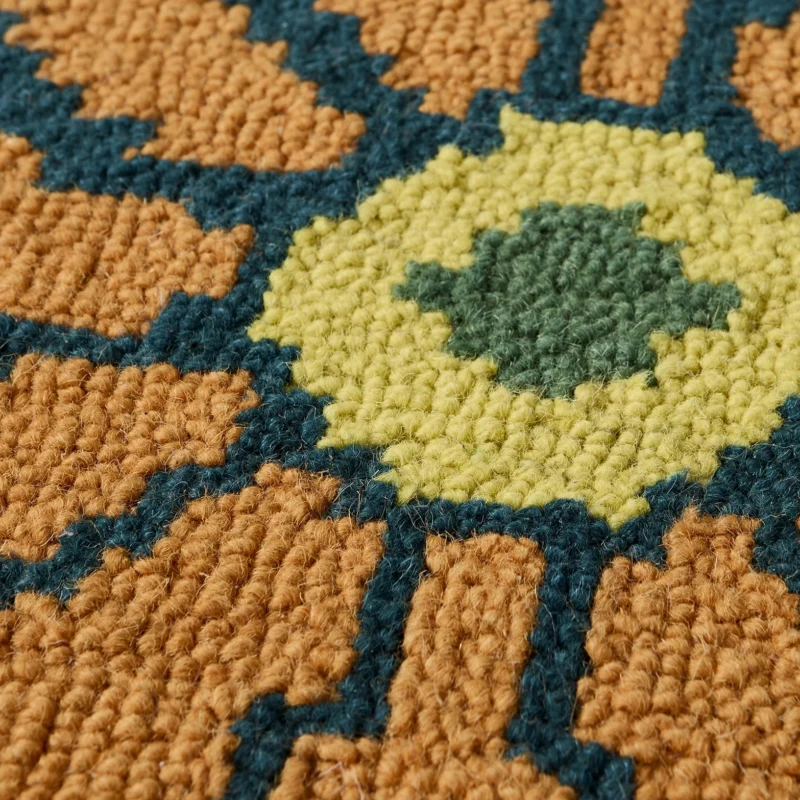
The handcrafted Kaleidoscope Floral rug demonstrates how pattern can define a room from the floor upward. Its radiating composition brings visual energy without relying on a conventional border or repeated motif. Positioned beneath a simple sofa or dining table, it has enough presence to become the foundation of the space.
Ilori’s work has long been associated with joy, but joy here is treated as more than a decorative mood. It becomes a design principle: the belief that color can affect behavior, that an object can alter the emotional temperature of a room, and that personal surroundings can encourage confidence and imagination.
“Good design can be for everyone. It can change what we see and dream,” he says. “It changes the way people live, the way they think and the way they see the world.”
That conviction is reinforced through the pricing. The collection begins with a cotton jacquard hand towel priced at £9, while larger furniture includes a king-size bouclé ottoman bed at £799. The breadth is deliberate. Rather than reserving expressive design for a small audience, the collaboration offers multiple points of entry, from a single lamp or cushion to an entire bedroom scheme.
Accessibility does not necessarily diminish ambition. In this case, it sharpens the collection’s purpose. The products are intended to be used, mixed, moved, and lived with, rather than preserved as untouchable design statements.
The campaign reflects the same philosophy. Dunelm employees appear in place of traditional models, bringing individuality and a sense of lived experience to the imagery. The choice avoids the polished anonymity common to many retail campaigns and reinforces the collection’s emphasis on real homes, real personalities, and the idea that design gains meaning through the people who inhabit it.
For Christine Standeisky, Dunelm’s Head of Furniture Design, the partnership offered a natural alignment between the retailer’s history and Ilori’s belief in storytelling through objects. The collection, she notes, draws on Leicester’s origins and Britain’s textile legacy while focusing on pieces designed to resonate with everyday life.
That balance is what gives the collaboration its distinction. It is colorful without being superficial, accessible without appearing generic, and culturally informed without becoming overly literal.
In a design landscape still dominated by pale neutrals and cautious minimalism, Ilori offers an alternative: a home shaped by memory, optimism, and expressive confidence. His collection suggests that joy need not be treated as an accent. It can be built into the furniture, laid across the floor, folded onto the bed, and allowed to become part of everyday life.
