

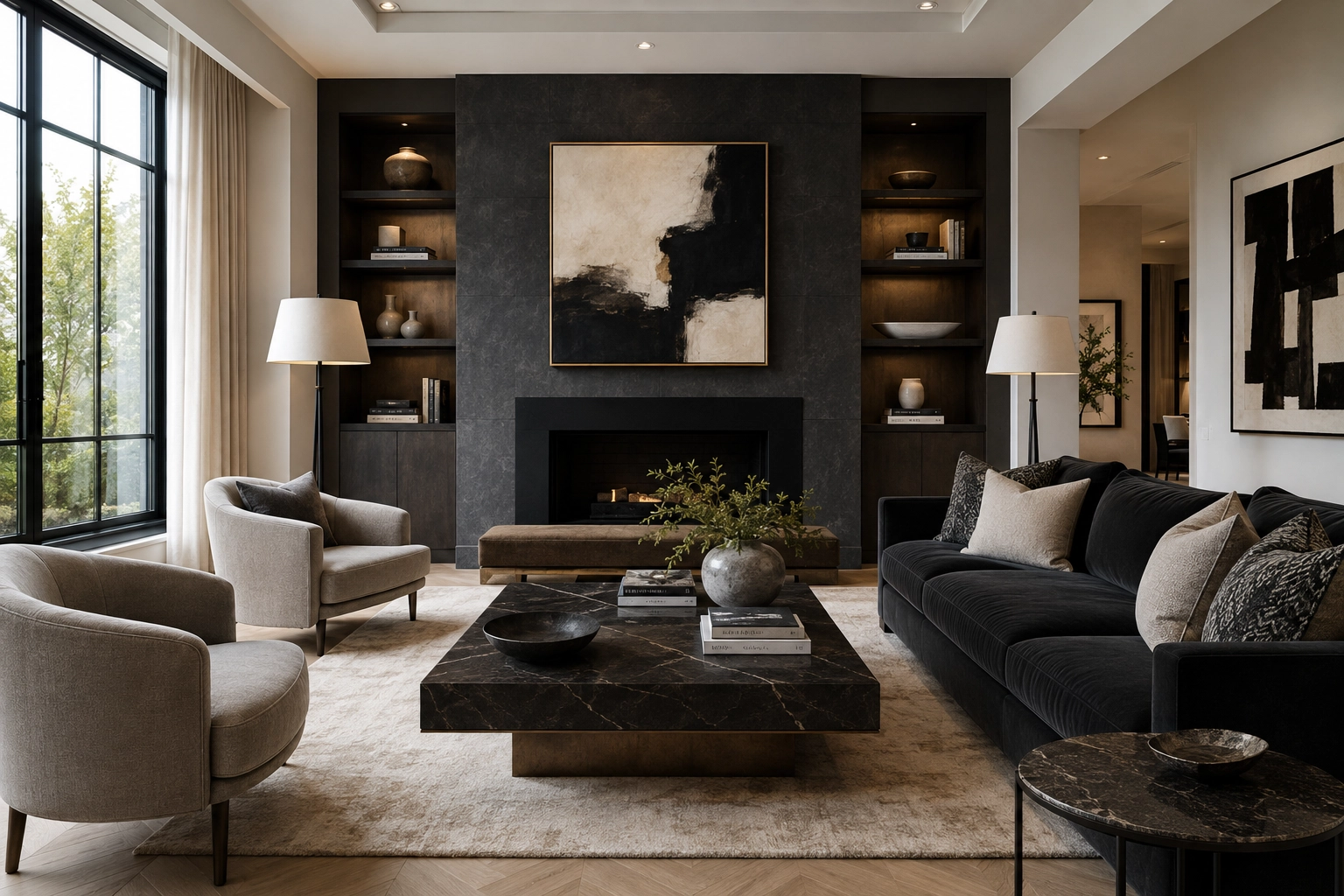
A truly elegant living room does not announce its intentions too loudly. It reveals itself gradually in the balance of its proportions, the quality of its materials, the placement of light, and the quiet confidence of furnishings chosen to last beyond a single season.
While trends can offer fresh inspiration, timeless rooms are rarely built around whatever is newest. Their appeal comes from restraint, craftsmanship, and a clear understanding of how the space will be lived in. The most successful examples feel polished without becoming precious, comfortable without appearing casual, and layered without slipping into excess.
Begin with the architecture of the room. Before selecting a sofa, rug, or paint color, consider the features that already give the space character. Ceiling height, window placement, moldings, fireplaces, flooring, and natural light should guide the design rather than compete with it.
In a room with strong architectural detailing, furnishings can remain relatively restrained. Where the shell is simpler, millwork, paneling, built-in shelving, or a carefully considered fireplace surround can introduce depth. Even modest additions, such as a substantial skirting board or a well-proportioned cornice, can make a living room feel more complete.
A timeless palette is often grounded in nuanced neutrals rather than stark white. Warm ivory, parchment, taupe, stone, soft gray, and muted mushroom create a versatile foundation that responds beautifully to changing daylight. These shades also allow artwork, upholstery, and natural materials to assume greater visual importance.
Neutral, however, should never mean flat. A room becomes interesting through subtle variations in tone and texture. Limewashed walls, wool upholstery, linen curtains, polished plaster, aged wood, brushed metal, and honed stone can coexist within a restrained palette while giving the interior a rich, tactile quality.
Color is equally welcome when used with intention. Deep olive, tobacco, navy, oxblood, muted terracotta, and mineral blue possess a permanence that more fleeting hues often lack. Introduced through an upholstered chair, a painted library wall, artwork, or textiles, these colors bring depth without overpowering the architecture.
The sofa is usually the largest and most influential piece in the room. Rather than choosing one solely for visual impact, look for elegant proportions, supportive construction, and a silhouette capable of adapting to different surroundings. A well-made sofa with a gently tailored form will age more gracefully than one defined by an exaggerated trend.
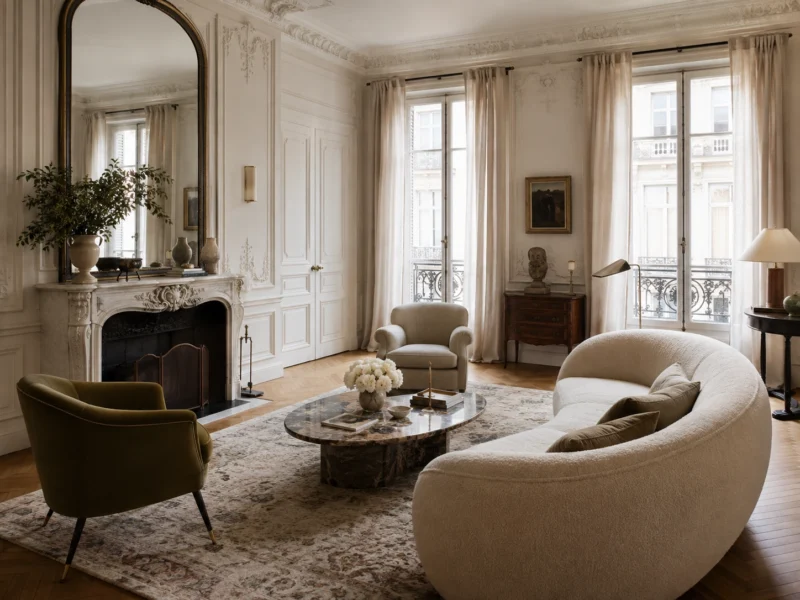
Comfort remains essential. A living room should invite people to sit, read, converse, and linger. Deep seating may suit a relaxed family home, while a more upright profile can work well in a formal reception room. In either case, upholstery should feel refined but durable enough to support daily life.
Avoid purchasing a complete matching furniture suite. Timeless interiors tend to feel collected rather than installed. Pairing a contemporary sofa with an antique side table, a sculptural armchair, or a vintage cabinet creates a more personal composition. The contrast between periods and materials gives the room a sense of history, even when the building itself is new.
The arrangement of furniture is just as important as the individual pieces. Seating should encourage conversation rather than merely face a television. Sofas and chairs can be drawn inward around a coffee table, fireplace, or central rug, creating a defined social zone within the larger room.
In spacious interiors, avoid pushing every piece against the walls. Floating furniture closer to the center makes the space feel more intimate and improves circulation around it. Smaller living rooms benefit from the same principle, although the scale of the furniture must be carefully controlled.
A rug helps establish the room’s proportions. Ideally, it should be large enough to sit beneath at least the front legs of the principal seating pieces. A rug that is too small can make even a generous room appear fragmented. Wool, silk blends, flatweaves, and vintage rugs introduce softness while anchoring the arrangement.
Window treatments should be considered as architecture rather than decoration. Full-length curtains mounted close to the ceiling can make windows appear taller and bring a sense of ceremony to the room. Linen, wool, velvet, and finely woven blends each create a different atmosphere, from relaxed and luminous to formal and enveloping.
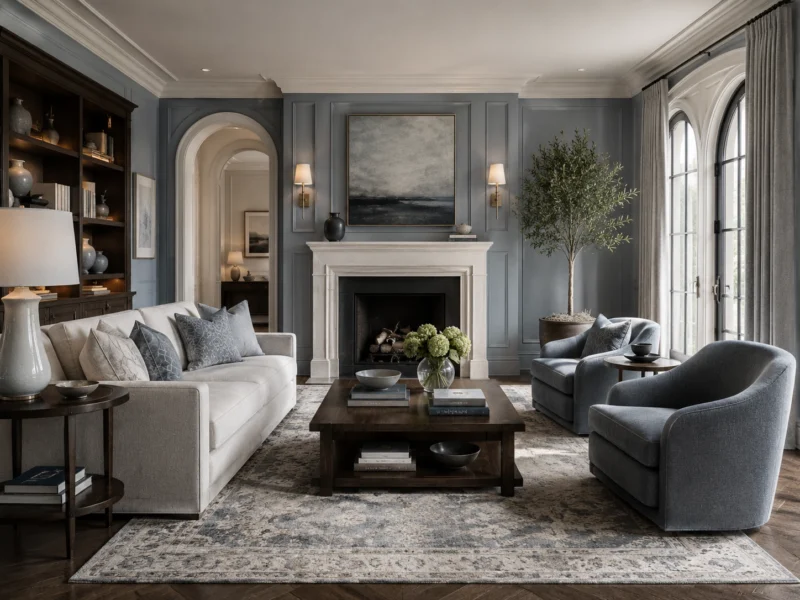
Layered treatments offer both beauty and practicality. Sheers filter daylight and preserve privacy, while lined curtains provide insulation and a more finished appearance. The fabric should fall generously, but not so heavily that it overwhelms the room.
Lighting is where many otherwise beautiful living rooms lose their sophistication. A single overhead fixture rarely provides enough variation. Instead, combine ambient, task, and accent lighting to create a room that changes character throughout the day.
A pendant or chandelier can establish a central gesture, but it should be supported by table lamps, floor lamps, picture lights, wall sconces, and discreet architectural lighting. Lamps placed at different heights create a softer, more flattering atmosphere than a uniformly bright ceiling.
Warm light is generally more inviting in a living room than cooler illumination. Dimmers are invaluable, allowing the room to shift from daytime clarity to evening intimacy. The fixtures themselves should be treated as part of the decorative composition, whether selected for sculptural form, craftsmanship, or subtle material contrast.
Artwork gives a living room its most personal layer. It need not match the upholstery or conform to a particular style. A contemporary canvas can bring energy to a traditional interior, while an antique landscape or portrait can add depth to a modern room.
The scale of the artwork matters. A single substantial piece often has greater impact than several undersized works scattered across a wall. Gallery arrangements can also be effective, particularly when united by consistent spacing or a thoughtful relationship between frames.
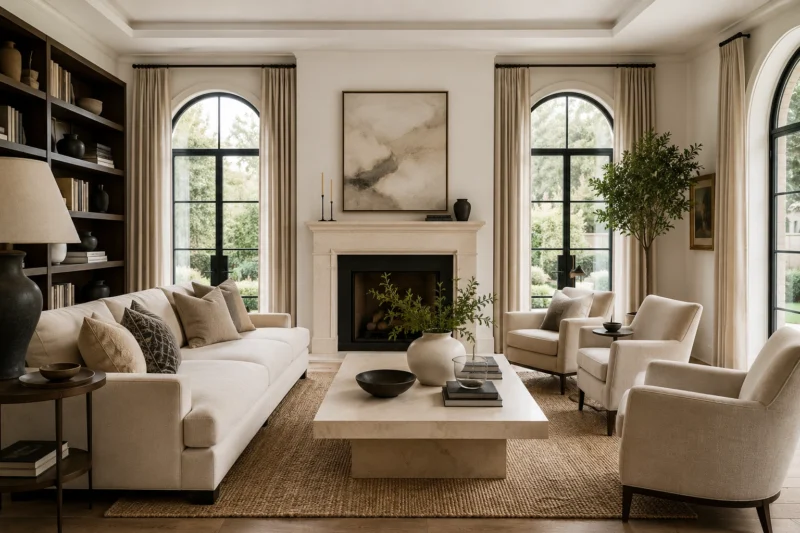
Books, objects, and collections should be edited rather than eliminated. Timeless rooms are rarely empty, but their contents feel considered. A ceramic vessel, a stack of art books, a sculptural bowl, or a found object can communicate far more than a shelf filled with generic accessories.
Built-in bookcases provide an opportunity to combine storage with display. Leave enough negative space for individual objects to register, and vary the height and orientation of books. The aim is to create rhythm rather than perfect symmetry.
Natural materials contribute greatly to a room’s longevity. Marble, limestone, solid wood, bronze, leather, wool, and linen develop character over time. Their imperfections are part of their appeal, allowing the room to age with dignity rather than require constant renewal.
Plants and flowers bring life to the composition. A tall indoor tree can soften a corner and balance substantial furniture, while seasonal branches or an architectural floral arrangement can introduce movement. Greenery should complement the room rather than turn it into a conservatory unless that is the intended effect.
Finally, resist the urge to complete everything at once. Elegant interiors often develop over time as art, furniture, and meaningful objects are added gradually. Leaving space for discovery prevents the room from feeling overly coordinated or impersonal.
Timeless design is not a rigid formula. It is an exercise in judgment: choosing fewer, better pieces; honoring the architecture; creating comfort; and allowing beauty to emerge through proportion, material, and light.
The result is a living room that feels relevant not because it follows the moment, but because it was never entirely governed by it.
