

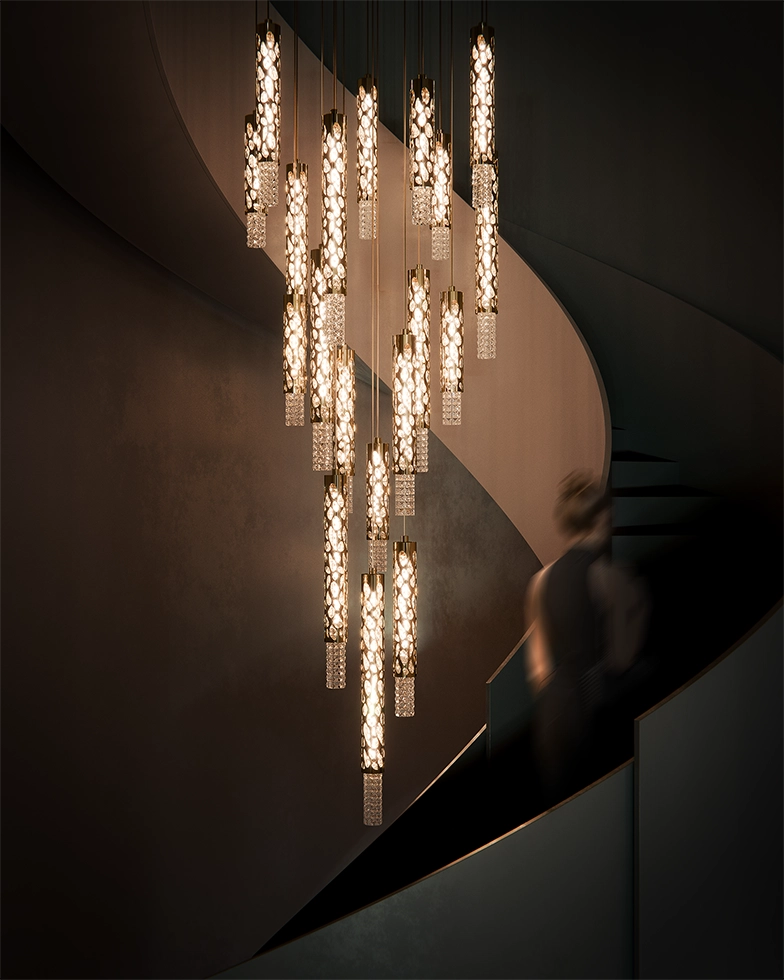
A chandelier once occupied the center of a room as a singular gesture. It was designed to command attention, define symmetry, and mark the place where architecture gave way to ornament. Castro Lighting’s new Allure suspension takes a different approach. Rather than relying on one dominant form, it builds presence through repetition.
The collection is composed of slender illuminated elements in handcrafted brass and crystal, each suspended at a different height. Together, they create a vertical composition that feels structured without becoming rigid. The effect is less like a conventional chandelier and more like an installation shaped by rhythm, spacing, and light.
That shift matters because contemporary interiors are increasingly defined by openness. Double-height living rooms, hotel lobbies, stairwells, dining spaces, and gallery-like corridors often require lighting that can occupy volume rather than simply hang within it. Allure responds by treating the space between each element as part of the design.
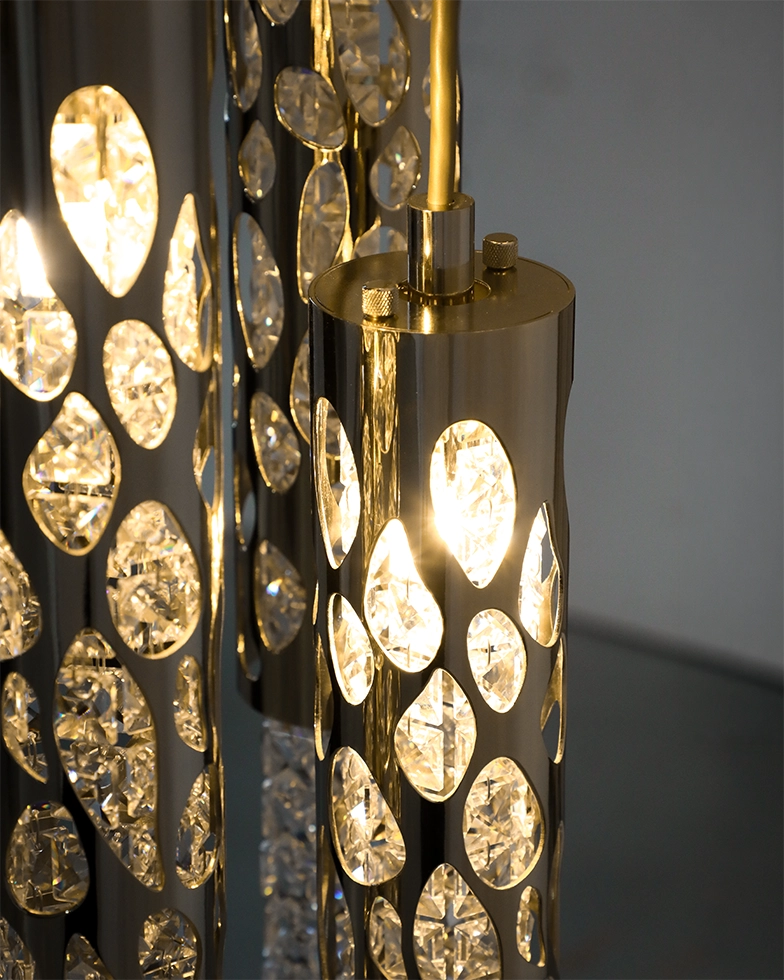
Its individual modules can be arranged in dense clusters or more expansive formations, allowing the installation to adapt to the scale and architecture of the room. In a residential setting, a smaller grouping might hover above a dining table or descend beside a staircase. In a hospitality interior, the same language can extend across a lobby or atrium, creating a stronger sense of movement.
This flexibility gives Allure much of its appeal. The collection maintains a recognizable identity while allowing architects and interior designers to adjust height, density, and composition. Each arrangement can respond to a different ceiling, circulation pattern, or focal point without losing the clarity of the original design.
Repetition is what holds the system together. Used without discipline, repeated forms can quickly become decorative noise. In Allure, the modules remain restrained enough to build visual rhythm without overwhelming the architecture. Their narrow proportions give the installation a lightness that contrasts with the richness of the materials.
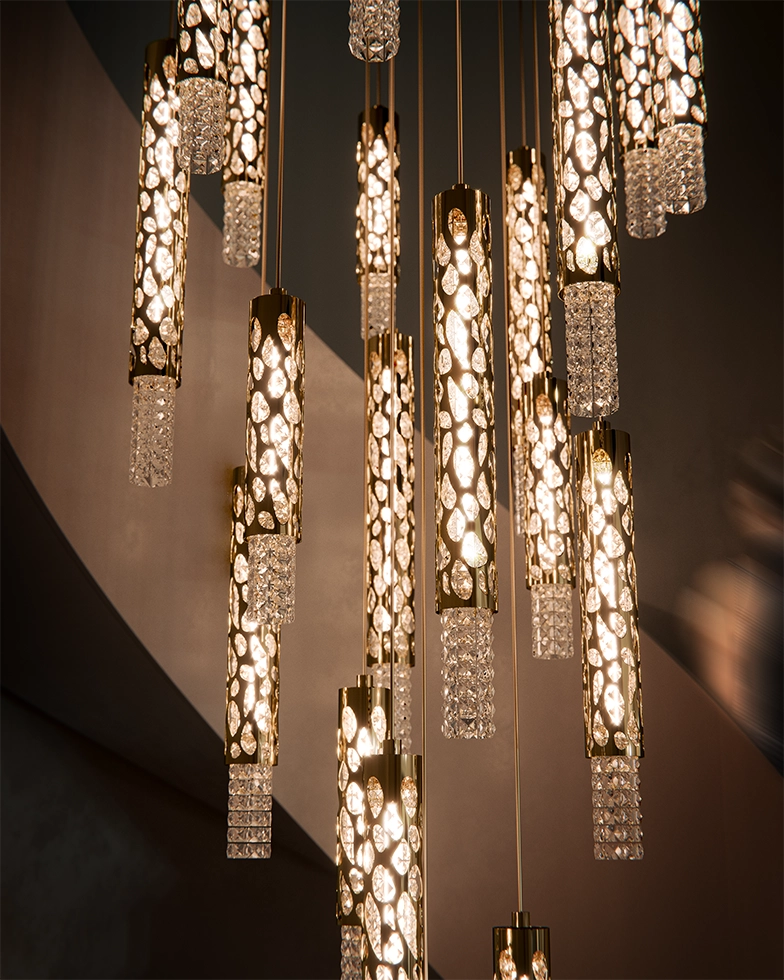
Brass provides warmth and structure. Crystal introduces reflection, depth, and a more elusive relationship with light. The two materials work in opposition: one grounded and metallic, the other transparent and luminous. That tension gives the composition greater complexity than its simple geometry might initially suggest.
The crystal does not merely embellish the fixture. It diffuses and refracts the light, softening the transition between the illuminated element and the surrounding room. As the modules are placed at varying heights, the light appears to move through the composition rather than radiate from a single source.
This creates a different kind of atmosphere. Instead of drawing the eye toward one central object, Allure encourages it to travel. The repeated forms establish a sequence, leading attention upward, downward, or across the space according to the arrangement.
In double-height rooms, that vertical emphasis can be especially powerful. A tall interior often risks feeling visually disconnected, with the ceiling floating above the activity below. Suspended lighting can bridge that distance, bringing the upper volume into the composition and giving the architecture a stronger sense of proportion.
The same principle works on a more intimate scale. Over a long dining table, repeated modules can create continuity without the heaviness of a single broad fixture. In a stairwell, they can follow the movement of the architecture. In a reception area, they can define a zone without the need for walls or screens.
Allure’s ability to adapt makes it relevant across residential, hospitality, and commercial interiors, but the collection is not conceived as a purely technical system. Its visual identity depends on the hand-finishing of each brass component, produced in Castro Lighting’s workshops in Portugal.
That craftsmanship adds subtle variation to an otherwise precise design. Brass has a natural depth that changes according to the light, revealing warmer and darker tones throughout the day. When used repeatedly, those shifts prevent the composition from feeling mechanical.
Portuguese metalworking traditions have long favored material richness and decorative skill, yet Allure applies that heritage with considerable restraint. The collection does not rely on intricate ornament or overt historical references. Its sense of luxury comes instead from proportion, finish, and the disciplined use of enduring materials.
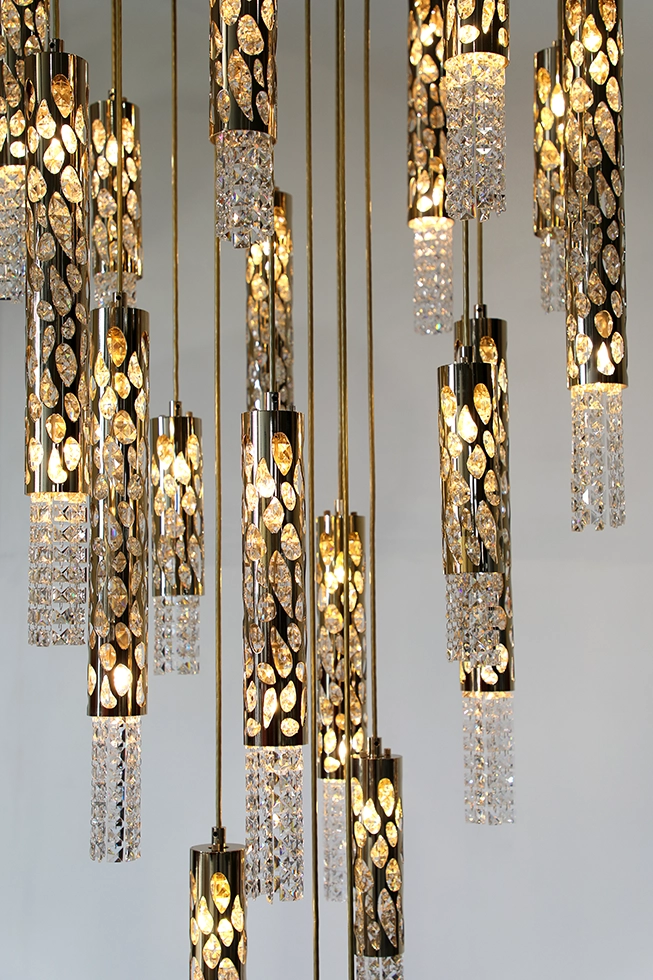
This makes it particularly suited to contemporary interiors where decorative elements must coexist with clean architecture. In a minimal room, the brass and crystal bring warmth without interrupting the larger design. In a more layered setting, the suspension can contribute texture while preserving visual clarity.
The collection also reflects a broader change in the role of lighting. Increasingly, designers are not treating fixtures as accessories added after the room is complete. Lighting is being considered earlier, as part of the architecture itself.
A well-composed suspension can define circulation, establish intimacy, emphasize height, and change how the boundaries of a room are perceived. It can perform the work of sculpture while remaining essential to the function of the space.
Castro Lighting has worked within this territory since 1978, producing handcrafted lighting, furniture, and bespoke interior pieces for projects around the world. Allure continues that approach while offering a more modular and spatially responsive expression of the brand’s design language.
Its success lies in the balance between consistency and variation. The modules repeat, but the composition never feels static. Their alignment can be orderly or loose, dense or expansive, symmetrical or deliberately irregular.
That freedom allows the installation to take on the character of the space around it. Allure does not impose a single visual solution. It provides a vocabulary of form, material, and light from which many different arrangements can emerge.
In doing so, Castro Lighting has created more than a suspended fixture. Allure demonstrates how repetition, when handled with precision, can become a source of movement, atmosphere, and architectural presence.
