

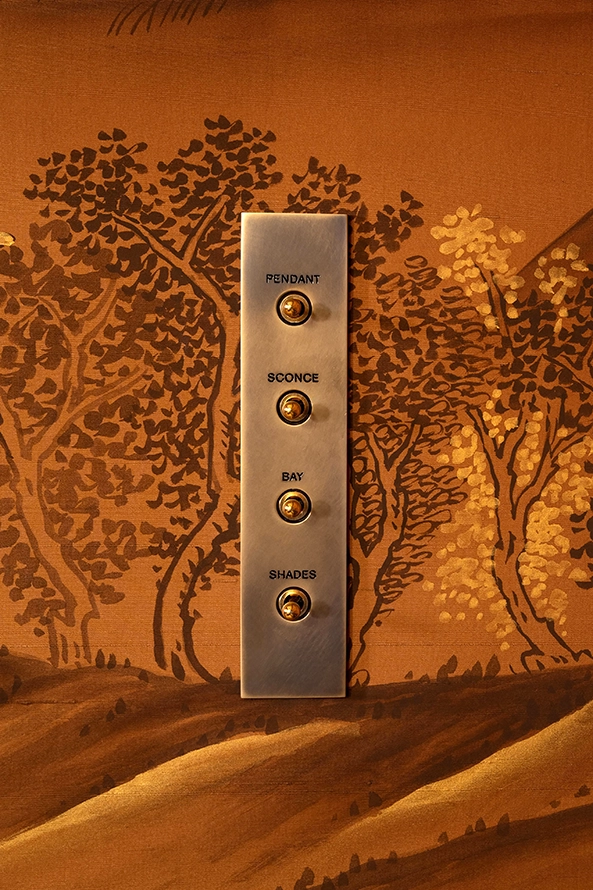
The most refined interiors are often distinguished by the details that are easiest to overlook. A switch plate, socket, thermostat casing, or control panel may occupy only a few inches of wall, yet its material, proportion, and finish can quietly influence the character of an entire room.
Meljac’s new Antique Brass NA finish is built around that idea. Developed for the French manufacturer’s solid-brass electrical fittings, the surface is treated by hand in the company’s workshop outside Paris, producing a warm, aged appearance with subtle variations in tone. Matte areas sit alongside brighter highlights, creating depth without polish and richness without ornament.
The result is less about decorative effect than authenticity. Rather than imitating the appearance of aged metal, the finish reveals the natural qualities of brass itself. Each plate carries slight variations created through the manual treatment process, giving the material a sense of individuality that would be difficult to achieve through uniform industrial coating.
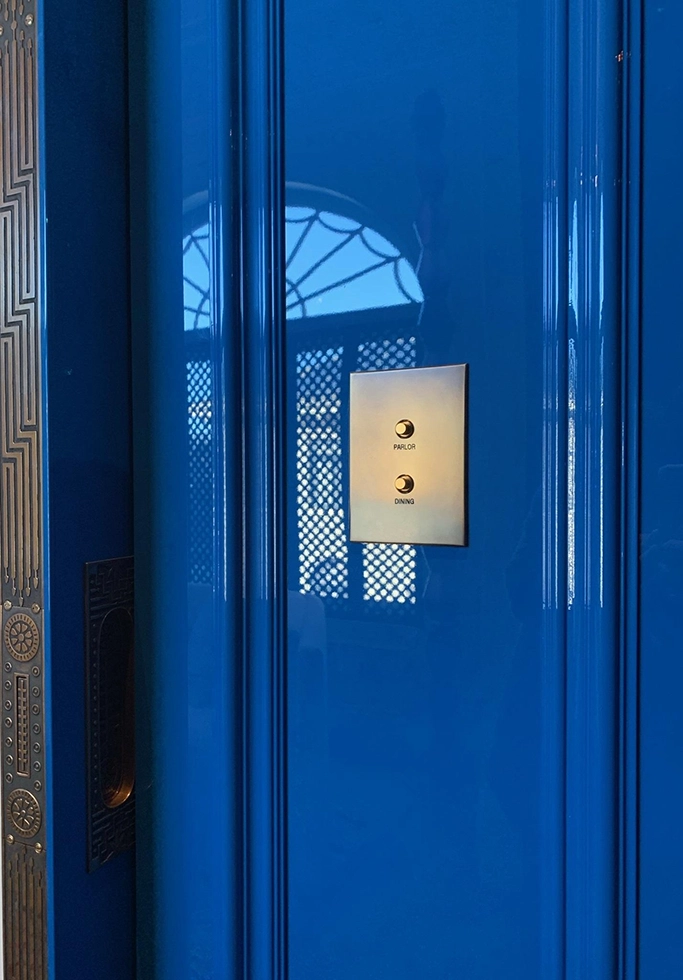
That distinction matters in contemporary interiors, where perfection has gradually given way to a more tactile understanding of luxury. Designers are increasingly drawn to materials that show variation, texture, and evidence of the hand. Honed stone, unlacquered brass, limewash, natural timber, and hand-finished metal all share a quality that highly polished surfaces often lack: they deepen with time.
Antique Brass NA enters this conversation at a particularly useful scale. It allows one of the room’s smallest architectural components to participate in the wider material palette. Against dark wood, the finish feels warm and grounded. Paired with marble or limestone, it introduces a softer metallic counterpoint. In a minimalist room, it can provide just enough contrast to keep the architecture from feeling overly austere.
The finish is available across several of Meljac’s collections, including Classique, Ellipse, Damier, and Solaris, allowing it to move between different design languages. Its adaptability is part of its appeal. In a traditional interior, the patina feels familiar and established. In a contemporary one, the same surface can introduce tension between old-world craft and modern control systems.
That contrast is especially relevant as technology becomes increasingly integrated into residential design. Home automation panels, thermostats, and lighting controls are essential to the way a modern home functions, yet they are often treated visually as interruptions. Meljac’s approach is to give those systems a more architectural presence.
The company’s brass casings can be customized with engravings and screen printing, allowing practical controls to be resolved with the same care as cabinetry hardware, plumbing fittings, or decorative metalwork. Instead of disappearing into the wall, they become part of the room’s composition.
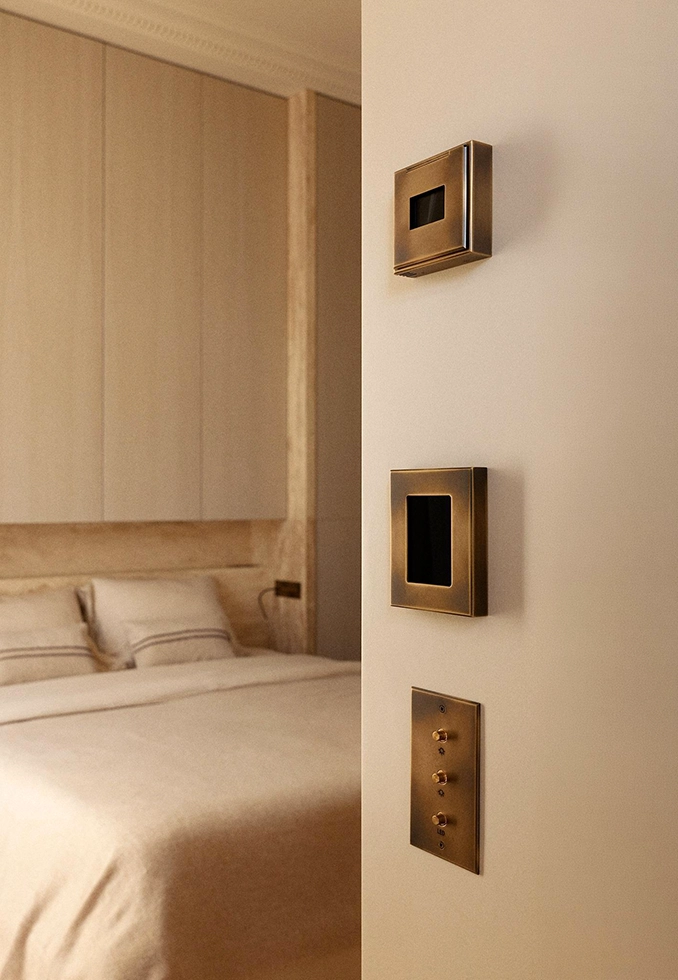
This is where Antique Brass NA feels most contemporary. The finish does not reject technology or attempt to disguise it. It gives technology a material language that feels more considered, tactile, and permanent.
Meljac has spent decades developing that relationship between function and craftsmanship. Founded in 1995 by André Bousquet, the company produces switches, sockets, reading lights, and custom control casings using materials selected for both durability and visual character. Its products are manufactured in France and carry the Origine France Garantie certification, while the company itself holds the Entreprise du Patrimoine Vivant distinction, awarded to French firms recognized for exceptional artisanal and industrial expertise.
Those credentials place Meljac within a tradition of French decorative craftsmanship, but the brand’s work is not confined to historical interiors. Its fittings appear in contemporary residences, luxury hotels, fashion boutiques, and major cultural landmarks, including the Palace of Versailles, the Louvre Museum, and Notre-Dame de Paris.
The breadth of those settings is revealing. A well-designed switch is not limited to one style of architecture. Its success depends on proportion, material, and the way it responds to the surrounding room.
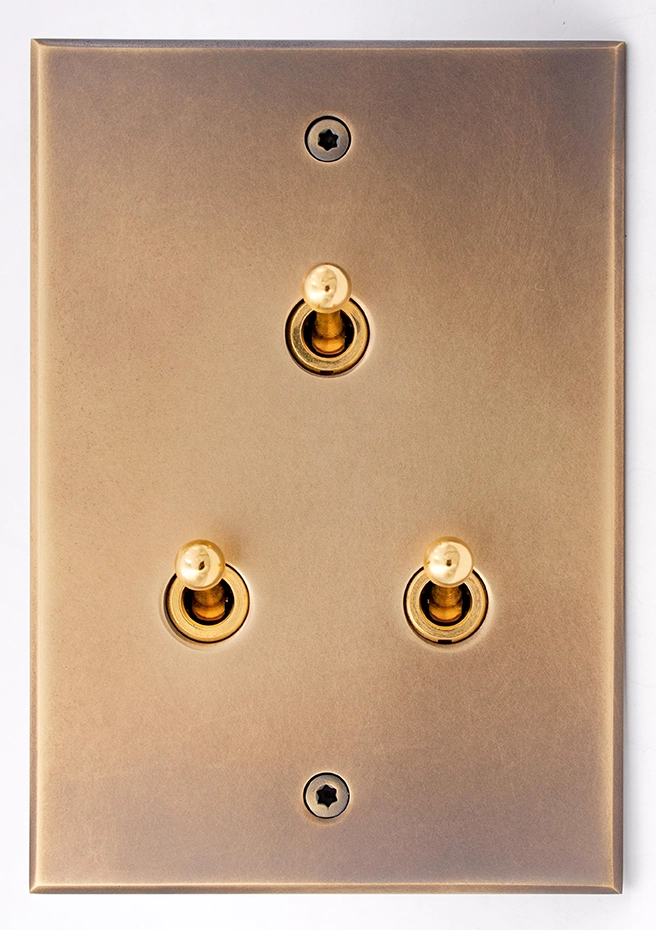
Antique Brass NA achieves that through restraint. The surface is neither heavily distressed nor aggressively polished. Its variations remain controlled, allowing the brass to feel aged without appearing theatrical. The finish brings warmth and complexity, but it does not compete with the wall, stone, timber, or furniture around it.
That balance reflects a wider shift in luxury interiors. The most persuasive rooms are no longer defined by abundance alone. They are shaped by consistency, by the decision to carry the same level of consideration from the largest architectural gesture to the smallest point of contact.
A switch is touched every day. A socket remains visible long after the furniture changes. A thermostat panel may sit at eye level in a carefully composed hallway. These objects are functional, but they are also part of the visual rhythm of the home.
By treating them as such, Meljac elevates a category too often left unresolved.
Antique Brass NA does not transform the room through scale or spectacle. Its influence is quieter. It brings depth to the wall, warmth to the material palette, and a subtle sense that even the most practical element has been deliberately chosen.
In the modern interior, that may be the most convincing expression of luxury: not a grand gesture, but the absence of an overlooked detail.
