

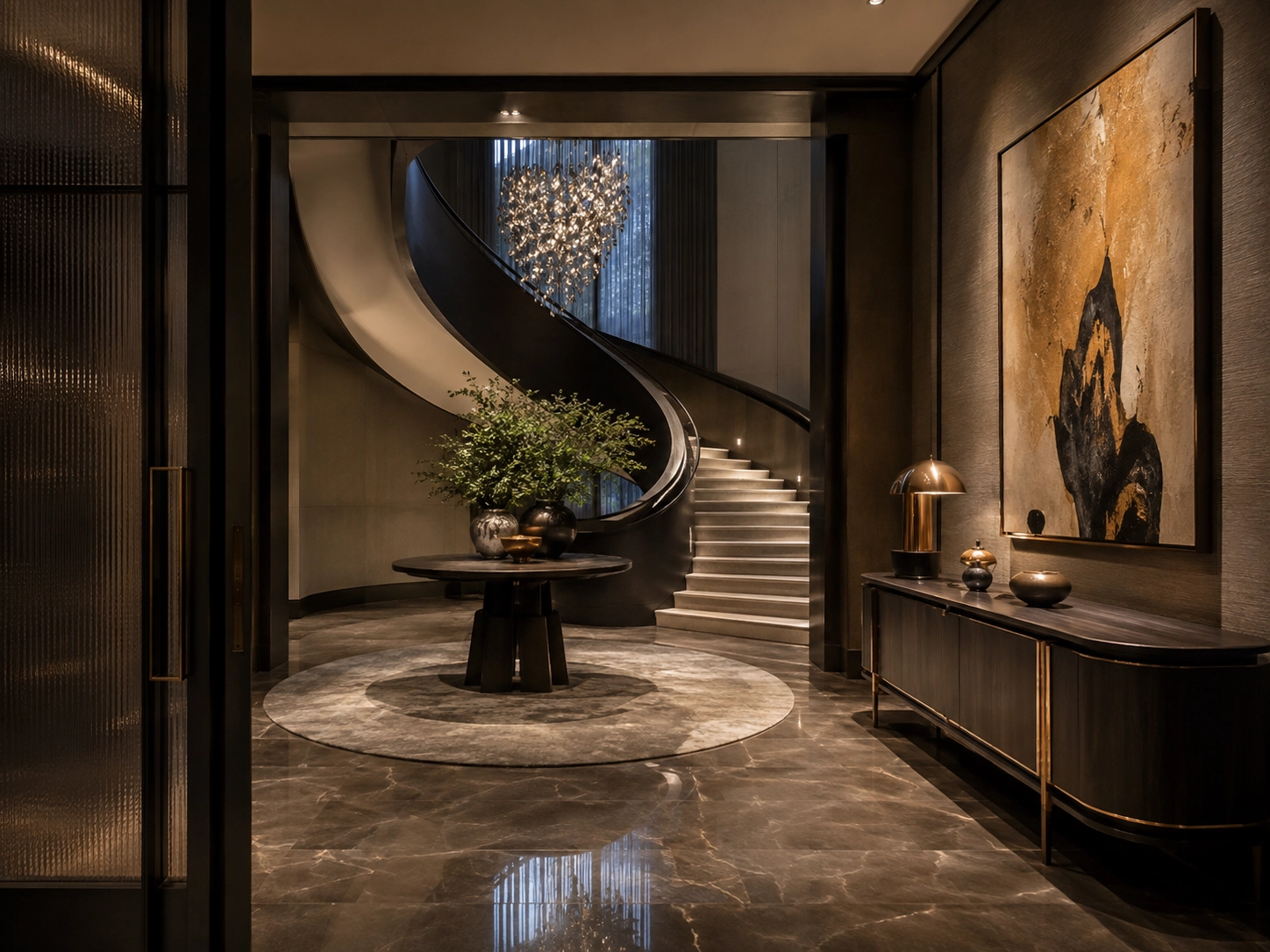
A foyer is more than a passage between the front door and the rest of the home. It is the first architectural gesture a guest encounters, the space that introduces the interior’s mood, and often the moment that determines whether a residence feels thoughtfully composed or merely decorated.
The most memorable entrances do not rely on excess. Their impact comes from proportion, materiality, light, and a clear point of view. A sculptural console, a beautifully veined stone floor, an oversized work of art, or a pendant suspended at precisely the right height can establish character before a single living space comes into view.
Successful foyer design begins with understanding the architecture. In a grand entrance hall, generous volume invites larger gestures: a sweeping staircase, a substantial chandelier, an antique chest, or a pair of sculptural chairs. A smaller foyer requires greater discipline, but it need not feel less luxurious. A narrow console, a carefully scaled mirror, and a refined lighting scheme can give even a compact entry a sense of occasion.
The goal is not to fill the space, but to create a composition that feels complete.
Flooring often provides the foyer’s strongest visual foundation. Because the entrance must withstand frequent use, durability matters as much as appearance. Natural stone, porcelain, terrazzo, patterned tile, and wide-plank timber can all create an elegant first impression when selected in harmony with the rest of the home.
Marble remains a classic choice, particularly in residences where the entry is intended to feel formal. Bold veining can turn the floor into a decorative feature, while honed finishes create a quieter, more contemporary effect. Checkerboard stone introduces graphic character, and geometric tile can lend rhythm to a smaller space without overwhelming it.
Where timber is used, a large rug can define the entrance while softening acoustics and adding warmth. The rug should feel intentional in scale. A piece that is too small can appear incidental, while one that extends comfortably beneath the principal furniture creates a more grounded arrangement.
Lighting is equally important. A foyer should feel welcoming during the day and atmospheric after dark. Relying on a single ceiling fixture rarely produces the most flattering result. Layering overhead lighting with sconces, lamps, or concealed illumination creates depth and allows the space to shift in mood.
In a double-height foyer, a large pendant or chandelier can help bring the volume down to a more human scale. The fixture should relate to the architecture rather than compete with it. Sculptural glass, finely worked metal, alabaster, plaster, and woven materials each create a distinctly different impression.
Smaller entrances can benefit from a flush mount, a pair of wall lights, or a table lamp placed on a console. Warm, diffused illumination is generally more inviting than stark overhead light. Dimmer controls allow the foyer to feel bright and practical when necessary, then softer and more cinematic in the evening.
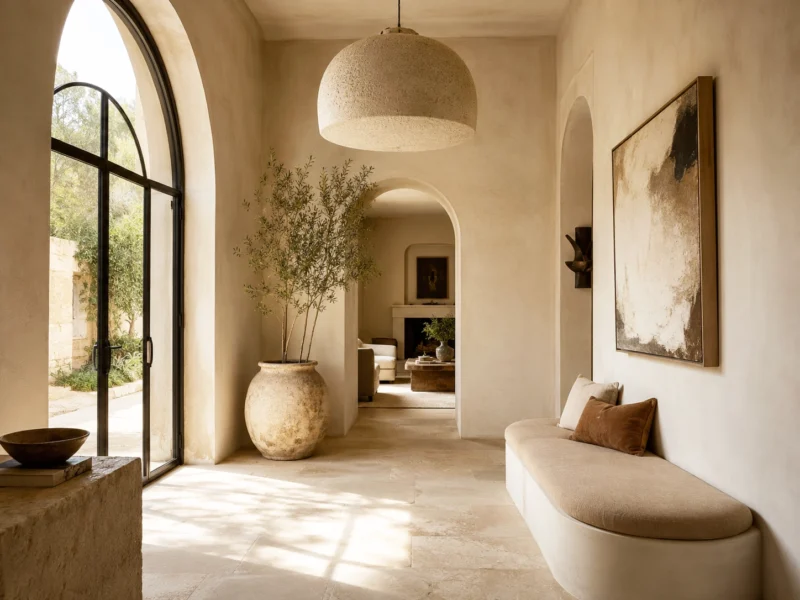
The console table is often the foyer’s central piece of furniture. It provides a surface for flowers, books, decorative objects, and a lamp, while visually anchoring the wall. Its form should reflect both the architecture and the available circulation space.
A carved antique console can bring depth to a contemporary interior, while a monolithic stone design lends weight and permanence. Slender metal frames work particularly well in narrow halls, and custom millwork can provide concealed storage without compromising the composition.
Scale is critical. A console that is too delicate may disappear against a large wall, while an oversized piece can obstruct movement. Allow sufficient room for doors to open, guests to pass comfortably, and the eye to travel into adjoining spaces.
Above the console, art or a mirror creates a natural focal point. Mirrors are especially effective in compact or dim foyers because they reflect light and expand the perceived space. Rather than selecting a mirror solely for function, consider its frame as part of the room’s material palette. A bronze, lacquered, timber, or plaster frame can introduce texture and character.
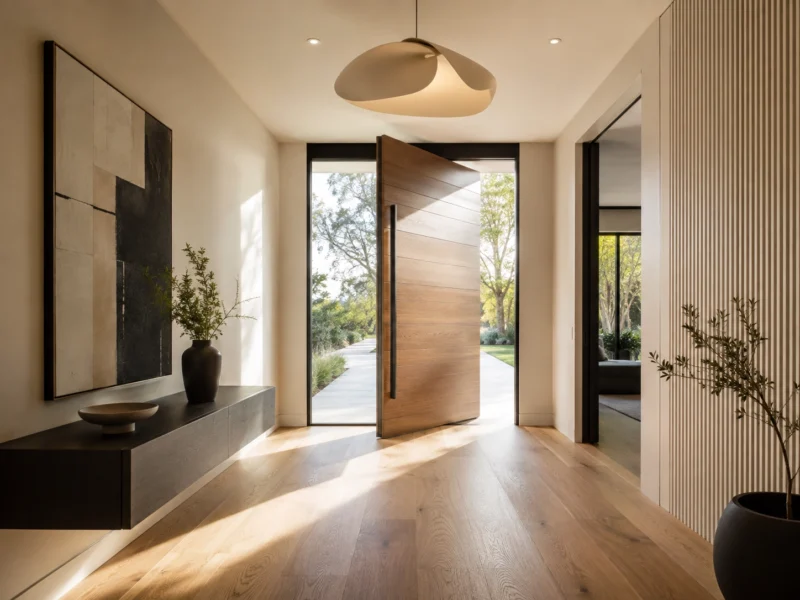
Artwork offers a more personal alternative. One large work often has greater impact than several smaller pieces, particularly in a formal entrance. The art should feel connected to the furniture beneath it, not suspended too high or lost on the wall. In a more eclectic home, a salon-style arrangement can create interest, provided the spacing and proportions remain controlled.
A foyer may also need to perform practical functions. Storage for shoes, coats, bags, and keys should be incorporated discreetly, particularly in a family home. Built-in cabinetry, upholstered benches, wall hooks, and decorative baskets can keep daily necessities organized while preserving a polished appearance.
In smaller entrances, a bench with concealed storage can be especially useful. A wall-mounted shelf or shallow cabinet may provide enough space for essentials without crowding the room. Practicality should feel integrated into the design rather than added as an afterthought.
Color can define the foyer as a destination in its own right. While many homeowners default to pale neutrals, an entrance can support richer, more dramatic shades. Deep green, oxblood, navy, charcoal, and warm ochre create intimacy and make artwork, metalwork, and lighting feel especially vivid.
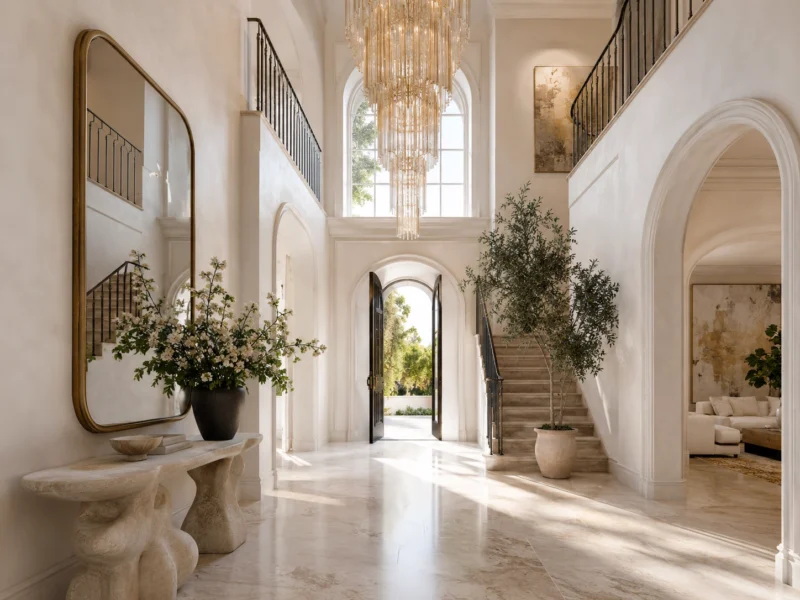
Wallpaper is another powerful option. A panoramic mural, hand-painted pattern, grasscloth, or graphic print can transform a transitional area into one of the home’s most memorable rooms. Because a foyer is experienced in shorter intervals than a living room or bedroom, it can often accommodate a stronger decorative statement.
Architectural details should not be overlooked. Wall paneling, fluted plaster, moldings, arched openings, decorative screens, and ceiling treatments can give the foyer substance even before furniture is introduced. In contemporary homes, shadow gaps, integrated lighting, and sculptural wall finishes can achieve a similarly refined effect.
When a staircase is visible from the entrance, it becomes part of the foyer’s composition. The balustrade, treads, handrail, and lighting should be considered alongside the flooring and furniture. A beautifully designed staircase can provide all the drama the space requires, allowing the remaining elements to remain restrained.
Flowers, branches, ceramics, and collected objects complete the room. A tall arrangement can emphasize ceiling height, while a low bowl or sculptural vessel creates a quieter gesture. These details should appear edited rather than abundant. The entrance should offer a glimpse of the home’s personality, not reveal everything at once.
The finest foyers create a sense of anticipation. They welcome, orient, and subtly prepare visitors for what lies beyond. When architecture, light, furniture, and art are brought together with confidence, the foyer becomes far more than an arrival point. It becomes the opening chapter of the home.
