

Olivia Palermo has built her reputation on an instinct for composition. Her style has never depended solely on a memorable dress, an important handbag, or a perfectly tailored coat. Its distinction lies in the balance between them: classical and contemporary, polished and relaxed, familiar and unexpected.
That same sensibility has now entered the home through a new partnership with Perigold, the luxury furnishings platform owned by Wayfair. The collaboration is Perigold’s first major brand partnership and centers on the interiors of Palermo’s new Manhattan apartment, which she furnished through the retailer’s online platform with support from its Design Services team.
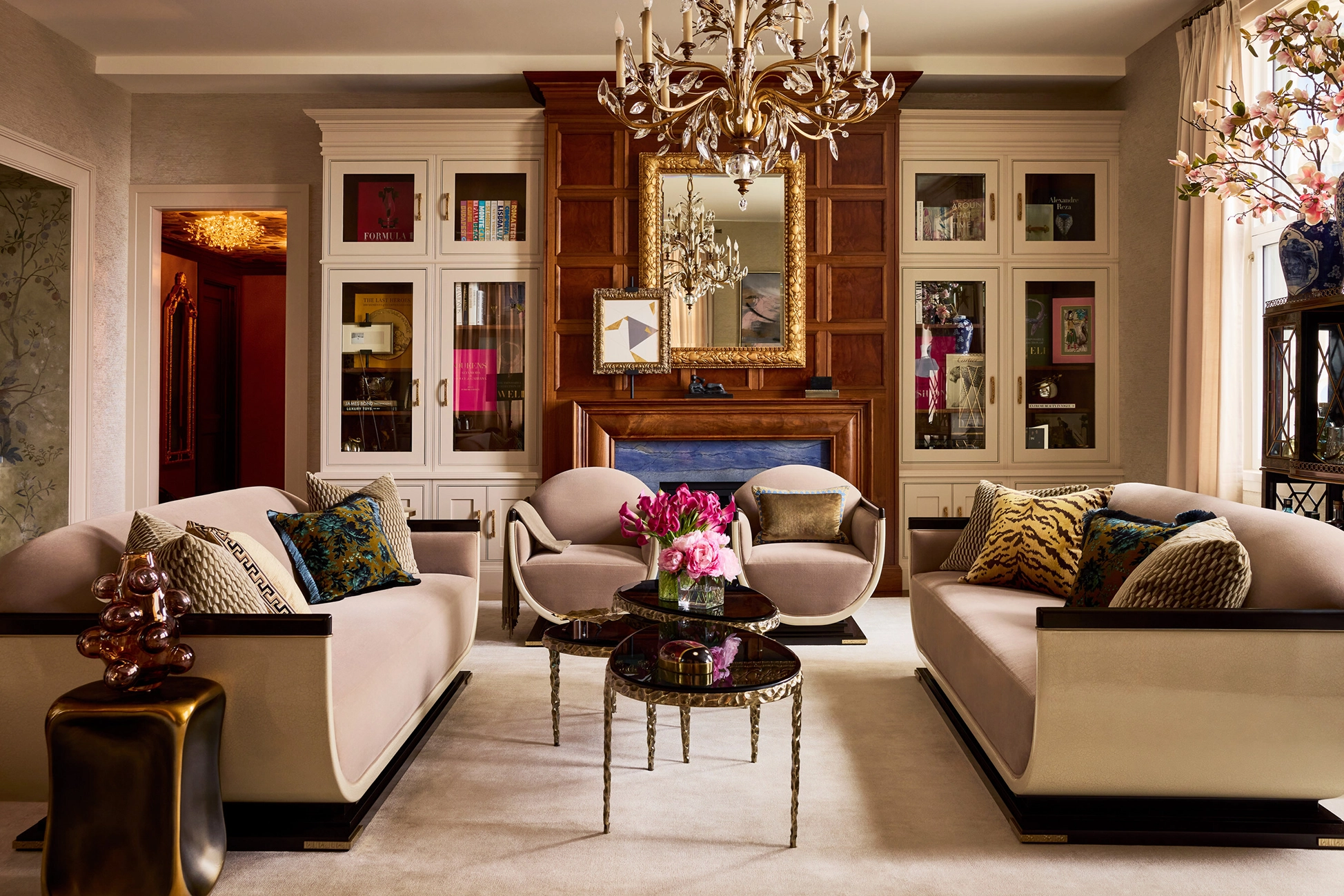
The project translates Palermo’s fashion vocabulary into a residential setting without making the rooms feel like an extension of a wardrobe campaign. Classic forms sit beside cleaner modern lines, while richly textured surfaces are balanced by a restrained palette of taupe, green, gray, and cream. The effect is cultivated but not overly coordinated, with enough contrast to prevent the apartment from feeling staged.
Palermo approached the project as an exercise in curation. Perigold’s platform currently brings together more than 460,000 products from over 1,000 design brands, giving her access to a broad mix of furniture, lighting, textiles, wallcoverings, and decorative objects. The challenge was not finding enough options, but editing them into a coherent home.
That editing is most apparent in the living room. Palermo and Perigold Design Services specialist Elisabeth Gunshenan divided the open space into distinct areas for dining, entertaining, and relaxing rather than treating it as one uninterrupted room. A generous sectional establishes an informal place to gather, while a Louis XVI-inspired armchair introduces a more traditional note.
The room’s appeal comes from this tension between periods. A curved velvet sofa can coexist with crystal lighting, glossy surfaces, sculptural furniture, and pieces informed by European decorative traditions. Nothing is required to match precisely. Instead, shape, finish, proportion, and tone carry the composition.
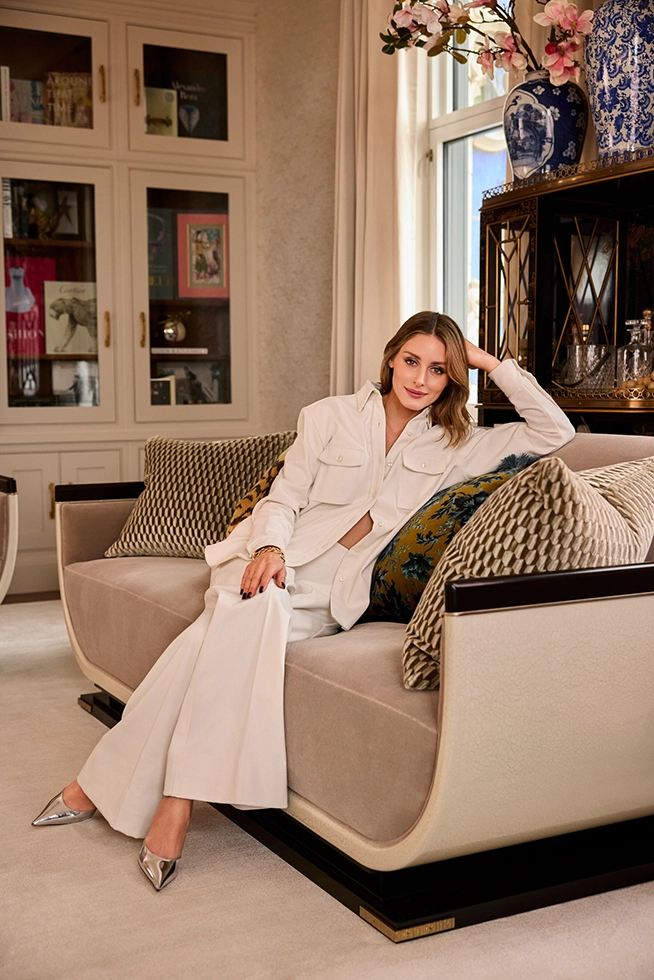
Palermo describes her approach to interiors as closely related to the way she approaches fashion: balancing timeless pieces with modern accents and “a little bit of drama.” That drama appears in carefully controlled moments rather than decorative excess.
In the living areas, crystal lighting adds shimmer and vertical emphasis. A chinoiserie bar cabinet introduces the character of a collected object rather than an anonymous storage piece. In the kitchen and wet bar, patterned wallcovering creates continuity between adjoining spaces. The entryway uses glossy black molding, gilded wood, and strongly veined marble to establish a more ceremonial arrival.
The private rooms adopt a calmer register. The bedroom combines layered bedding, crystal lighting, sculptural seating, and tailored details to create an atmosphere closer to a considered hotel suite than a conventional city bedroom. Palermo’s concise neutral palette allows differing textiles and motifs to coexist without visual clutter.
Among the brands represented throughout the apartment are Caracole, Maitland-Smith, Eichholtz, Theodore Alexander, Eastern Accents, Schonbek, Fine Art Handcrafted Lighting, and The House of Scalamandré. The selection moves comfortably between traditional silhouettes and more streamlined contemporary pieces, underscoring Palermo’s preference for interiors that resist a single decorative period.
For Perigold, the apartment functions as more than a celebrity residence. It demonstrates how a vast digital marketplace can be transformed into a personal interior through design guidance and disciplined selection. The company positions its service around access to established design brands, concierge support, quality guarantees, and white-glove delivery, presenting convenience as part of the modern luxury experience.
This is an important distinction. Shopping for furniture online may offer breadth, but luxury interiors still depend on understanding scale, finish, placement, and how objects relate once they occupy the same room. Palermo’s apartment argues that digital access becomes most persuasive when paired with a strong curatorial point of view.
The partnership will continue through a series of shoppable digital and social content, allowing viewers to explore the apartment and purchase Palermo’s selected furnishings through Perigold. Yet the project succeeds because it feels less like a catalogue than a portrait of how she wants to live.
Palermo has not simply moved from fashion into furniture. She has brought the discipline behind her personal style into a more intimate setting. The apartment is polished without feeling untouchable, glamorous without theatrical excess, and layered without losing clarity.
Its defining lesson is one Palermo has long understood: memorable style is rarely created by a single object. It comes from the relationships between them.
