

The most compelling architectural journeys rarely begin with a checklist of famous landmarks. They begin with a city whose streets reveal an idea: a radical plan for modern living, an ancient urban fabric preserved across centuries, or a civic experiment in which architecture became an expression of cultural ambition.
In 2026, design-minded travelers are looking beyond the familiar capitals. The new architectural itinerary favors places where buildings, landscapes, craftsmanship, and public life remain inseparable. Some destinations are monuments to modernism; others offer layered conversations between vernacular traditions and contemporary design. Each rewards slow exploration—and the willingness to look beyond the façade.
Brasília, Brazil
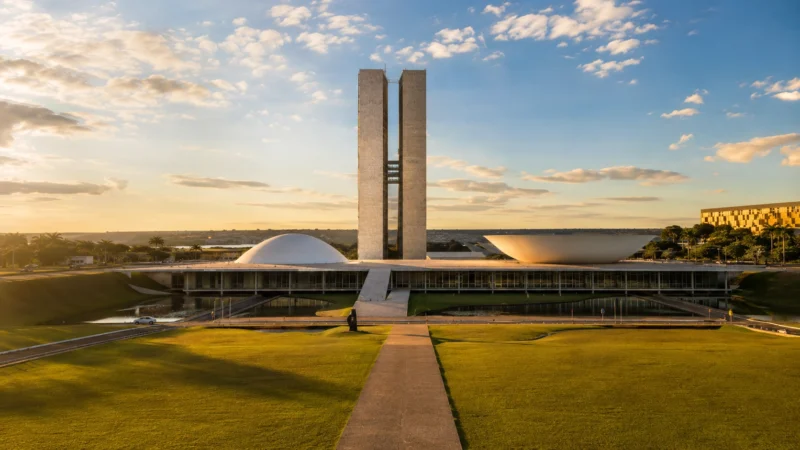
Few cities make their ambitions visible on such a monumental scale. Conceived in the late 1950s by urban planner Lúcio Costa and architect Oscar Niemeyer, Brasília transformed an undeveloped plateau into a national capital defined by sweeping axes, ceremonial plazas, sculptural concrete, and carefully ordered residential superblocks.
The essential journey follows the Monumental Axis toward the National Congress, the Cathedral of Brasília, and Praça dos Três Poderes. Yet the city is most revealing beyond its official buildings, where Costa’s superquadras demonstrate an idealistic vision of communal urban life surrounded by gardens and open space. Brasília is not simply a collection of Niemeyer masterpieces; it is one of the 20th century’s most complete attempts to build modernism at the scale of an entire city.
Chandigarh, India
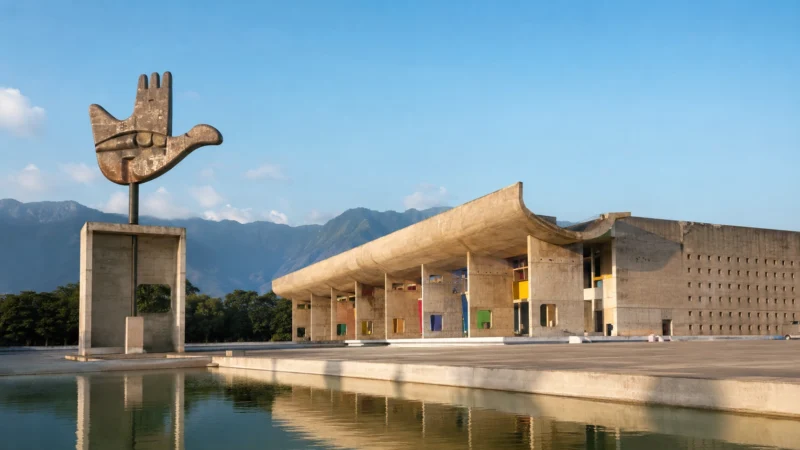
Chandigarh remains one of the great experiments in postwar planning. Developed as the new capital of Punjab after Indian independence, the city combined Le Corbusier’s monumental architectural language with the work of Pierre Jeanneret, Jane Drew, Maxwell Fry, and a generation of Indian architects.
Its most commanding ensemble is the Capitol Complex, where the Palace of Assembly, Secretariat, High Court, and monumental Open Hand symbol come together against the foothills of the Himalayas. But Chandigarh’s quieter intelligence lies in its network of sectors, shaded streets, housing, gardens, and civic institutions. The city offers a rare opportunity to experience modernist architecture not as an isolated object, but as a framework intended to shape everyday life.
Ljubljana, Slovenia
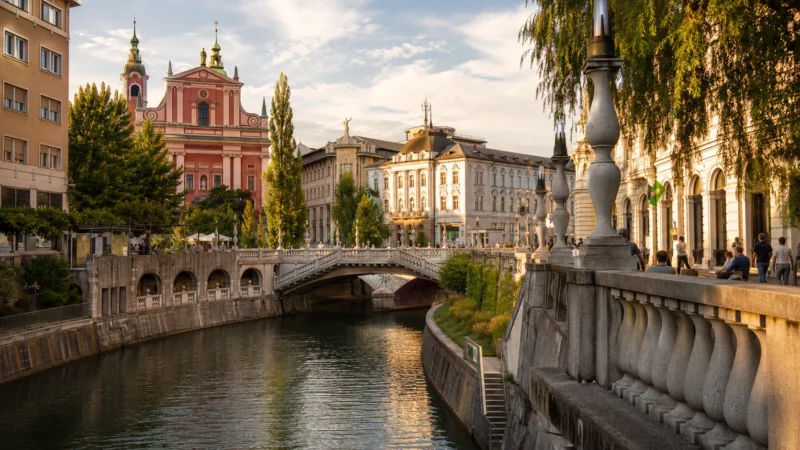
Jože Plečnik did not simply design buildings in Ljubljana; he composed the city as a continuous architectural experience. Bridges, markets, libraries, embankments, parks, and public squares were treated as parts of a single human-centered vision.
The Triple Bridge and riverside market provide the most recognizable introduction, but the National and University Library reveals Plečnik at his most powerful. Its severe brick exterior gives way to a ceremonial interior progression from darkness toward light. Elsewhere, the Cobblers’ Bridge, Žale Cemetery, and landscaped riverbanks demonstrate how classical references could be reinterpreted with wit, intimacy, and an unmistakably personal vocabulary. His interventions are now recognized as a defining example of human-centered urban design.
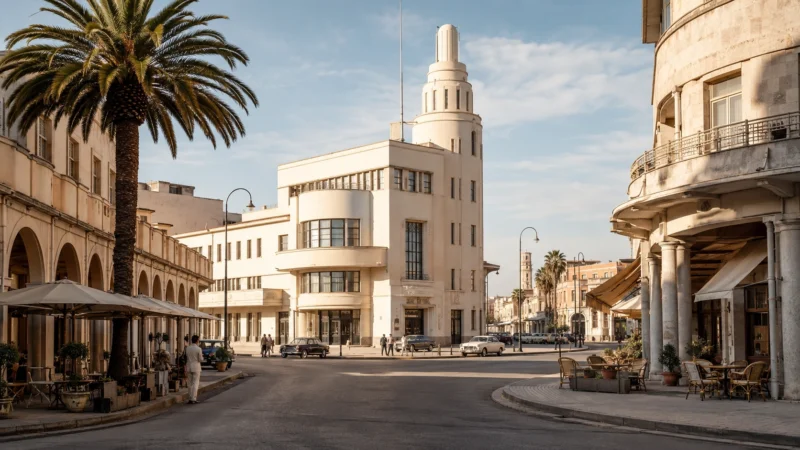
Asmara, Eritrea
Asmara contains one of the world’s most complete concentrations of early modernist and Italian Rationalist architecture. Constructed largely during the colonial period between the late 19th century and 1941, the city includes streamlined cinemas, apartment buildings, factories, religious structures, cafés, and service stations.
Among its icons are Cinema Impero, with its Art Deco lettering and rhythmic façade, and the Fiat Tagliero building, whose dramatic concrete wings evoke an aircraft poised for flight. Yet Asmara’s significance lies in the continuity of its wider streetscape. Much of its original urban pattern, mixed-use fabric, and human scale remain intact, allowing the city to be read as both a complicated colonial inheritance and a living African capital that has absorbed, adapted, and preserved its architectural past.
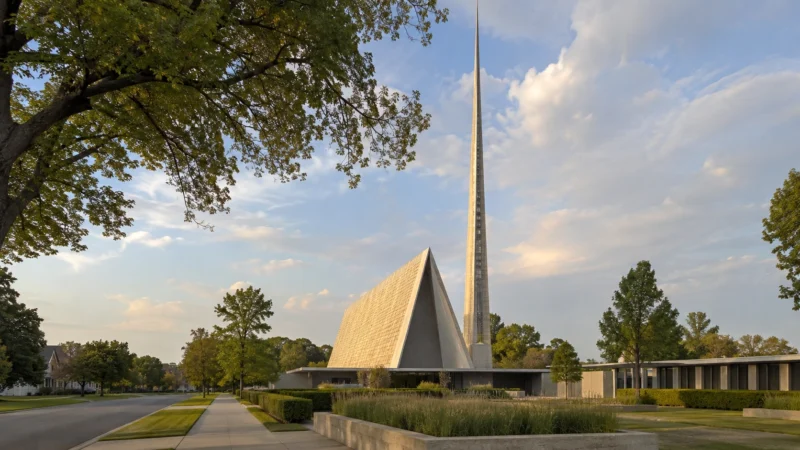
Columbus, Indiana
A small Midwestern city may seem an unlikely destination for a pilgrimage through international modernism, but Columbus holds an extraordinary collection of civic architecture. Its schools, churches, libraries, banks, public spaces, and private residences were designed by figures including Eliel Saarinen, Eero Saarinen, I.M. Pei, Kevin Roche, Harry Weese, and Deborah Berke.
North Christian Church, with its slender spire and hexagonal sanctuary, remains among Eero Saarinen’s most affecting works. Nearby, I.M. Pei’s restrained public library faces Henry Moore’s monumental sculpture Large Arch, creating a civic ensemble of unusual clarity. The Miller House and Garden brings architecture, interiors, furniture, and landscape together in one of America’s most complete modernist residences. More than 80 noteworthy buildings and public spaces can be found across this city of just over 50,000 residents.
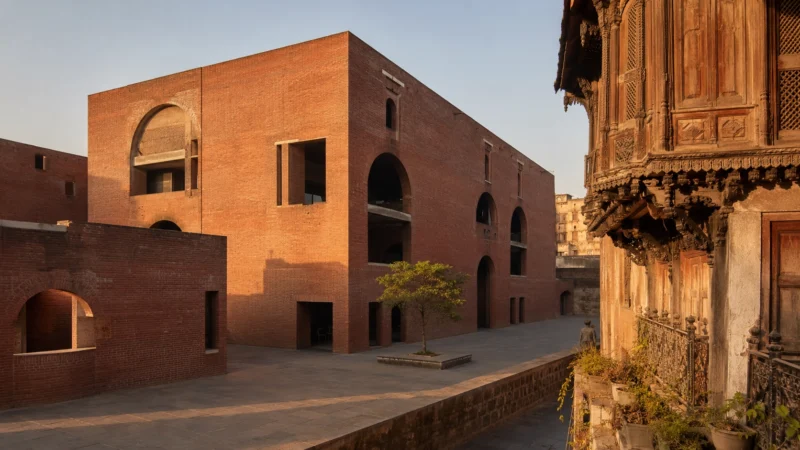
Ahmedabad, India
Ahmedabad’s architectural richness comes from contrast. Intricately carved mosques, stepwells, courtyard houses, and historic pol neighborhoods coexist with some of the most important modern buildings constructed in India during the 20th century.
Le Corbusier’s Mill Owners’ Association Building and Villa Shodhan brought muscular concrete forms into conversation with local climate and shade. Louis Kahn’s monumental brick architecture at the Indian Institute of Management created another defining chapter, while Balkrishna Doshi developed a distinctly Indian modernism grounded in movement, community, and climatic response. Ahmedabad is particularly rewarding because its modernist landmarks do not stand apart from the city’s traditions; they reveal how international ideas were reworked through local materials and ways of living.
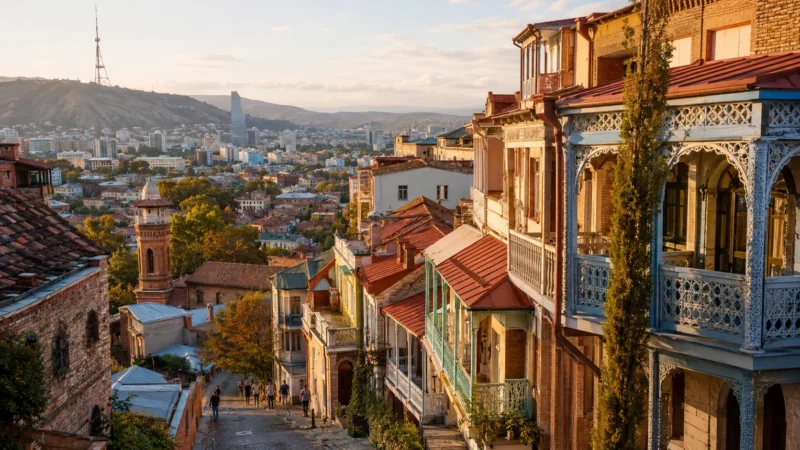
Tbilisi, Georgia
Tbilisi’s architecture resists a single definition. Timber balconies project over narrow lanes in the old city, brick domes rise above the sulfur baths of Abanotubani, Art Nouveau apartment buildings line once-grand avenues, and assertive Soviet structures punctuate the surrounding hills.
The result is less a seamless composition than a vivid record of the city’s many political and cultural eras. The former Ministry of Highway Construction—now the Bank of Georgia headquarters—remains one of the city’s most audacious Soviet-era buildings, its stacked concrete volumes appearing to hover above the landscape. Contemporary interventions along the Mtkvari River introduce another layer, making Tbilisi an absorbing study in how cities evolve without erasing their contradictions.
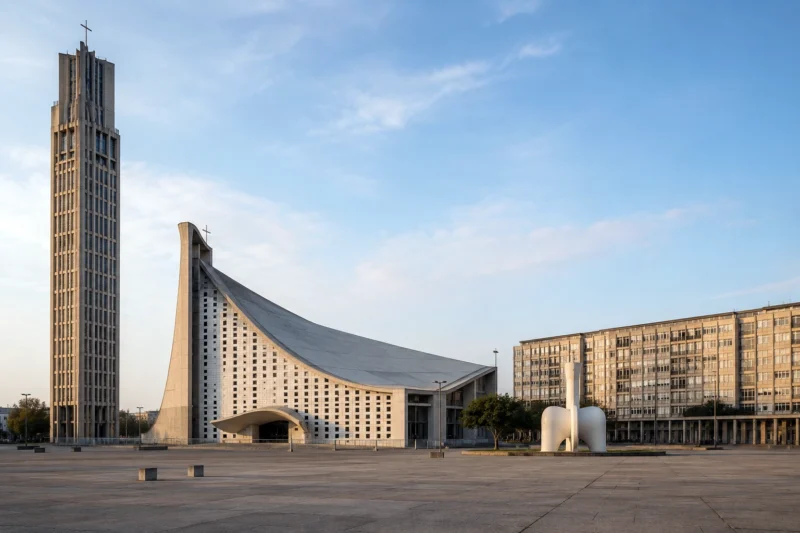
Le Havre, France
Rebuilt after the destruction of the Second World War, Le Havre is an unexpectedly elegant meditation on concrete. Architect Auguste Perret and his team reconstructed the city center between 1945 and 1964 using prefabrication, modular proportions, and a disciplined structural grid.
That order never feels entirely austere. Concrete surfaces shift in texture and tone, while broad avenues draw the eye toward the sea. The monumental Church of Saint-Joseph rises above the city as both memorial and beacon, its octagonal tower illuminated internally by colored glass. The Perret Model Apartment offers a more intimate perspective, revealing how the reconstruction extended from the urban plan to furniture, circulation, and domestic life.
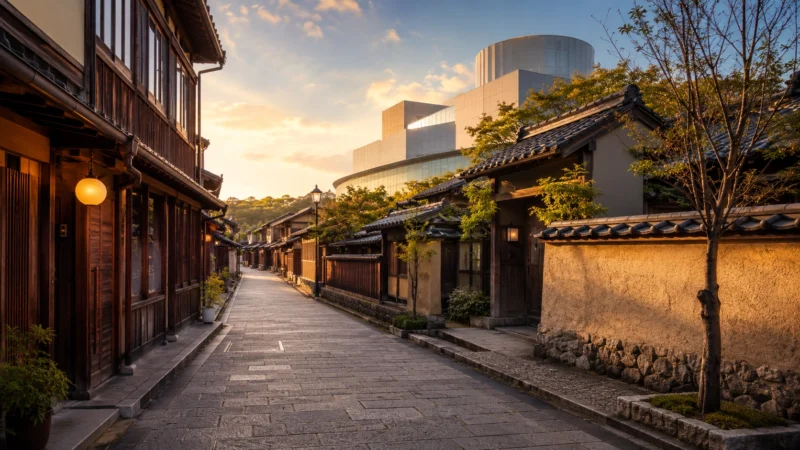
Kanazawa, Japan
Kanazawa offers a refined dialogue between preservation, craftsmanship, and contemporary architecture. Its samurai residences, earthen walls, teahouse districts, gardens, and traditional workshops survive alongside some of Japan’s most thoughtful modern cultural buildings.
The circular 21st Century Museum of Contemporary Art, designed by SANAA, dissolves the conventional hierarchy between front and back, inviting visitors to approach from multiple directions. Yoshio Taniguchi’s D.T. Suzuki Museum is quieter still, using water, stone, and controlled views to create an atmosphere of contemplation. Between them are neighborhoods where lacquerware, ceramics, gold leaf, and textile traditions remain part of the city’s living identity.
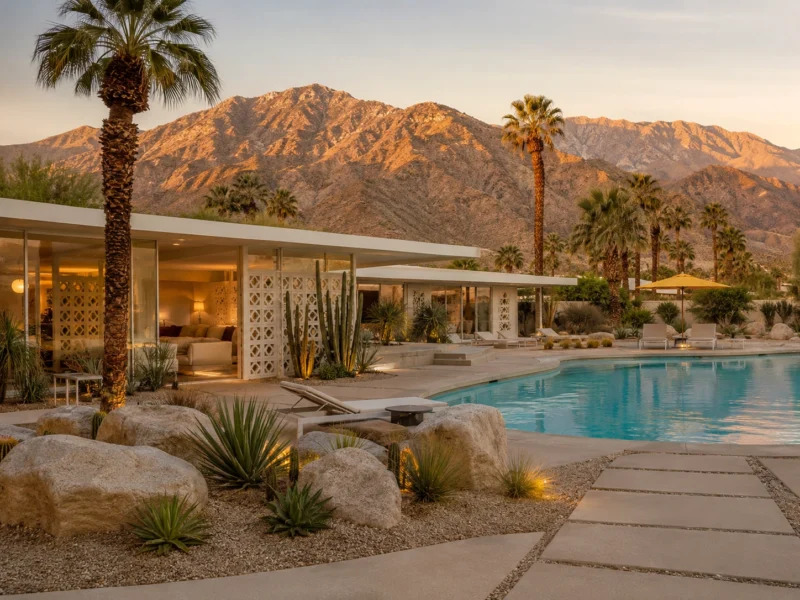
Palm Springs, California
Palm Springs turned the desert into an architectural laboratory. From the 1920s onward—and most decisively in the postwar decades—architects developed a regional modernism characterized by deep overhangs, clerestory windows, breezeways, lightweight structures, and an effortless relationship between interior rooms and outdoor living.
Richard Neutra’s Kaufmann Desert House remains the emblem, but the city’s architectural character was shaped just as powerfully by Albert Frey, Donald Wexler, William Krisel, E. Stewart Williams, and John Lautner. Former hotels, banks, service stations, private homes, and civic buildings now form an unusually accessible design landscape. Palm Springs may be glamorous, but its enduring appeal lies in the intelligence with which modernism was adapted to heat, light, and terrain.
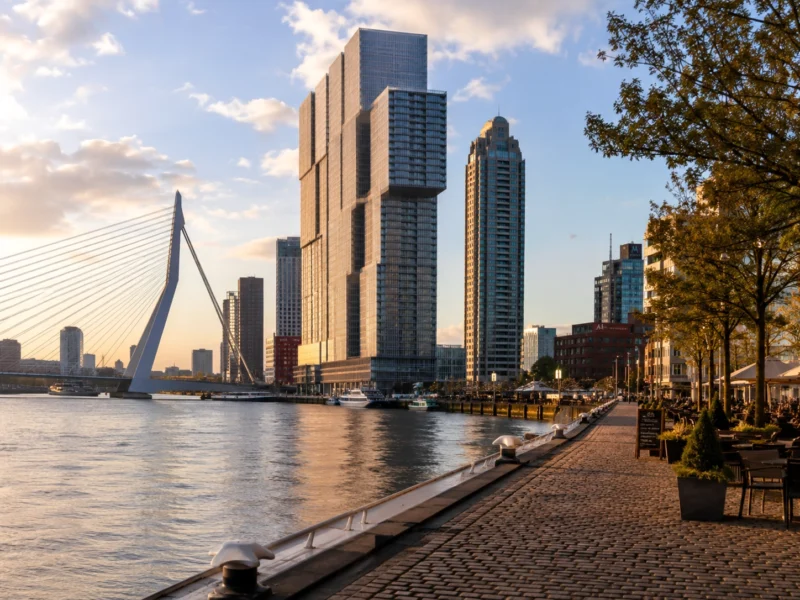
Rotterdam, the Netherlands
Where Amsterdam often looks inward toward history, Rotterdam presents architecture as an ongoing public experiment. Rebuilt following the destruction of its historic center during the Second World War, the city has embraced bold towers, unconventional housing, adaptive reuse, and infrastructure as defining elements of its identity.
Piet Blom’s Cube Houses remain the playful icons, while the OMA-designed De Rotterdam complex gives the waterfront a far more monumental presence. MVRDV’s mirrored Depot Boijmans Van Beuningen introduced an entirely new museum typology as the world’s first publicly accessible art-storage facility, exposing conservation, collection management, and the normally hidden machinery of the museum. Rotterdam feels less like a completed composition than an urban studio in continuous production.
Fez, Morocco
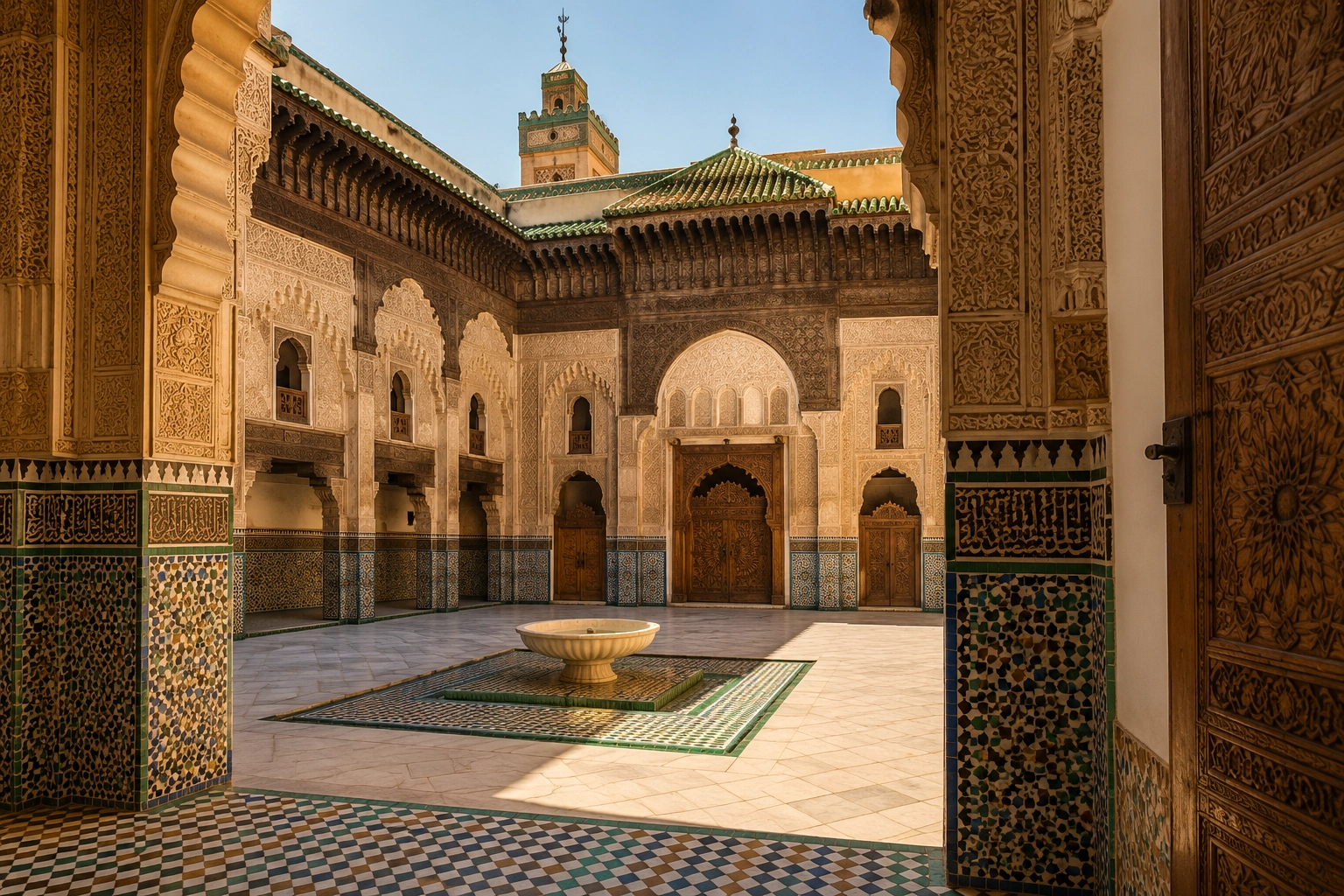
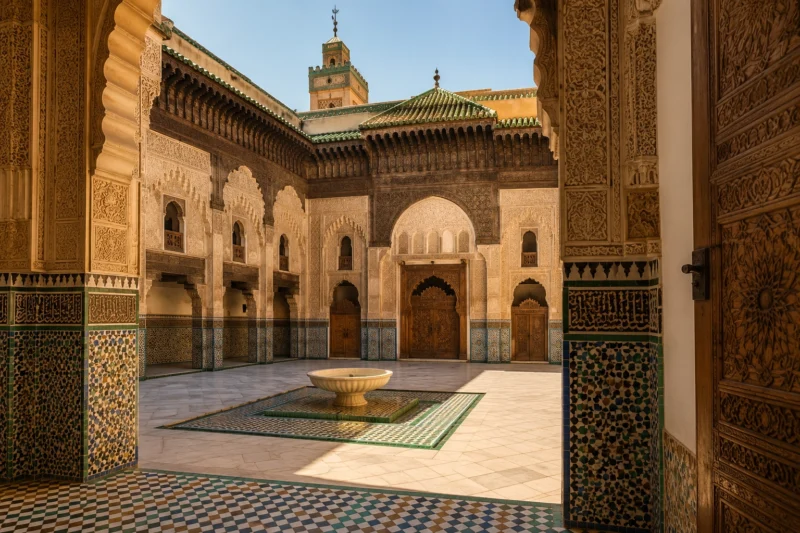
The medina of Fez offers architecture not as a sequence of isolated monuments, but as an immersive urban fabric. Narrow lanes twist between courtyard houses, workshops, fountains, mosques, madrasas, markets, and hidden gardens, creating a city experienced through shadow, sound, texture, and sudden moments of ornament.
The Bou Inania and Al-Attarine madrasas reveal the sophistication of Marinid craftsmanship through carved cedar, geometric tilework, calligraphy, and intricately modeled plaster. Yet the medina’s real power comes from its continuity. Craftspeople still work within spaces shaped by long-established trades, while domestic architecture turns inward toward private courtyards rather than outward toward the street. Fez remains one of the most influential historic cities in North Africa, with an urban and architectural legacy that extended across the region and into Andalusia.
The Journey Is in the Details
The finest architectural destinations do more than preserve notable buildings. They reveal how design responds to climate, ceremony, politics, craft, technology, and daily life. In Brasília and Chandigarh, architecture became an instrument of national ambition. In Ljubljana and Columbus, civic patronage transformed the public realm. In Fez, Kanazawa, and Tbilisi, the city itself operates as an archive of material culture.
These places are worth traveling for not because they offer a perfect architectural narrative, but because they resist one. Their buildings hold competing histories, unrealized ideals, moments of reinvention, and evidence of the people who continue to inhabit them. For the design-minded traveler, that complexity is precisely the point.
