

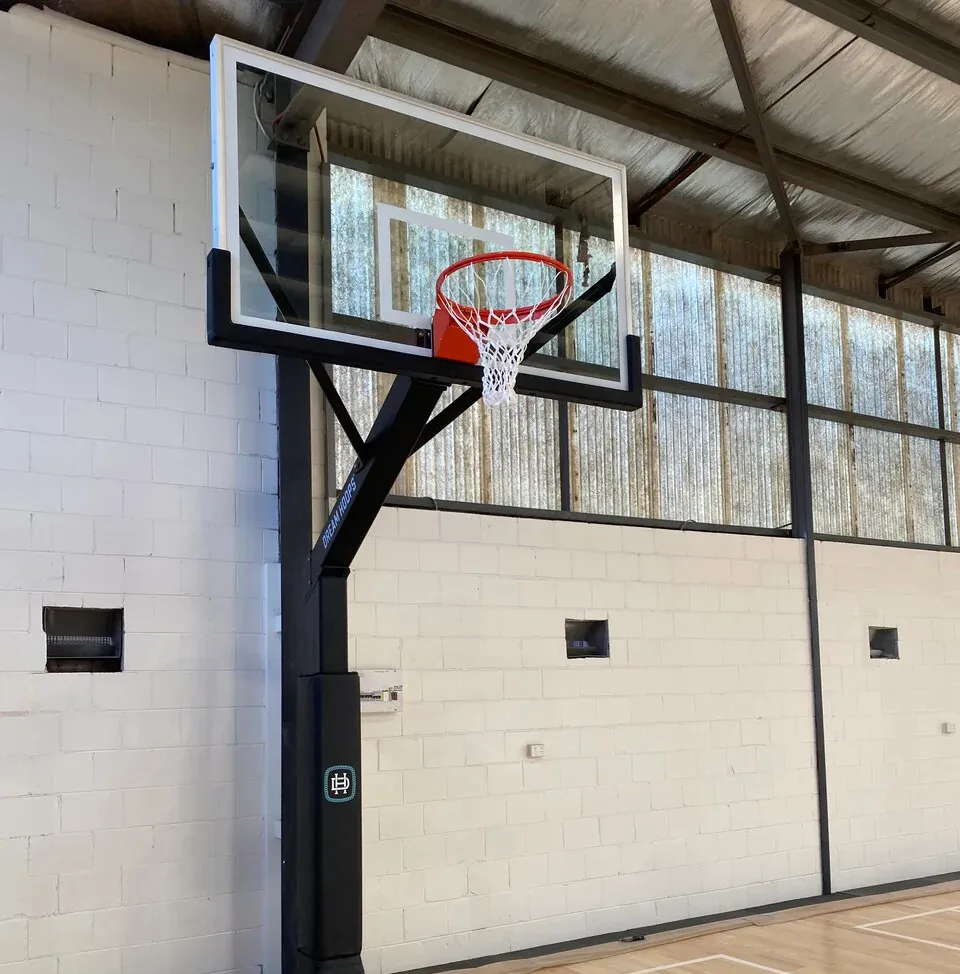
Photo Courtesy of DreamHoops
The sound comes first: a clean, sharp bounce that cuts through the quiet of a backyard, followed by the steady rhythm of feet finding their timing. It feels familiar, almost like stepping onto a professional court, but the setting is home. The lines are crisp, the surface grips just right, and every movement responds the way it should. For players who know the difference, the details matter. That difference is where DreamHoops has built its name.
Across Australia and beyond, home courts are becoming serious environments for training, competition, and daily repetition. The demand is beyond a hoop and a slab of concrete, rather for something that mirrors the feel of elite arenas. DreamHoops answers that demand with precision, building courts that carry the same performance qualities found at the highest levels of the game.
At the center of it is a clear idea: if athletes train on surfaces that behave like professional courts, their development changes. The bounce is predictable, the traction consistent, and the game becomes sharper. DreamHoops builds for performance, where every pass, pivot, and shot feels right.
Built for the Way the Game Is Played
DreamHoops courts are designed with a focus on playability first. The surface systems are engineered to deliver consistent ball response, giving players confidence in every dribble and pass. This consistency is what separates casual courts from serious ones. When the surface reacts the same way every time, players can trust their instincts and play faster.
The company also prioritizes shock absorption and joint support. Hard, unforgiving surfaces can wear down the body over time, especially for athletes who train often. DreamHoops integrates cushioning into its court systems, helping reduce impact while still maintaining the responsiveness needed for competitive play. The result is a court that supports both performance and longevity.
Founder Luke Tadich has been clear about the intent behind the brand. “We build courts that feel like the real thing, so players can train properly at home,” he says. That focus on authenticity is what drives the design, from the materials used to the way each court is installed.
Precision in Every Detail
Every DreamHoops court is built with careful attention to layout and finish. Court dimensions, line markings, and hoop placement follow professional standards, allowing players to practice in a space that mirrors official competition settings. This attention to detail gives athletes a sense of familiarity that carries over into real games.
Installation is another key part of the process. DreamHoops does not treat courts as simple add-ons to a property. Each project is planned to fit the space while maintaining performance standards. From leveling the base to aligning the surface panels, every step is handled with accuracy to avoid inconsistencies that could affect play.
Flexibility is built into that process. DreamHoops courts are designed to work across different environments, from private homes to commercial venues and full-scale professional settings. Whether it’s a compact backyard court, a training facility, or a larger venue built for regular competition, the same standards apply. The scale may change, but the playing experience remains consistent.
From Backyard to Training Ground
For many athletes, access to high-quality courts is limited. Public courts vary in condition, and indoor facilities are not always available. DreamHoops changes that by bringing professional-level conditions into private spaces. What was once a backyard becomes a dedicated training ground.
This shift has practical benefits. Players can train on their own schedule, without waiting for court time or dealing with crowded spaces. Repetition becomes easier, and skill development becomes more focused. The convenience of having a reliable court at home often leads to more consistent practice.
At the same time, DreamHoops extends beyond residential use. Schools, sports complexes, and commercial venues are also adopting these courts to elevate their facilities. The ability to move between home, training centers, and professional environments without adjusting to different playing surfaces gives athletes a clear advantage.
A Standard That Feels Real
The appeal of DreamHoops lies in how closely it replicates the experience of professional play. The ball responds the way players expect, the surface supports quick movement, and the overall feel matches what athletes encounter in competitive settings. That sense of realism is what keeps players engaged and coming back to the court.
Durability is another factor that defines the brand. Outdoor courts face changing weather conditions, from heat to rain, and the materials must hold up over time. DreamHoops builds its systems to maintain performance despite these challenges, so the court continues to play the same way day after day.
Tadich emphasizes this consistency as a core principle. “It’s about giving players a court they can rely on every time they step on it,” he notes. That reliability, paired with the flexibility to suit home, commercial, and professional settings, is what turns a simple installation into something more, a space where the game feels serious, and every session carries purpose.
