

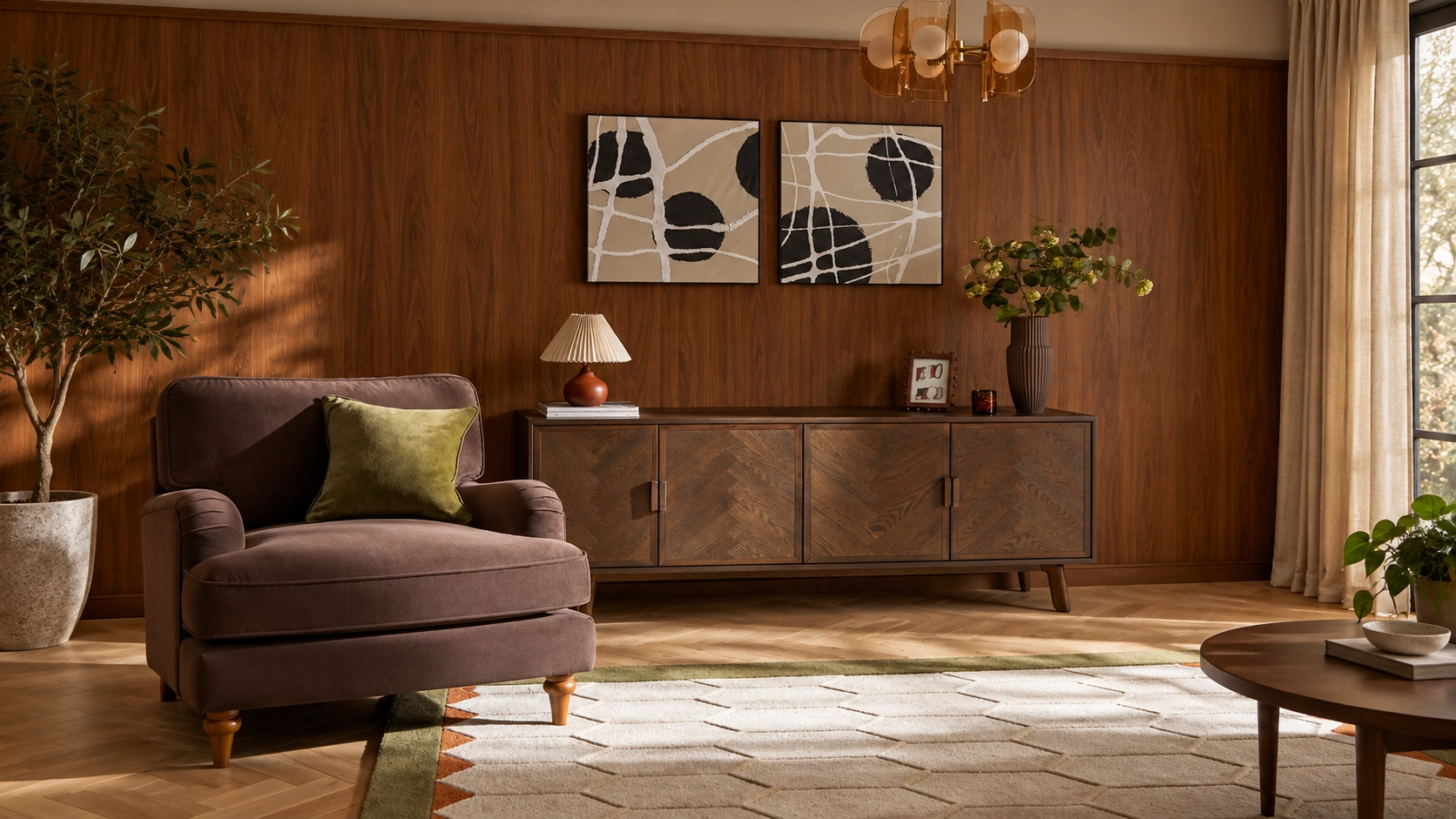
Chocolate brown, dark timber, tactile textiles and selective references to Americana are reshaping Western style for contemporary interiors.
Western influence is returning to interiors, but its latest expression is less about nostalgia and more about material intelligence.
The strongest schemes emerging this fall do not attempt to recreate the ranch house. Instead, they extract its most recognizable visual cues deep brown tones, natural timber, tactile fabrics, leather-inspired finishes, and occasional cowhide pattern and translate them into a more architectural, contemporary language.
That shift matters. Western style has traditionally been associated with overt motifs, but the current interpretation is quieter. Its success depends on proportion, texture, and restraint rather than theme.
Chocolate brown is central to the movement. In contemporary interiors, the color functions almost as a warm structural neutral. It can define cabinetry, anchor upholstered pieces, sharpen pale plaster walls, or introduce depth into rooms otherwise dominated by cream, linen, and stone. Unlike black, which can create hard visual contrast, brown tends to soften the transition between materials while still giving a space definition.
This is particularly effective when combined with dark woods. Walnut, smoked oak and similarly rich finishes give Western-inspired interiors a sense of permanence while avoiding the rusticity traditionally associated with ranch aesthetics. The result is closer to tailored residential design than decorative Americana.
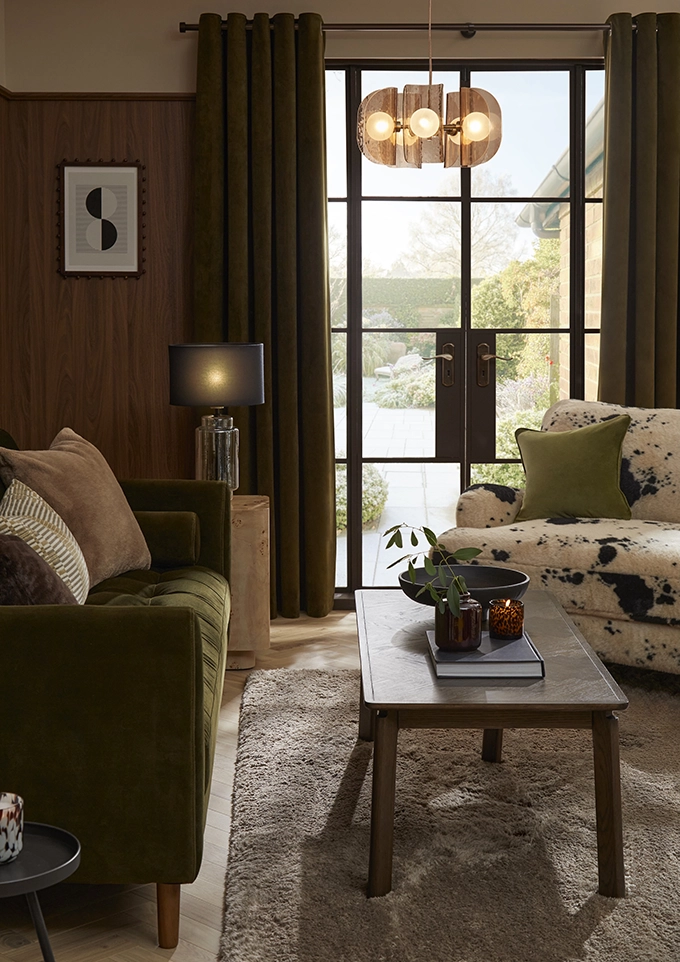
Dunelm’s current collection offers an accessible example of this direction. The range combines deep chocolate finishes, natural linen, dark timber and selective cow-print accents, illustrating how Western references can be incorporated without overwhelming a room.
The Beatrice II Cow Print Faux Fur Snuggle Chair is among the collection’s most overt pieces. Its generous form and tactile surface make it a strong focal point, but its effectiveness depends on what surrounds it. In a neutral room with restrained materials, the pattern reads as deliberate and sculptural. Repeated across multiple surfaces, it risks becoming decorative rather than architectural.
That distinction captures the broader direction of the trend.
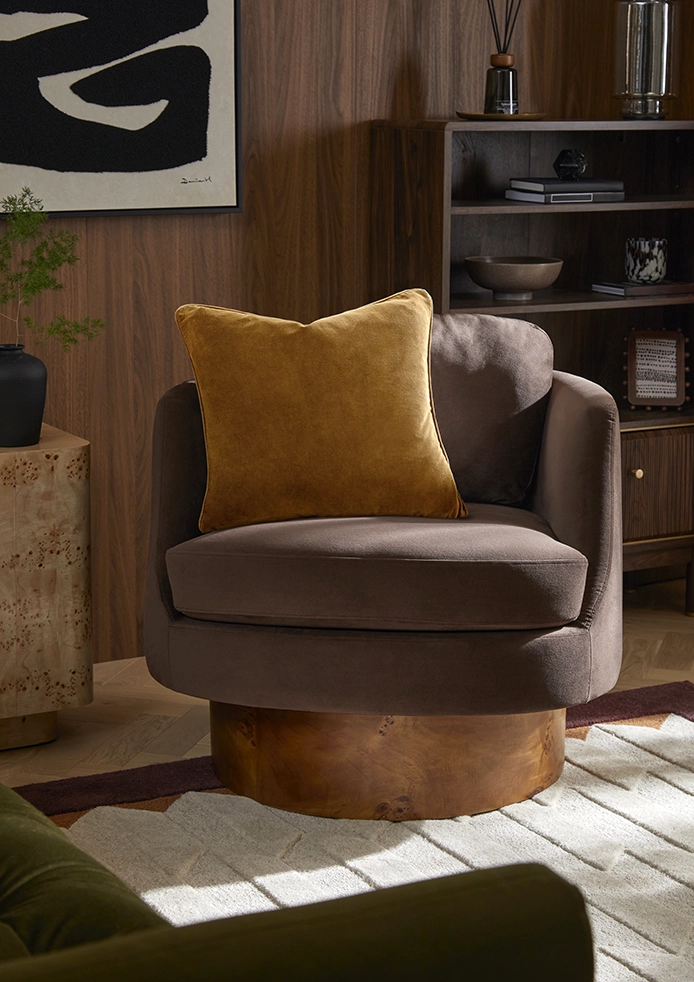
Western influence works best when a room is composed through material contrast. A dense textile beside polished timber. A soft upholstered form against a structured wall. A patterned accent within an otherwise quiet palette. These relationships give the interior depth without relying on obvious thematic references.
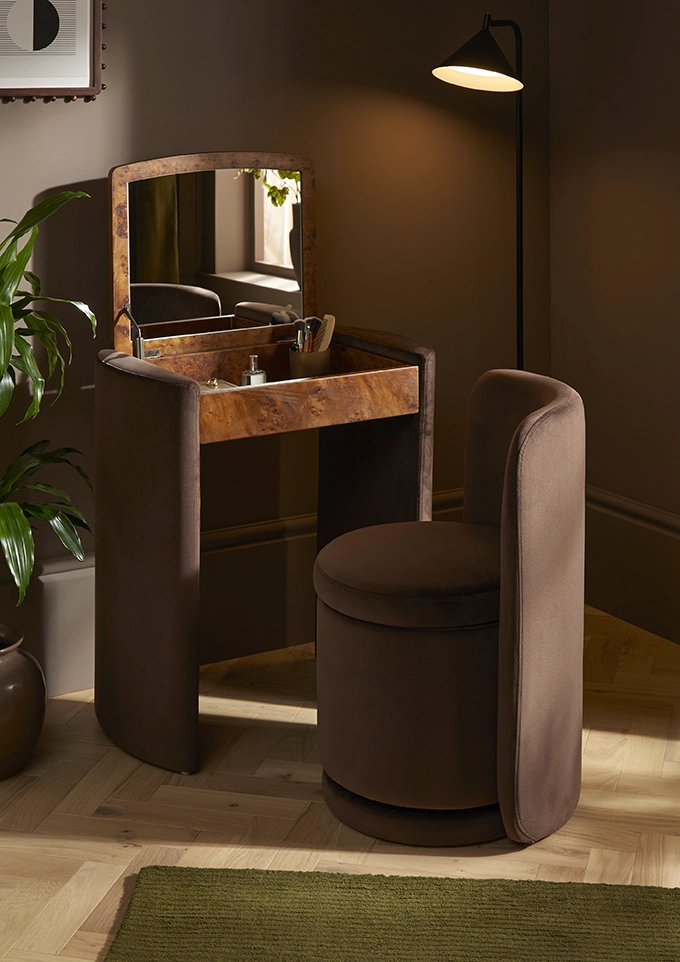
Smaller pieces reinforce the same approach. A compact dressing table in a deep chocolate finish introduces mass and tonal richness. A dark-wood overmantle mirror with a sculptural bobble frame adds rhythm to an otherwise flat surface. Herringbone detailing on nesting coffee tables provides another layer of visual structure, while naturally textured linen cushions help soften the harder elements around them.
The most successful schemes use such details hierarchically. Not every object needs to carry the Western reference. In fact, the room becomes more sophisticated when only one or two elements establish the idea and the remainder support it through tone, proportion and texture.
This is where the trend intersects with a broader shift in residential design. After several years dominated by pale minimalism, many interiors are moving toward warmer, more materially expressive environments. Deep timber, tactile fabrics, and saturated neutrals are returning because they create spaces that feel more inhabitable and less visually sterile.
Western chic fits naturally into that transition.
Its palette is earthy but not necessarily rustic. Its materials are tactile but can still be precise. Its decorative vocabulary can be expressive without becoming excessive.
Lighting plays a significant role in determining whether the look feels contemporary or themed. Warm, low-level illumination works particularly well with chocolate brown and dark woods because it enhances material depth and softens contrast. Fabric-shaded lamps, wall sconces, and diffused pendants are more effective than bright general lighting, which can flatten the tonal richness of the scheme.
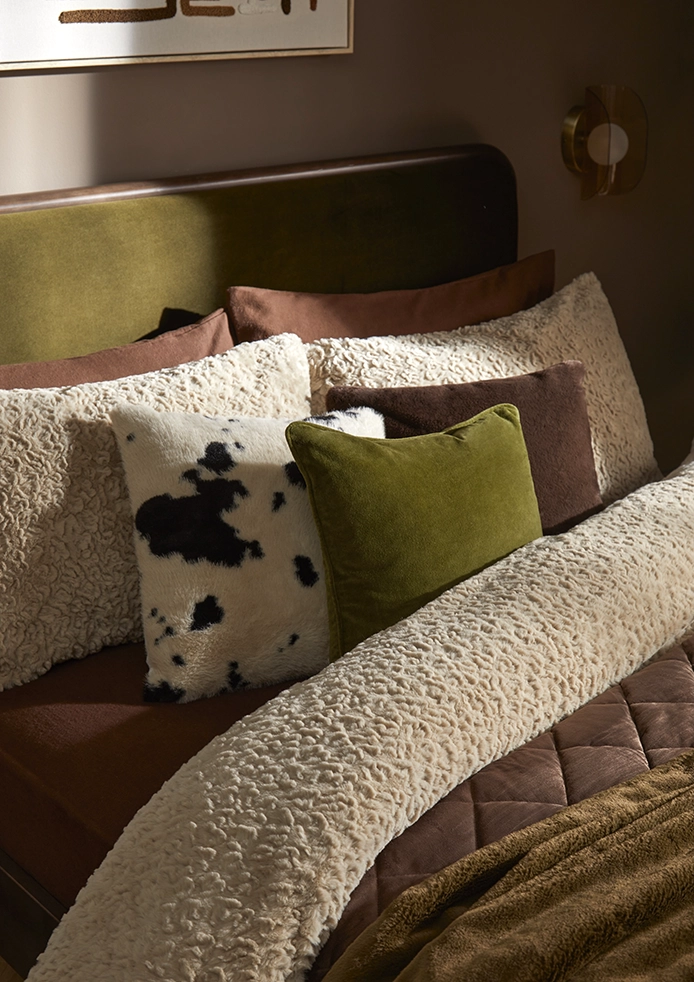
The same principle applies to furniture placement. Western-inspired interiors benefit from visual breathing room. Sculptural pieces should be allowed to stand independently rather than being crowded together. A cow-print chair, for example, is more effective when positioned as an isolated accent than when surrounded by multiple competing references.
Restraint is therefore not an aesthetic preference so much as the organizing principle of the trend.
The objective is not to create a room that looks Western. It is to create a room that feels grounded, tactile, and warm, while borrowing selectively from the material language of the American West.
That may mean a dark timber console against a pale wall, a leather chair paired with linen upholstery, or a patterned throw used as the only overt reference in the room. These combinations communicate the trend without allowing it to dominate the architecture.
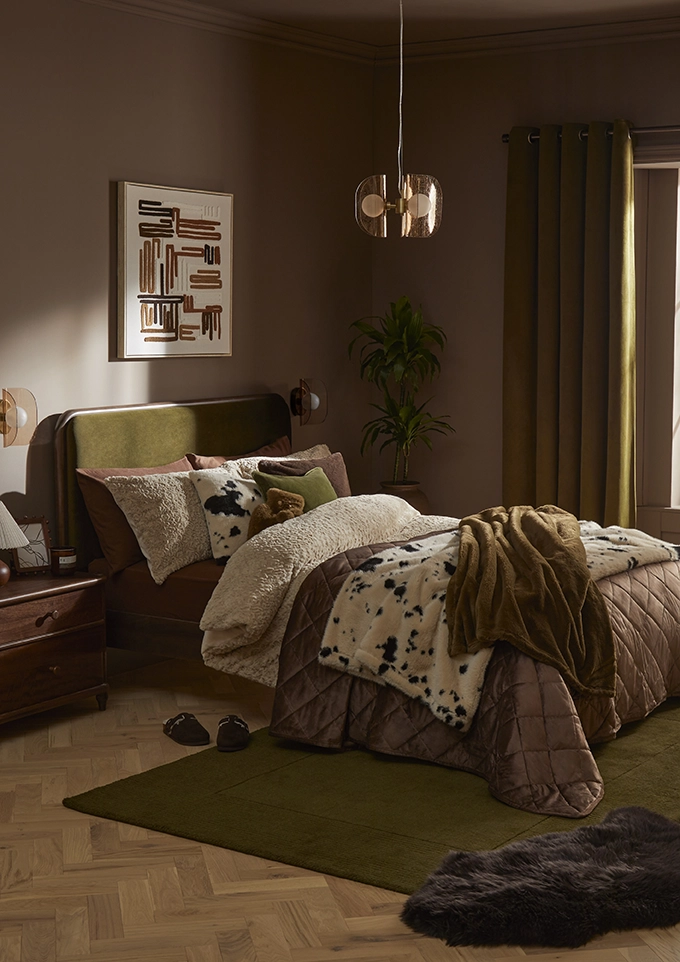
At its best, the new Western chic is less a style category than a design strategy. It demonstrates how a familiar aesthetic can be reinterpreted through materiality, proportion, and editing rather than reproduction.
For contemporary interiors, that distinction is what gives the trend longevity.
The American West may be the inspiration, but the final result belongs firmly to the present.
