

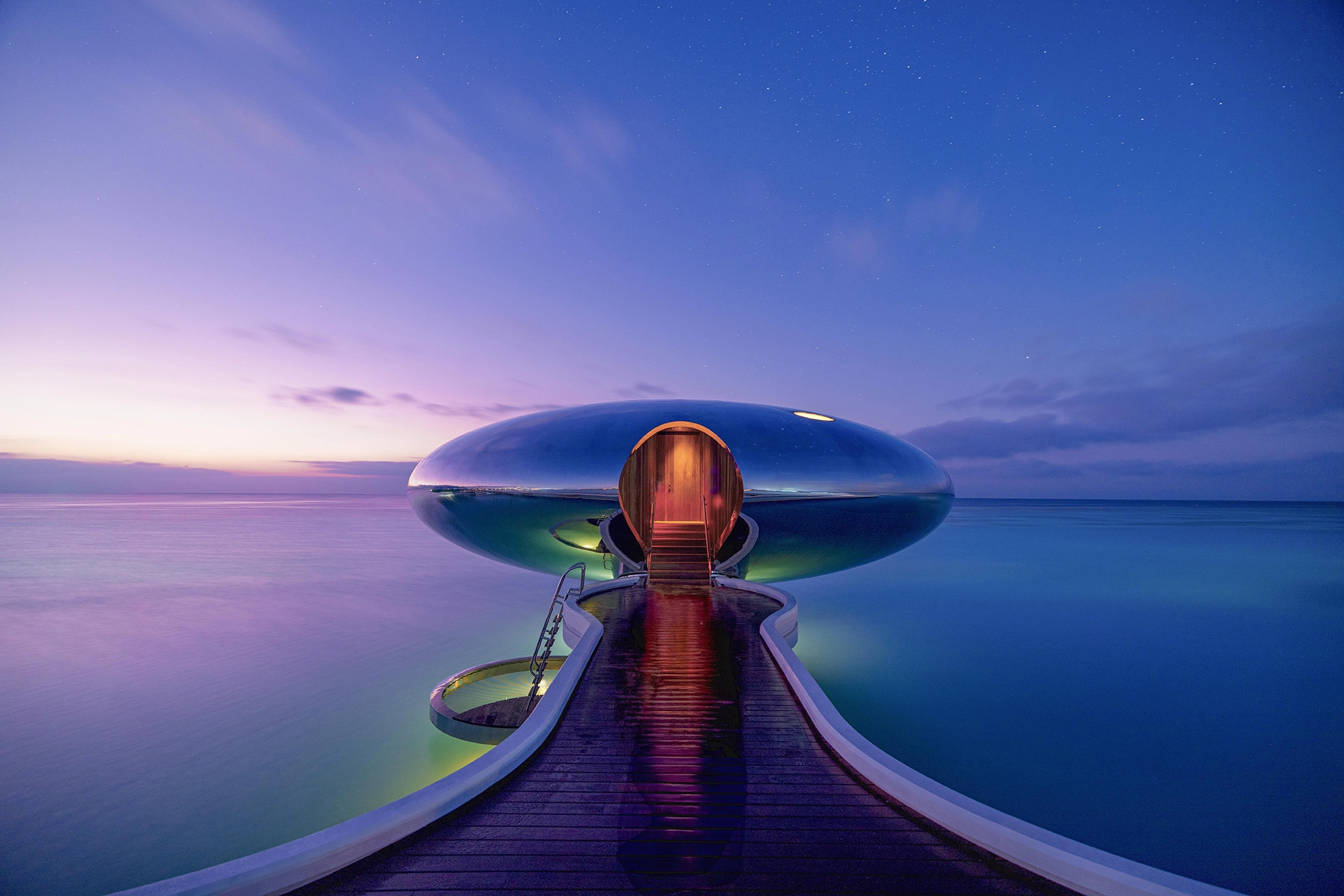
From a distance, the overwater villas of Shebara Resort appear less constructed than discovered. Their mirrored forms hover above the Red Sea like immense silver pearls, reflecting the changing blues of the water, the pale horizon, and the fierce desert light until architecture and landscape become almost indistinguishable.
Set on Sheybarah Island, approximately 25 kilometers from Saudi Arabia’s mainland, the 73-key resort is among the most visually ambitious hospitality projects to emerge along the Red Sea. Developed by Red Sea Global and designed by Dubai-based Killa Design, Shebara proposes a compelling new vision of luxury—one in which environmental sensitivity, technological innovation, and architectural spectacle are not competing ambitions, but parts of the same idea.
The island itself demanded an unusually restrained response. Its landscape encompasses mangroves, dunes, desert flora, turtle-nesting areas, and coral reefs of remarkable biodiversity. Rather than imposing a conventional resort footprint across this fragile setting, Killa Design approached the project as a series of carefully positioned objects, each intended to touch the land and water as lightly as possible.
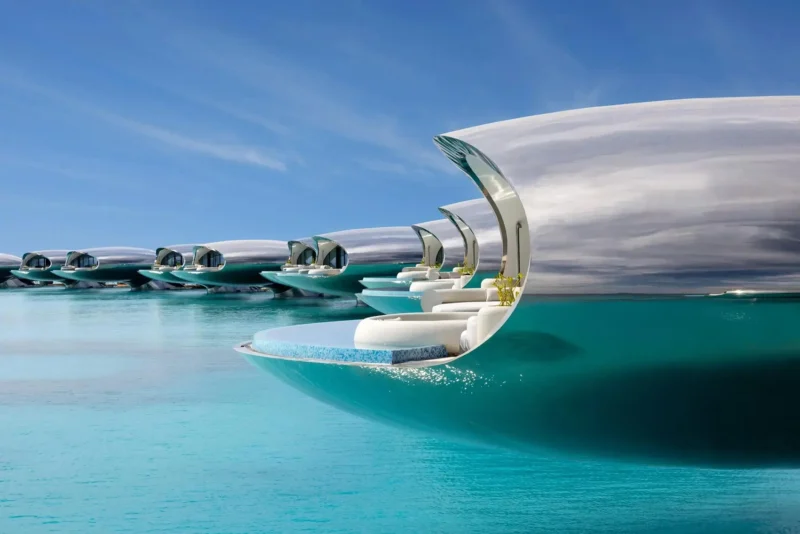
The resort’s defining overwater villas are polished stainless-steel orbs cantilevered above the lagoon. Their reflective surfaces capture the sky and sea, allowing the buildings to recede visually into their surroundings despite their futuristic geometry. The inspiration was a string of pearls emerging from the water, an image translated into a sequence of sculptural forms that curve along the shoreline with a deliberate sense of rhythm.
There are 38 overwater villas and 35 beachfront villas, each designed to offer private pools and uninterrupted views across the sea. The offshore villas sit more than 50 meters from the natural coral reef and are supported by slender columns with minimal contact with the seabed. From within, guests are placed almost directly above the marine environment, with views extending toward the reef, the open water, and the wildlife moving below.
The effect is both dramatic and strangely serene. The exterior architecture may appear space-age, but its purpose is deeply connected to place. The reflective shells absorb the visual character of the island rather than competing with it, while the elevated structures create observation points from which guests can encounter fish, birds, and turtles without entering or disturbing their habitat.
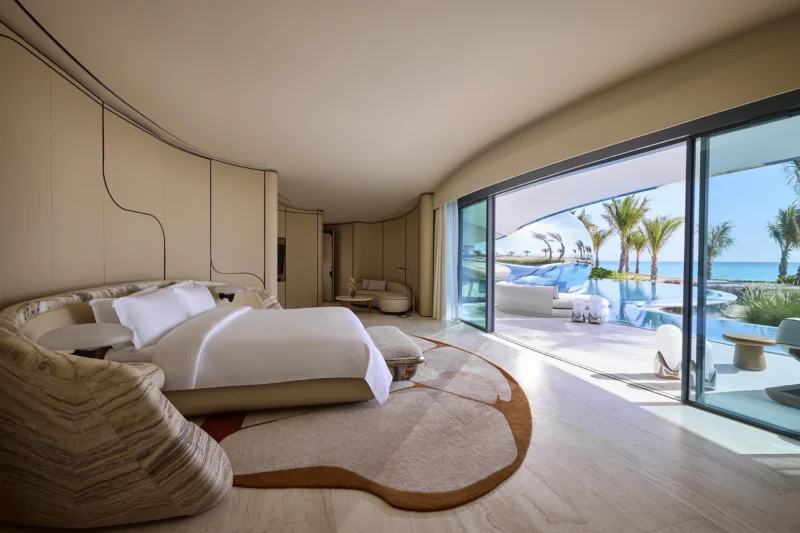
Inside, the mood shifts from metallic precision to tactile warmth. Studio Paolo Ferrari developed the interiors with the sensibility of a private coastal residence, balancing the villa’s curved architecture with natural textures, softly sculpted furnishings, and a restrained palette drawn from sand, stone, and sea. The interiors are designed to frame the landscape rather than distract from it, creating spaces that feel cocooning without becoming enclosed.
Curved walls and furniture echo the aerodynamic profile of the buildings, while expansive glazing opens each room toward the water. The transition from bedroom to terrace is almost seamless, reinforcing the impression that the villa is suspended between sky and sea. Materials and finishes are quiet, allowing the changing daylight and movement of the water to become part of the interior composition.
This residential intimacy is central to Shebara’s appeal. Though conceived as a resort, the villas avoid the standard visual vocabulary of hospitality design. They feel more akin to private coastal retreats, where architecture, furniture, lighting, and landscape have been considered as a single continuous environment.
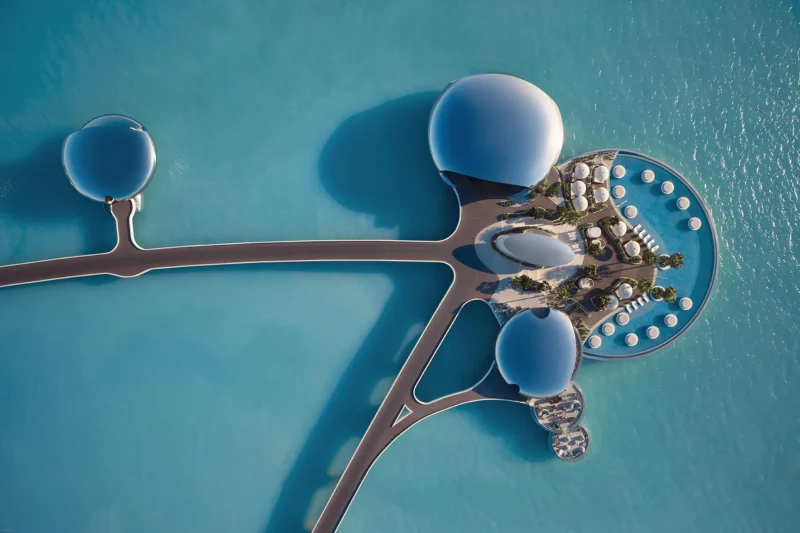
The project’s technical achievement is equally significant. Each villa was constructed, fitted out, and commissioned offshore before being transported to the island and connected to the resort’s infrastructure. This modular approach reduced the amount of on-site construction and helped limit disruption to the dunes, coral reefs, and wildlife habitats that surround the development.
Shebara was conceived as an off-grid destination with its own systems for power, water, waste treatment, and transportation. A 110,000-square-meter solar farm supplies the resort with renewable energy, while desalination, reverse-osmosis, sewage-treatment, and water-reclamation systems support its daily operation. Electric vehicles are used for movement on land and water, further reducing the environmental impact of the resort.
These systems are not hidden entirely from view. Part of Shebara’s philosophy is to make the resort’s infrastructure part of the guest experience, revealing the complexity required to operate a luxury destination within such an ecologically sensitive environment. The project’s sustainability ambitions extend beyond conservation toward regeneration, with programs involving mangrove expansion, coral gardening, and the protection of turtle-nesting areas.
Guests may also encounter educational initiatives focused on the island’s ecosystems, turning a stay at Shebara into more than an exercise in seclusion. The intention is to create a form of marine eco-tourism that encourages closer observation of the environment while supporting its long-term resilience.
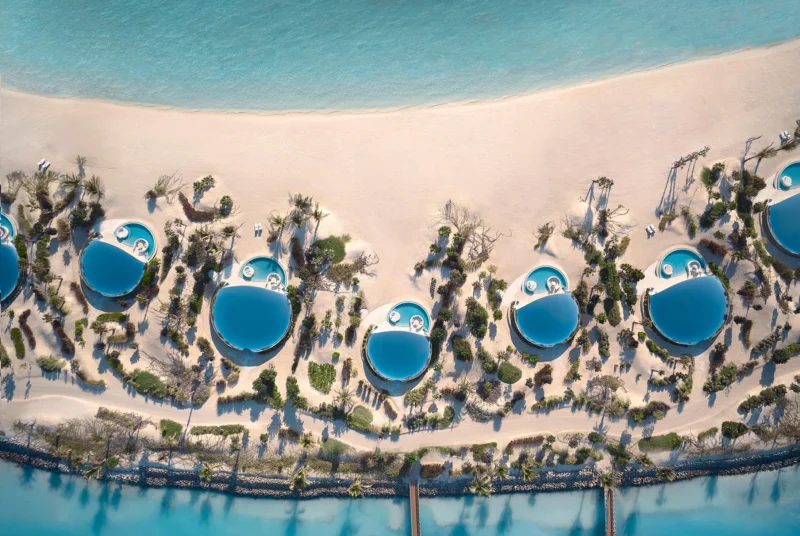
The resort’s broader program includes five signature restaurants, a spa, and a fitness center, yet the architecture remains its most powerful attraction. At sunrise, the mirrored villas take on the pale blush of the sky. At midday, they become brilliant, almost liquid forms against the blue water. By evening, they reflect the deeper tones of the sea and seem to dissolve into the horizon.
This constant transformation gives Shebara an unusual emotional quality. The resort is highly engineered, yet its experience is shaped by natural phenomena: light, tide, wind, and reflection. The polished surfaces do not simply create spectacle; they remind guests that the architecture is always responding to something larger than itself.
Shebara arrives at a moment when luxury hospitality is being reconsidered across the globe. Privacy and exclusivity remain important, but they are increasingly accompanied by questions of environmental responsibility, cultural relevance, and long-term impact. The most progressive resorts are no longer judged solely by the beauty of their rooms or the remoteness of their locations, but by the intelligence with which they occupy the land.
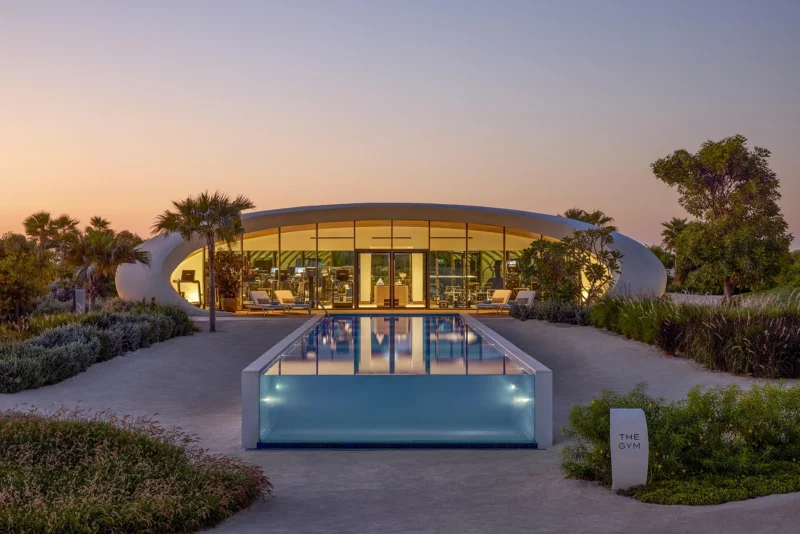
On Sheybarah Island, Killa Design has created an architecture that is unmistakably futuristic yet profoundly attentive to nature. The villas are bold enough to become icons, but reflective enough to surrender much of their visual identity to the sea around them.
In that tension lies the project’s greatest achievement. Shebara does not attempt to disappear completely, nor does it dominate its extraordinary setting. Instead, it hovers between presence and reflection—a string of silver forms suspended above the Red Sea, offering a glimpse of what sustainable luxury might become.
