There was a time when outdoor living meant little more than a dining table, a few chairs, and an umbrella positioned against the afternoon sun. The terrace was pleasant but secondary, a place visited occasionally rather than inhabited with intention.
That distinction has all but disappeared.
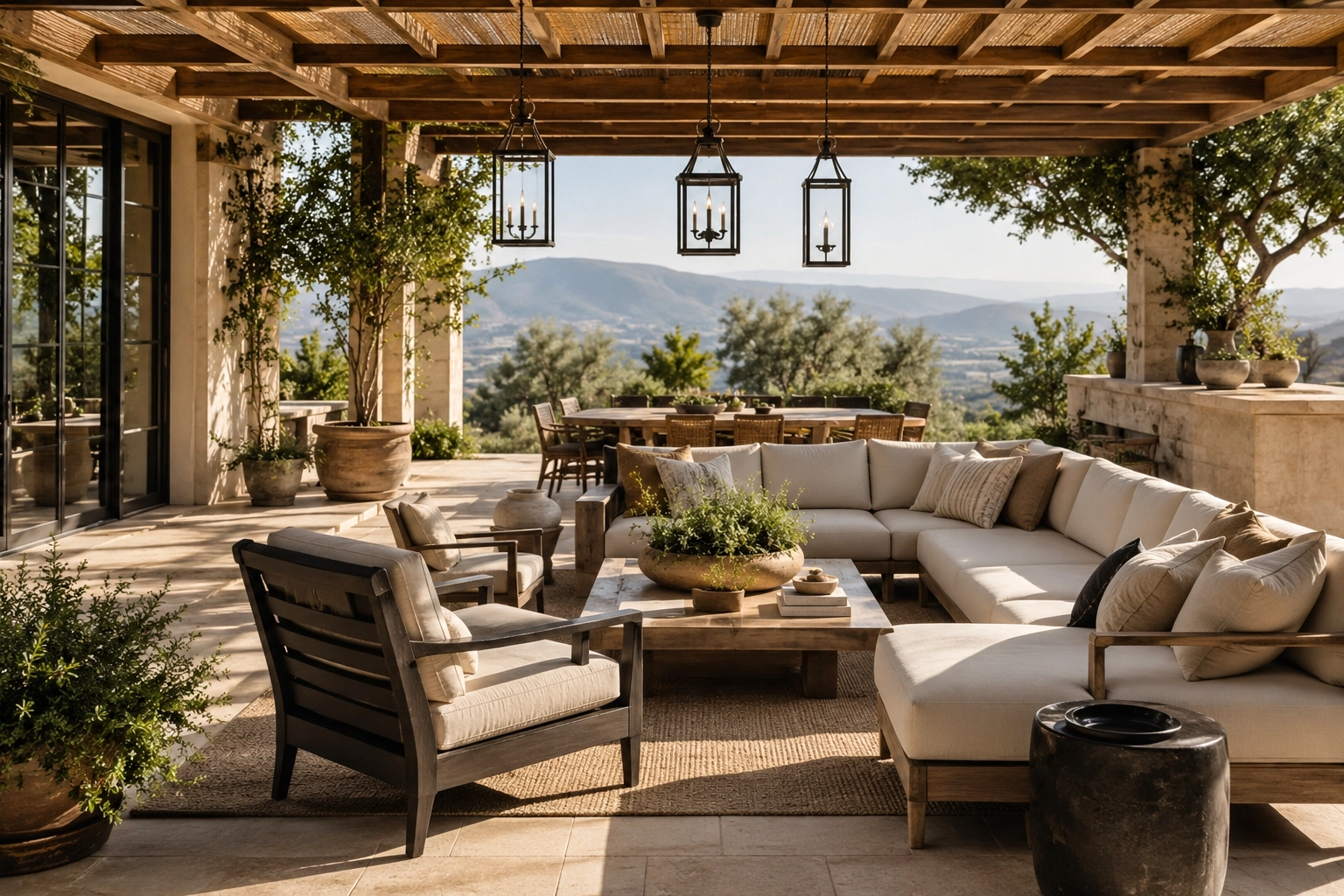
Today’s most compelling outdoor spaces are designed with the same discipline as the interiors beyond their doors. They have structure, atmosphere, layered materials, sculptural lighting, and furniture chosen not simply to withstand the elements, but to make people want to stay.
The best of them do not feel like patios dressed for a season. They feel like rooms without ceilings.
As architecture continues to dissolve the line between indoors and out, terraces, loggias, courtyards, and poolside pavilions have assumed a more central role in the life of the home. Walls of glass slide away. Stone flooring carries uninterrupted across the threshold. A kitchen opens toward a shaded dining area, while the living room finds its counterpart beneath the sky.
The effect is less about adding another entertaining space than expanding the way a home can be experienced.
A successful outdoor room begins with architecture. Indoors, walls and ceilings create boundaries naturally. Outside, enclosure must be suggested with greater subtlety.
A pergola can establish a sense of shelter while preserving an open view. A low stone wall may define a seating area without interrupting the landscape. Mature trees, clipped hedges, climbing vines, and tall grasses can provide privacy with far more softness than a traditional fence.
In contemporary homes, deep rooflines and cantilevered structures create protected spaces that feel inseparable from the architecture. More traditional residences may rely on colonnades, arches, covered verandas, and vine-draped loggias. The style may differ, but the principle remains the same: the outdoor room should feel designed into the property, not placed upon it.
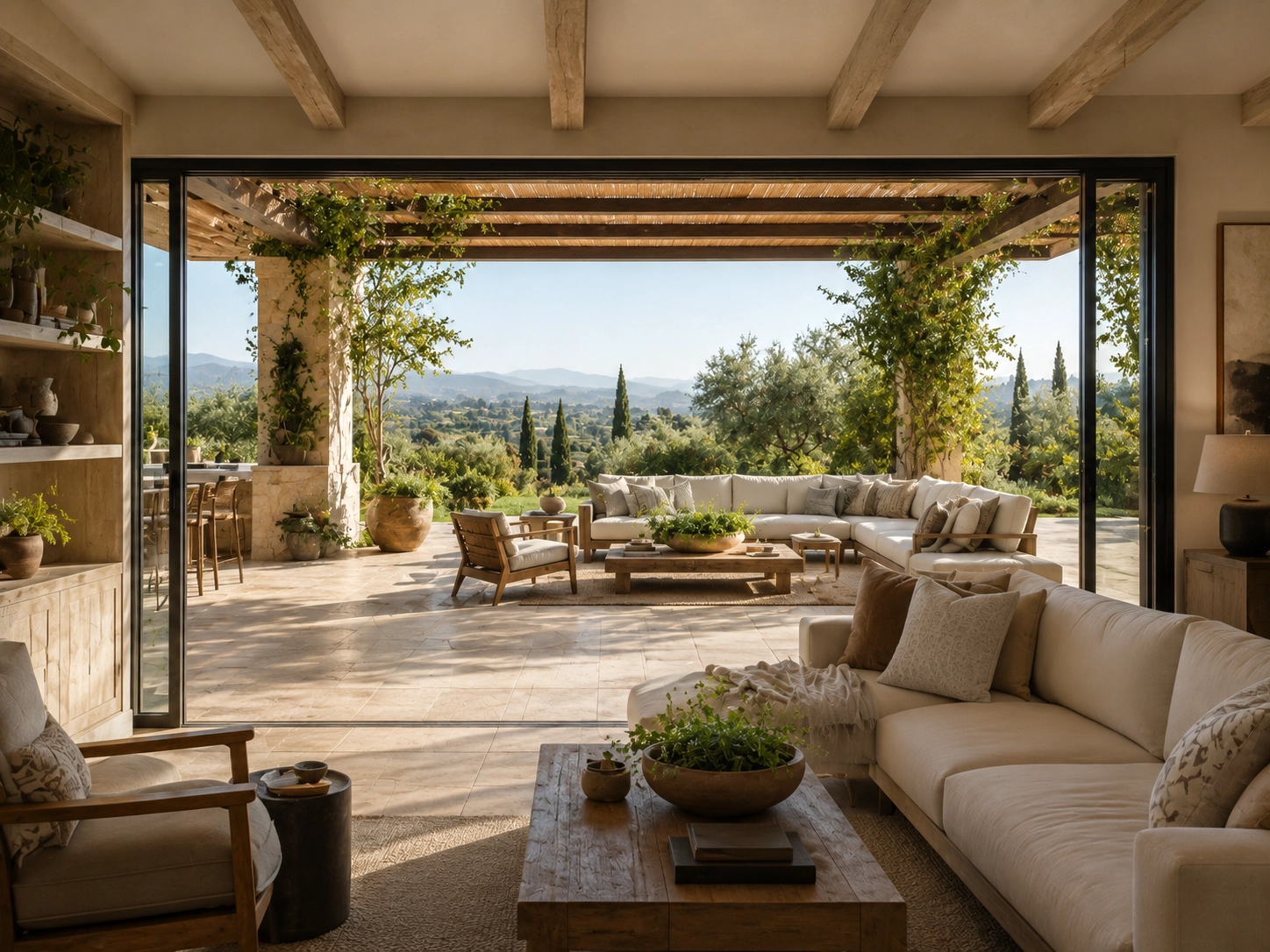
Large terraces are increasingly divided into distinct zones, much like open-plan interiors. One area may be devoted to dining, another to lounging, and a third to quiet retreat. Changes in flooring, planting, furniture orientation, or overhead structures allow each space to develop its own identity while remaining part of a larger composition.
Furniture has evolved accordingly. For years, outdoor pieces were expected to make a compromise: durability or beauty, but rarely both. Advances in performance textiles and weather-resistant materials have largely eliminated that trade-off.
Deep sofas, upholstered dining chairs, sculptural loungers, and modular seating now offer the comfort once reserved for interior rooms. Fabrics resist moisture and fading while retaining the softness and texture of linen, wool, and woven natural fibers.
This has changed not only how outdoor spaces look, but how they are used.
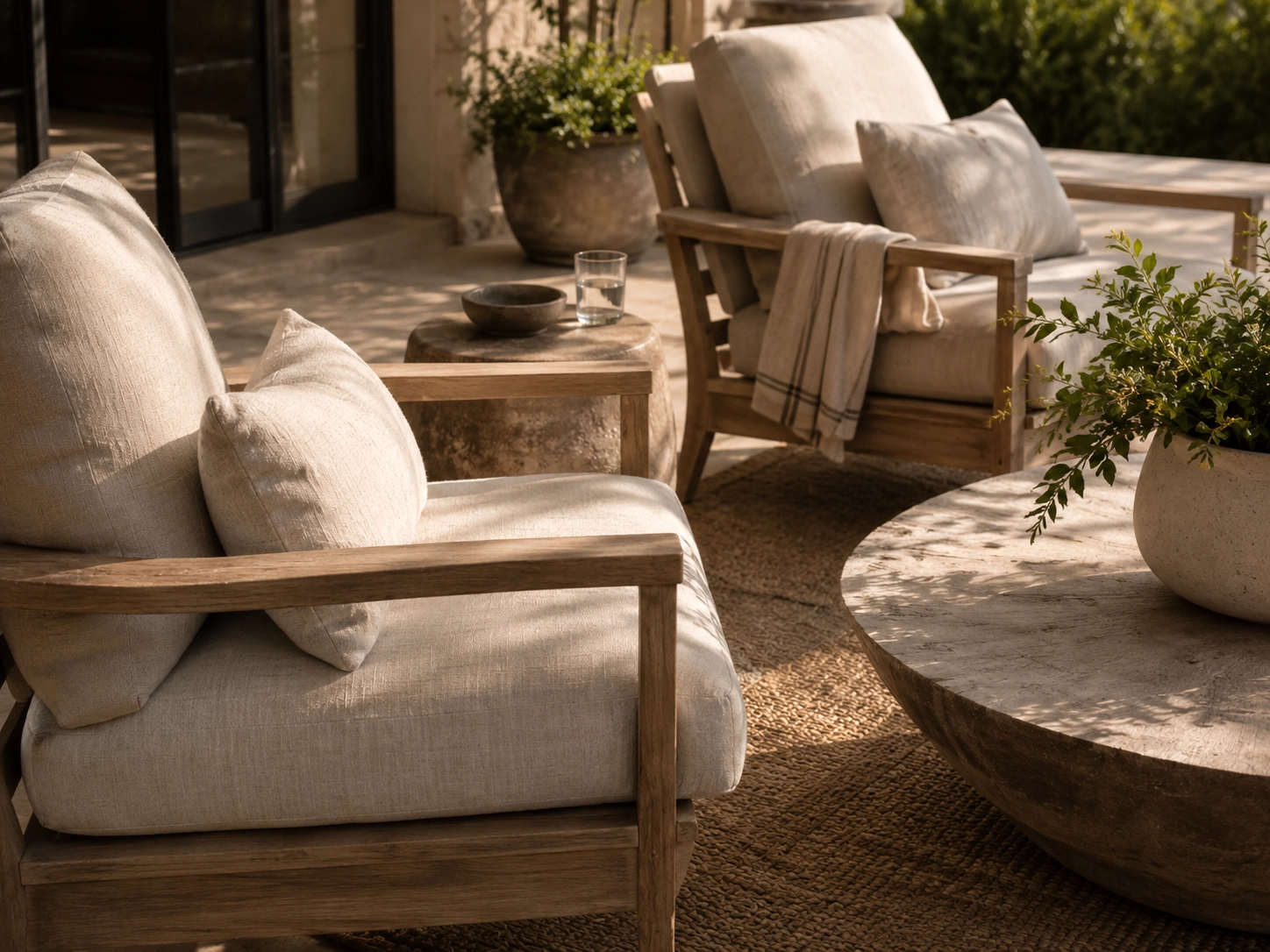
When seating is formal and upright, guests tend to visit briefly. When it is generous, shaded, and arranged around a focal point, they settle in. The terrace becomes a place for morning coffee, afternoon reading, cocktails before dinner, and conversations that continue well after sunset.
The most successful arrangements mirror the intimacy of an interior salon. Sofas and chairs are gathered around a low table, side tables remain within easy reach, and outdoor rugs create definition beneath broad stone or concrete terraces.
Materials should respond to the architecture and the setting. Teak brings warmth to modern glass and stone. Powder-coated metal offers a crisp counterpoint to lush planting. Woven fibers soften architectural lines, while ceramic and carved stone introduce weight and permanence.
The most memorable spaces rarely rely on a single matching collection. They are built through contrast: tailored and relaxed, polished and organic, substantial and light.
Lighting completes the transformation.
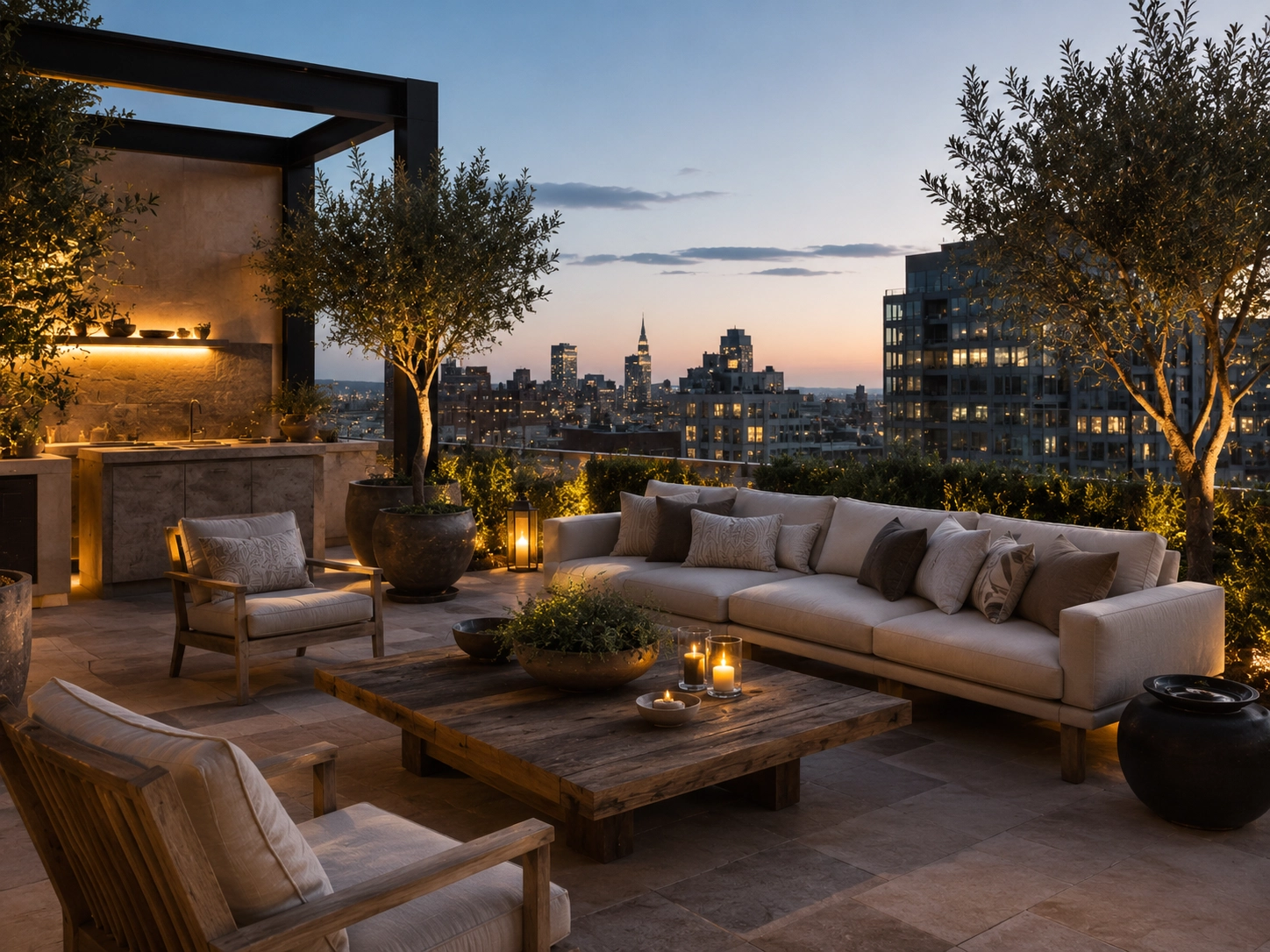
An outdoor room may be shaped during the day, but it often becomes most alluring after dark. The strongest lighting schemes work in layers, beginning with discreet architectural illumination for pathways, steps, and cooking areas.
Softer sources create atmosphere: wall lanterns, portable lamps, pendants suspended beneath a pergola, and concealed fixtures placed among planting beds.
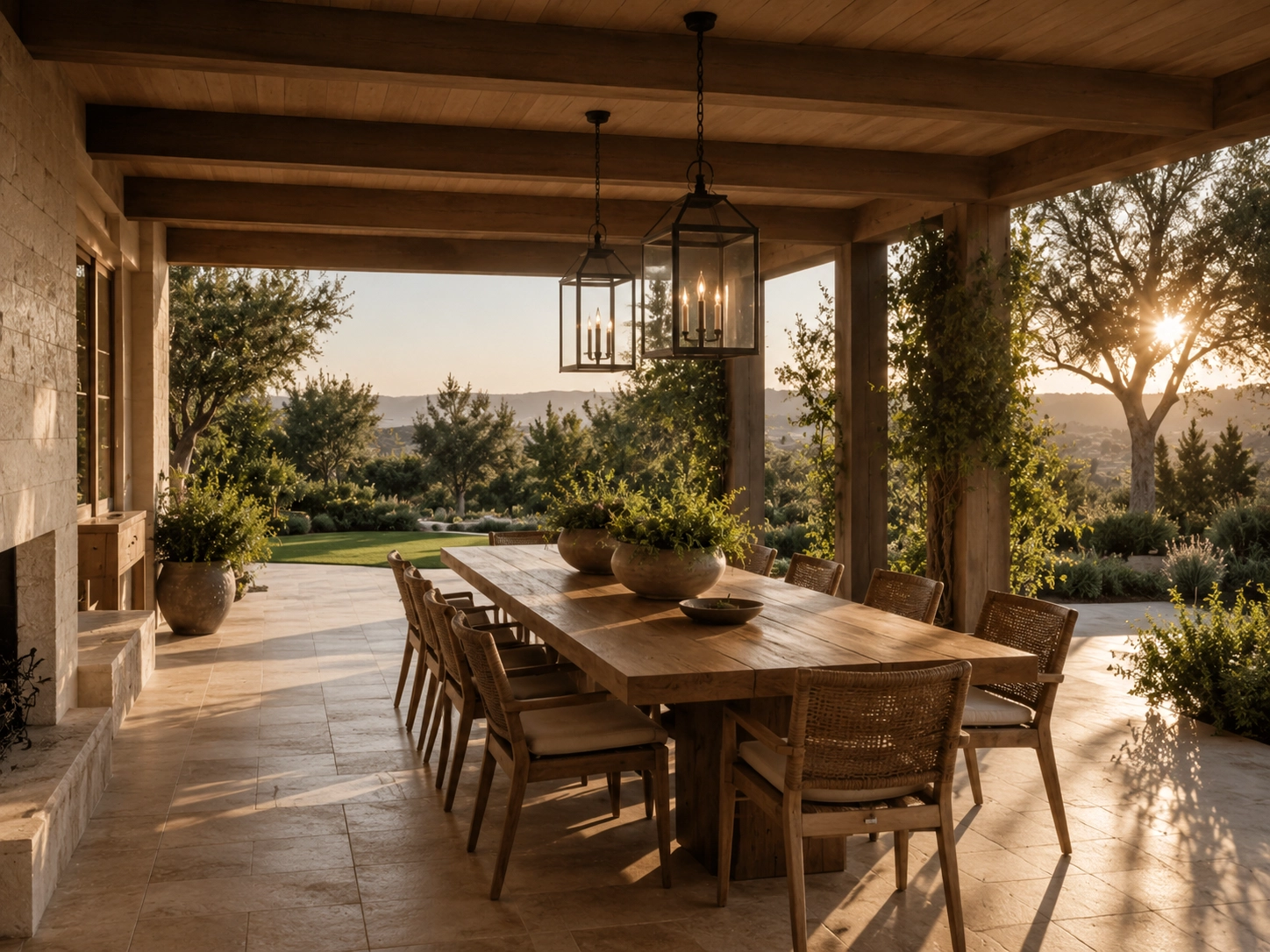
Rather than flooding the entire garden with light, designers increasingly use shadow as part of the composition. A mature tree illuminated from below becomes a living sculpture. Light grazing across a textured wall reveals the character of stone or plaster. A pool glowing beyond the terrace extends the room visually into the landscape.
Fireplaces, linear fire features, and clusters of candlelit lanterns offer warmth and a natural point of gathering. The objective is not brightness alone, but a sense of intimacy.
The finest outdoor rooms also belong unmistakably to their setting. A coastal residence may draw from pale stone, weathered wood, linen, and the muted colors of sea and sky. A desert home may favor deep shade, earthen plaster, native planting, and a warmer palette of rust, tobacco, and sand.
Designing for place means accounting for sun, wind, heat, rainfall, and privacy as carefully as color and texture. In tropical climates, shade may be the greatest luxury of all. In an urban garden, layered planting and sculptural screens may provide seclusion. In a rural setting, the design may instead frame the horizon and allow the landscape to become part of the room.
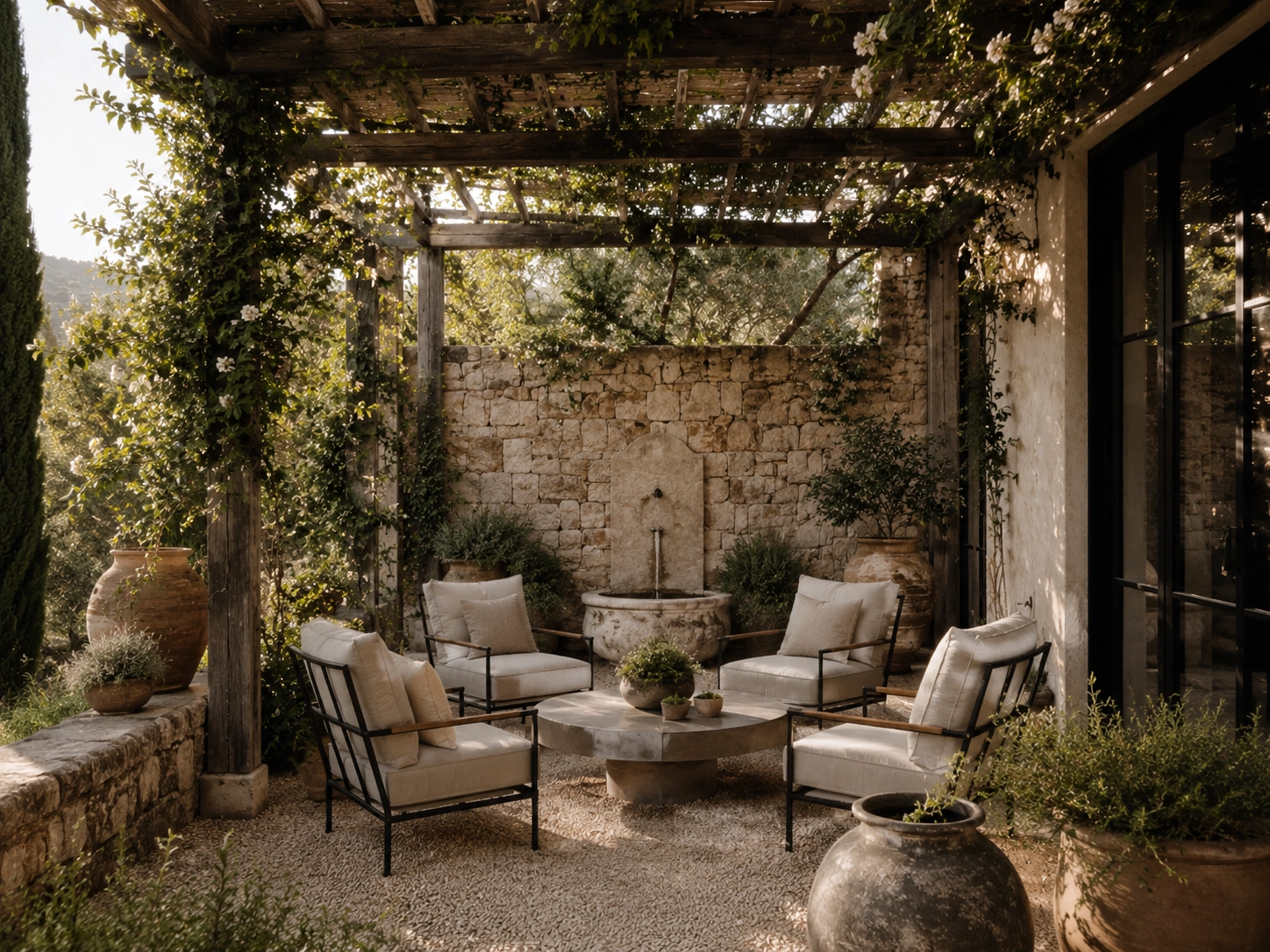
Luxury outdoors is no longer defined by size or extravagance. It is found in a chair positioned to catch the evening breeze, in lighting that flatters rather than overwhelms, and in the quiet transition from cool interior stone to a sun-warmed terrace.
The finest outdoor rooms feel inevitable. Architecture, furniture, lighting, and landscape appear to have always belonged together.
They do not attempt to recreate the interior. They offer something more elemental: a place shaped by moving air, changing light, and the rhythm of the seasons.
That is the promise of the modern outdoor room, not simply another place to entertain, but another way to live.