

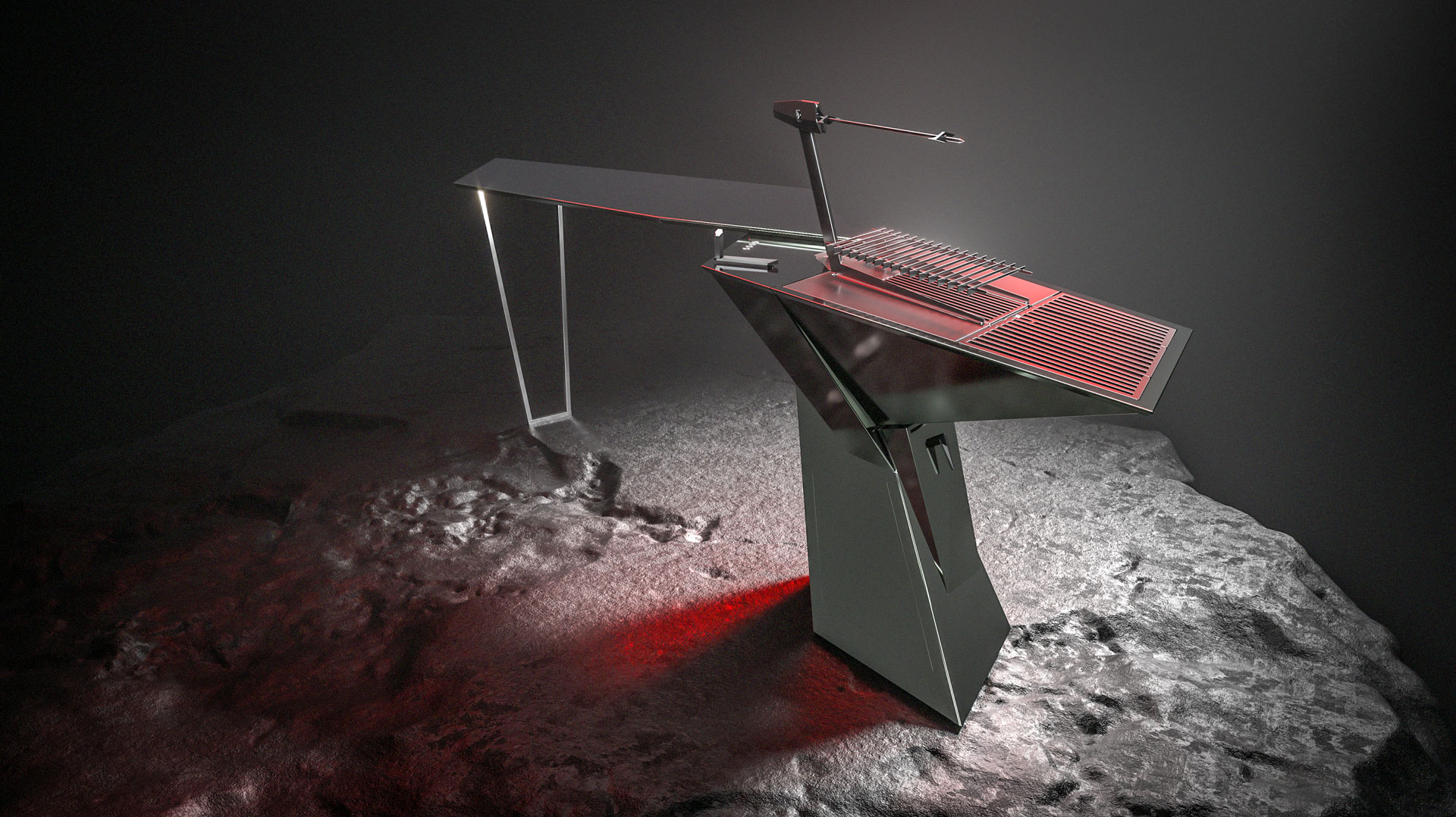
At dusk on the Côte d’Azur, the outdoor kitchen begins to change character. Stainless steel catches the last of the sun, polished surfaces reflect the garden, and the first flame gives the terrace a new center of gravity. With THE LINE Grill, cooking outdoors is not treated as a domestic task to be hidden behind masonry. It becomes the evening’s architecture.
Made in France, THE LINE approaches the barbecue as both a culinary instrument and a sculptural object. Its elongated silhouette, smooth curves, and disciplined proportions are a decisive departure from the bulky grills that have traditionally occupied terraces and pool decks. The design is intended to remain visible, even when it is not in use, giving it more in common with contemporary outdoor furniture than conventional cooking equipment.
That distinction matters as outdoor spaces become increasingly sophisticated. The modern terrace is no longer an afterthought furnished with a dining table and a freestanding grill. It is conceived as an extension of the architecture, often with the same attention given to materials, lighting, circulation, and sight lines as the rooms inside. THE LINE responds to that shift with a product that can hold its own within a carefully designed landscape.
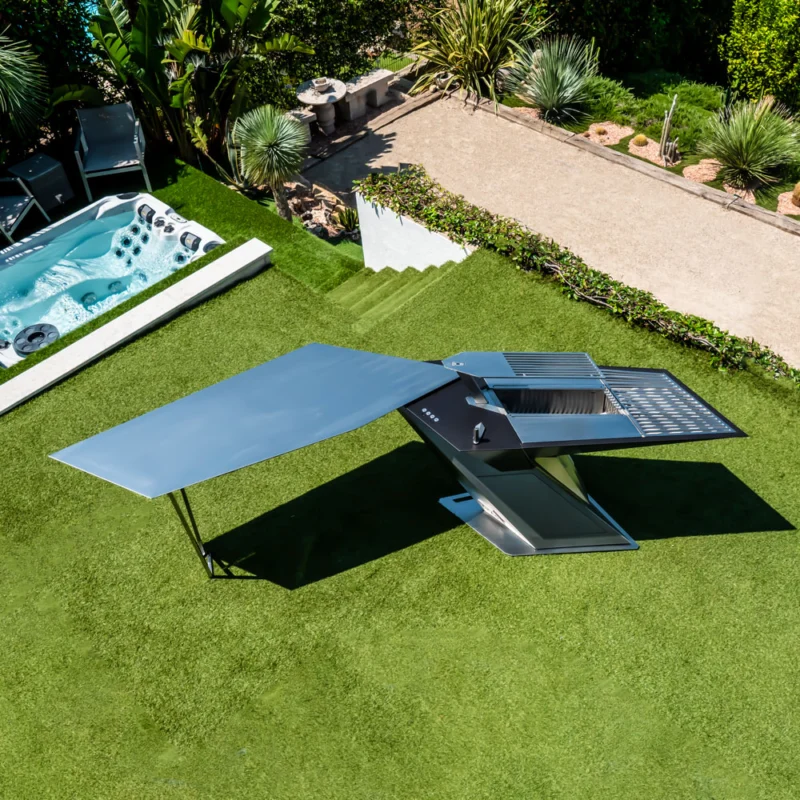
Its visual restraint conceals considerable versatility. Available in NOVA and INFINITY versions, the system can function as a barbecue, plancha, fire pit, teppanyaki plate, rotisserie, smoker, and pizza oven. Rather than arranging these functions as a collection of separate appliances, THE LINE integrates them into a single coherent form.
The cooking area is modular, allowing the firebox to be divided into as many as four independent heat zones. Removable vertical partitions concentrate heat where it is needed, while an intermediate grate can alter the depth of the fire and reduce the amount of wood or charcoal required. The result is a system capable of moving from high-temperature searing to slower, more controlled cooking without compromising the clarity of its design.
There is room to cook for a substantial gathering. THE LINE states that the principal barbecue configuration accommodates up to 12 guests, while opening the full cooking area can support larger occasions. A skewer system holds 17 brochettes, and the rotisserie can manage cuts weighing as much as 15 kilograms. The smoker accommodates cold, intermediate, and hot techniques, while the pizza oven can operate in traditional or convection modes.
The materials have been chosen with similarly serious intent. Both versions are constructed from marine-grade 316 stainless steel, an alloy prized for its resistance to heat, moisture, salt, and corrosion. That makes the grill particularly well suited to coastal terraces, poolside installations, and climates where lesser metals quickly reveal their age. Even the stabilization base is formed from 10-millimeter stainless steel, giving the piece the weight and security required for intensive use.
Its grates and planchas are machined from solid 10-millimeter stainless steel rather than assembled from welded components. Beyond the visual purity this creates, the method reduces traditional structural weak points and reinforces the sense that THE LINE has been engineered as a permanent element of an outdoor environment rather than a seasonal accessory.
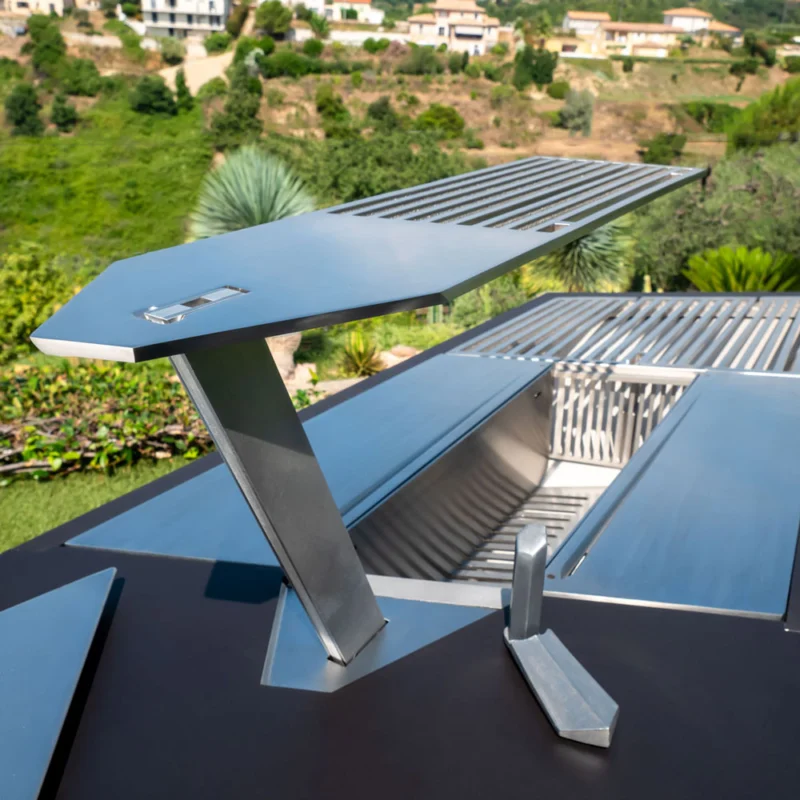
The finishes allow the object to shift personality. Mirror-polished stainless steel gives it a sharper, almost liquid presence, capturing sky, planting, and firelight across its surface. Brushed stainless steel is quieter and more architectural, with a satin texture that sits comfortably beside stone, timber, and concrete. Thermocoated color finishes offer another degree of integration, allowing the grill to echo or deliberately contrast with its surroundings.
A swiveling table designed for six guests extends the social ambition of the piece. Rotating through 360 degrees, it allows the cook to remain involved with the table rather than isolated at the edge of the terrace. It is a small but telling design decision: THE LINE treats cooking over fire as a communal ritual, not backstage preparation.
The NOVA model offers the essential mechanical experience with an emphasis on simplicity. INFINITY adds a more technological layer, including an integrated control panel and a rotisserie adjustable from one to eight rotations per minute. A rechargeable 12-volt battery powers the system, while Wi-Fi connectivity allows selected controls and battery monitoring through a dedicated mobile application.
Technology, however, remains visually subdued. Touch-sensitive switches are set into the work surface, charging connections are concealed, and the controls do not disturb the continuity of the form. This disciplined integration helped earn THE LINE INFINITY a 2026 German Design Award in the Excellent Product Design category for Outdoor Living.

The award recognizes what is ultimately most compelling about THE LINE: it does not ask design to excuse performance, nor performance to overwhelm design. The engineering is substantial, but the object remains calm. Its many cooking modes are available without turning the terrace into a professional kitchen crowded with machinery.
In the best outdoor spaces, fire has always played more than one role. It cooks, warms, illuminates, and gathers people around it. THE LINE gives that ancient ritual a distinctly contemporary expression, shaped in French stainless steel and refined for terraces where every object is expected to contribute to the whole.
When the cooking is finished, and the flame begins to settle, the grill does not disappear into the background. It remains exactly where it belongs: a piece of functional sculpture, holding the outdoor room together.
